Brake fluid is cheap; the damage from neglecting it is not. Replacing a $10–$30 bottle of fluid at the right time can prevent seized calipers, rusted brake lines, and spongy pedal feel that shows up during a hard stop when you least expect it. Understanding brake fluid replacement cost means looking beyond a single number and knowing what you’re actually buying in terms of safety and long-term reliability.
Over time, brake fluid will accumulate moisture, which can lower its boiling point and cause the brake fluid to boil, which, in extreme circumstances, will make air and cause the pedal to be spongy without warning, although that doesn’t usually happen.
Modern cars complicate the picture. ABS, stability control, electronic parking brakes, and tight packaging all affect how long a brake fluid change takes and which tools are required. That’s why a compact Honda Civic and a performance-oriented BMW can land in very different price brackets for the same service, even though the fluid itself is practically the same.
How Much Does Brake Fluid Replacement Cost?
Across the U.S. in 2025, most drivers see a brake fluid flush or exchange priced roughly between $100 and $225 at a repair shop. The fluid itself is usually just $5–$20 per quart, and most cars only need about a quart or liter. The rest is labor and shop overhead.
Different sources put the “typical” shop price in slightly different spots—some around $100–$160, others in the $170–$200 range as labor and shop fees creep up. In practice, if you call three reputable shops for the same vehicle, you’ll usually get:
- Independent shop: about $110–$170
- Chain store or tire shop: about $120–$190
- Dealer: about $150–$225, especially on newer vehicles with complex systems
A DIY brake fluid service often costs $10–$40 in fluid plus any tools you don’t already own (bleeder kit, catch bottle, gloves). That’s why many cost breakdowns say the job is “mostly labor.”
A few examples that mirror real-world patterns:
- A mainstream compact car such as a Honda Civic or similar economy sedan usually lands on the lower end of the range because parts are common and systems are straightforward.
- Crossovers and SUVs such as a Honda CR-V have similar fluid cost but can require slightly more labor time and sometimes carry higher shop rates in certain markets.
- Luxury and performance cars such as many BMW models often use higher-boiling DOT 4 or 5.1 fluids and more complex bleeding procedures. Higher labor rates and more time to bleed ABS modules can push the total toward the top of the range.
Add-ons change the picture quickly. If a rusty brake fluid line is leaking or a caliper bleeder screw snaps, the job stops being a simple flush and may jump several hundred dollars.
What You’re Paying For in a Brake Fluid Service
Shops use different terms—brake fluid flush, brake fluid exchange, brake fluid service—but they’re all variations on the same goal: get contaminated fluid out and fresh fluid in.
A typical professional service includes:
- Visual inspection of hoses, lines, calipers, and master cylinder
- Testing or inspecting fluid condition (color, moisture content if they use a tester)
- Draining old fluid from the master cylinder
- Pushing new fluid through all four corners until clean fluid appears
- Proper disposal of used fluid
Many chains and dealers now use pressure or vacuum equipment that connects to the reservoir and pushes new fluid through the system in a controlled way. That’s quicker and more consistent than manual pumping, especially when ABS modules or electronic parking brakes need special bleed routines via a scan tool.
When you ask how much does it cost to replace brake fluid at a given shop, clarify what’s included:
- Is it a full system flush or just a quick bleed?
- Are they using fluid that meets or exceeds your car’s DOT spec?
- Do they include a brake inspection in the price?
This makes price comparisons meaningful instead of just chasing the lowest number.
When to Replace Brake Fluid
Brake fluid is hygroscopic—over time it absorbs moisture through seals, hoses, and even repeated opening of the reservoir cap. That water lowers the fluid’s boiling point and encourages internal rust.
Most real-world recommendations converge on:
- Every 2–3 years or around 30,000–40,000 miles in normal driving
- Sooner in humid climates, mountain driving, or track use
Manufacturers vary: some specify a strict two-year interval, others three years or a certain mileage, and a few simply say to replace fluid when it’s discolored or fails a moisture test.
Warning signs that the fluid is overdue include:
- Spongy or soft pedal feel
- Increased stopping distance under repeated hard braking
- ABS or brake warning lights
- Dark, murky, or nearly black fluid in the reservoir

Pro Tips are nuggets of information direct from ASE-certified automobile technicians working with CarParts.com, which may include unique, personal insights based on their years of experience working in the automotive industry. These can help you make more informed decisions about your car.
Pro Tip: Note, however, that a car may not produce any symptoms at all, and many OEMs have no interval for brake fluid replacement.
Having said that, ignoring signs when they appear can lead to vapor lock (boiling fluid forming gas bubbles) and internal corrosion in calipers, ABS valves, and lines—repairs that make the original brake fluid replacement cost look tiny.
DIY vs Professional Brake Fluid Change
You can change brake fluid at home, but the risk/reward balance isn’t the same for everyone.
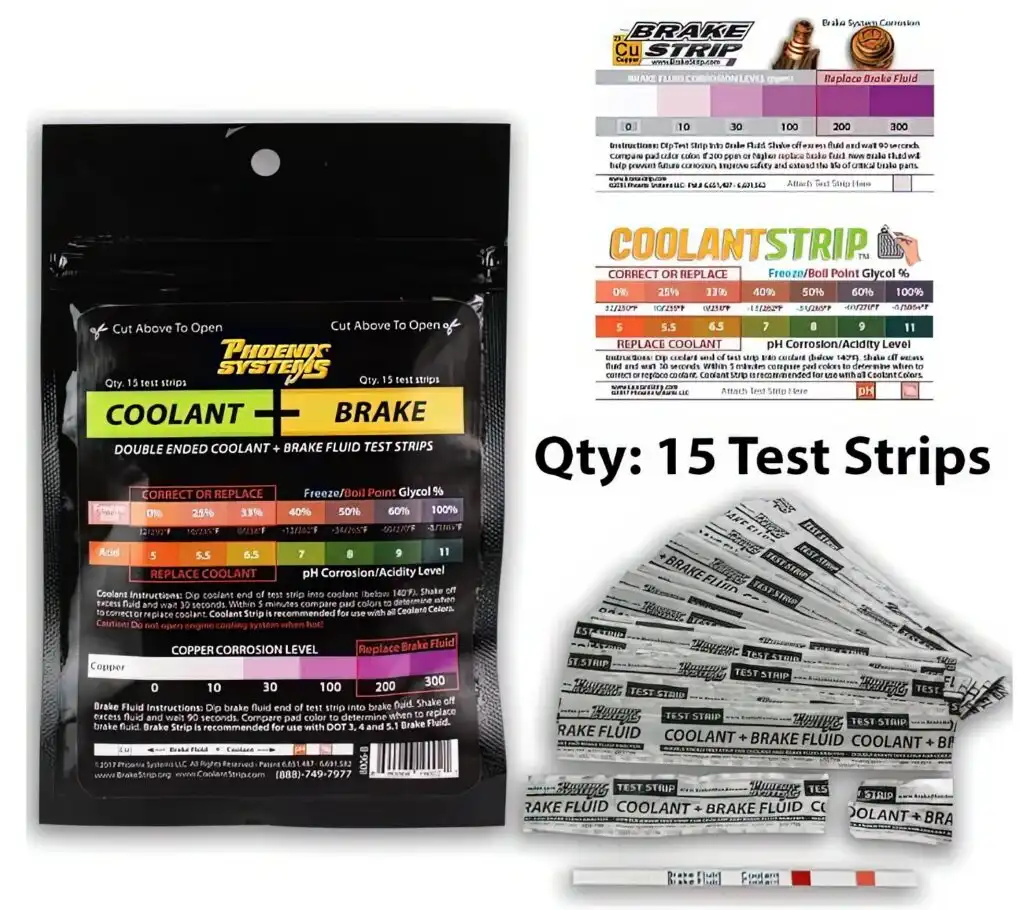
If You Can, First Test for Excessive Moisture
Brake fluid is hygroscopic, meaning, it readily absorbs moisture. There are tools for testing this, but you can use a standard DVOM set on the lowest volt scale to check for moisture. Just connect the negative meter lead to the negative battery terminal and dip the positive probe into the brake fluid; 0.30 volts or more measured that way indicates excessive moisture.

Basic Steps for a Careful DIY Brake Fluid Change
- Check the manual: Confirm the correct DOT spec (usually DOT 3, DOT 4, or DOT 5.1 for modern cars—never mix silicone DOT 5 into a system not designed for it).
- Gather tools: Jack, jack stands, lug wrench, box wrench for bleeders, clear hose, catch bottle, fresh fluid, safety glasses, and gloves.
- Siphon the reservoir: Remove most of the old fluid from the master cylinder, then refill with new fluid.
- Lift the car and remove wheels: This gives cleaner access to bleeder screws on calipers or wheel cylinders.
- Bleed in the correct sequence: Usually from the wheel farthest from the master cylinder to the closest (often RR → LR → RF → LF, but verify for your vehicle).
- Maintain fluid level: Keep the reservoir from running low at all times to avoid pulling air into the system.
- Watch for clean fluid: Continue until fresh, clear fluid comes out at each corner and no bubbles remain.
- Final checks: Verify a firm pedal with the engine running and inspect for leaks at every connection.

DIY is most realistic if you’re comfortable working under the car and your vehicle uses a simple hydraulic system. Once you add electronic parking brakes or complex ABS bleed procedures that require a scan tool, paying a professional is usually cheaper than fixing a botched job.
How Vehicle Type and Driving Style Affect Cost
Two drivers can maintain their brakes perfectly and still see different bills for the same service.
Daily commuters in compact cars typically pay less.
A Honda Civic or similar mainstream sedan or crossover usually uses common DOT 3 or DOT 4 fluid and straightforward hardware. Parts are inexpensive and most shops have done this procedure thousands of times, keeping pricing competitive.
Drivers of luxury and performance vehicles tend to pay more.
Many BMW models and other high-performance cars rely on higher-boiling DOT 4 or DOT 5.1 fluids and more complex braking systems. These often require careful bleeding procedures and higher-priced fluids, nudging the total cost upward.
Heavy loads, hills, and track days increase both risk and cost over time.
Towing, mountain driving, and occasional track use drive fluid temperatures up. Boiling points matter more, and replacement intervals shrink—often annually for aggressive use. That means more frequent visits and higher lifetime spend, even if each service is “just” a couple hundred dollars.
Large service chains, like Jiffy Lube, that handle a wide mix of vehicles, such as those offering brake fluid exchange alongside oil changes and brake jobs, often provide a standardized price with a built-in inspection. In many cases, you’ll see them advertise a brake fluid exchange that includes a system check and fresh fluid meeting your manufacturer’s spec, with final pricing based on your specific vehicle and location.
Making a Smart Choice on Your Next Brake Fluid Service
If you’re comparing quotes, focus less on chasing the lowest dollar and more on what’s included, what fluid is used, and how often you drive in conditions that stress your brakes. For a well-maintained Honda CR-V or Civic driven mostly in town, paying a solid shop every 2–3 years for a proper brake fluid service is often the best balance of cost and safety. For a BMW driven hard or in the mountains, more frequent fluid changes with higher-spec fluid are cheap insurance against fade and expensive hardware failures.
Either way, brake fluid is one of the least expensive things you can service on a car that has arguably the biggest impact on your ability to stop when it counts.
Keep Reading: Related Posts



Any information provided on this Website is for informational purposes only and is not intended to replace consultation with a professional mechanic. The accuracy and timeliness of the information may change from the time of publication.