You fix a starter by testing the entire starting circuit before replacing any parts. Clean and verify the battery, cables, grounds, and trigger signal first, then replace the starter only if it still fails with proper power and ground confirmed.
How Do You Fix a Car Starter?
You fix a car starter by diagnosing the whole starting circuit, not just the motor. Many no-crank complaints trace back to voltage loss, bad grounds, a failed starter relay, or damaged ring gear rather than the starter itself.
Start with these checks:
- Verify battery charge. A battery strong enough to light the dash can still be too weak to crank the engine.
- Clean and tighten both battery terminals and the engine ground strap.
- Check cranking voltage at the starter. Around 9.6 volts or more during cranking is a useful baseline unless your vehicle spec says otherwise.
- Measure voltage drop on both the positive and ground sides if cranking is slow or intermittent.
- Confirm the trigger wire receives voltage when the key is in the start position. Problems here can also trace back to the ignition switch or, on automatic vehicles, the neutral safety switch.
- Listen carefully to the symptom. A click, slow drag, grind, or free-spin each points to a different fault. For more symptom-specific context, compare what you hear with bad starter symptoms.
For a quick fix, clean both battery posts, the battery cable ends, and the main engine ground before condemning the starter. Here is a common example: the battery is new, jump-starting does nothing, and the dash lights stay bright. In that case, cleaning oxidized terminals and retightening the ground strap can restore full current flow without any starter replacement at all.
| Symptom | Likely Cause | Best Next Step |
| Single click, no crank | Weak battery, high cable resistance, bad solenoid contacts | Load-test battery and check voltage drop |
| No click, no crank | No trigger signal, bad relay, ignition switch issue, clutch or park-neutral switch fault | Check fuses, relay, and trigger-wire voltage |
| Slow crank | Low battery reserve, corroded cables, dragging starter | Test battery first, then positive- and ground-side drop |
| Grinding while cranking | Misaligned starter, damaged pinion, worn ring gear teeth | Inspect fitment and flywheel or flexplate teeth |
| Starter spins but engine does not turn | Failed overrunning clutch or engagement problem | Remove starter and inspect drive gear |
| Starter stays engaged after the engine fires | Sticking solenoid, switch, or control issue | Stop using the vehicle until repaired |
If the battery, cables, and trigger circuit all check out and the starter still drags, clicks without cranking, or grinds, replacement is usually the correct fix.
Can You Fix a Starter on a Car?
Yes, you can fix a starter when the fault is external. When the starter has internal wear, a burned solenoid, a damaged drive gear, or contamination inside the housing, replacement is the better path.

Pro Tips are nuggets of information direct from ASE-certified automobile technicians working with CarParts.com, which may include unique, personal insights based on their years of experience working in the automotive industry. These can help you make more informed decisions about your car.
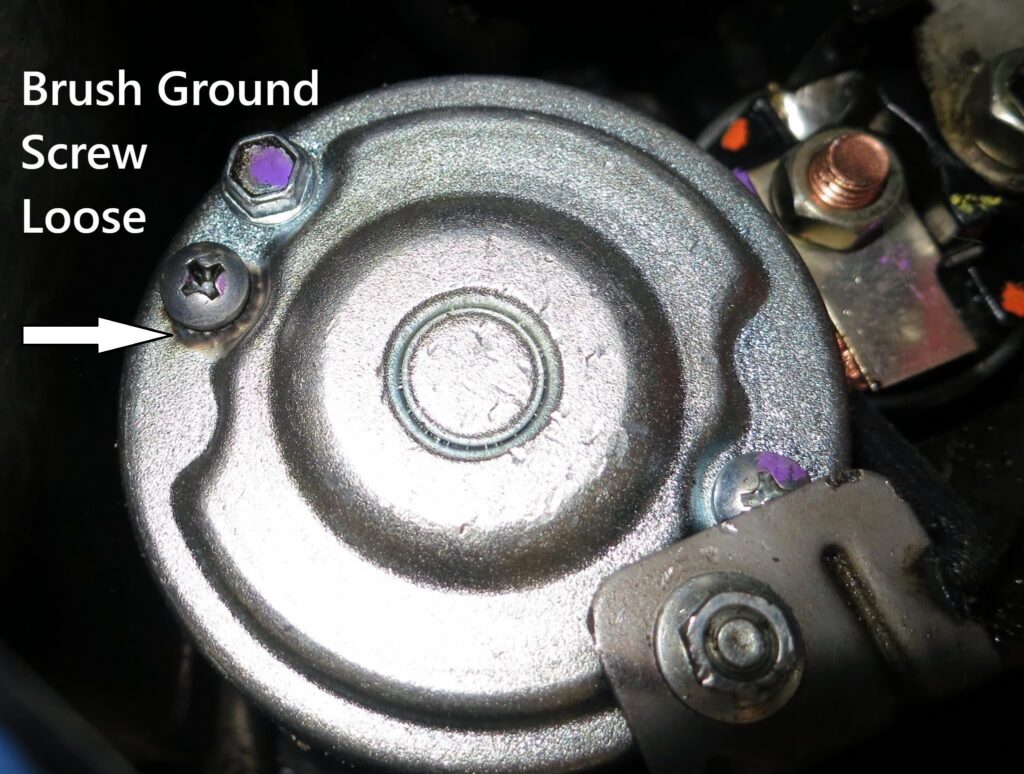
Pro Tip: You can also replace the brushes if the commutator is in good shape. Remember, a starter’s life rests in how many starts it has performed, not how many miles the vehicle has been driven. The brushes are a wear-prone part, but if the starter motor has been forced to operate with less than optimum voltage, it can fail very quickly.
Diagnosing a car starter motor begins with separating external faults from internal ones. The following issues are often repairable without replacing the starter:
- Dirty or loose battery terminals
- Loose or corroded engine grounds
- Corroded B-plus cable at the starter
- Failed starter relay or blown fuse
- Missing trigger voltage from the ignition switch or safety interlock
- Voltage drop between the battery and the “S” terminal that triggers the solenoid.
- Oil leaks contaminating the starter area before the unit is damaged internally
The following conditions usually mean the starter assembly is done:
- Proper power and ground reach the starter, but it still cranks slowly. It is important to find out why this happened or you may be replacing the starter again.
- The solenoid engages, but the motor does not turn the engine.
- The pinion or overrunning clutch slips. It may start to spin the engine and then whine.
- The starter grinds because the drive gear or ring gear is damaged.
- The unit keeps spinning after you release the key.
- The housing is cracked, smoking, or oil-soaked inside.
- Coolant has been leaking onto and into the starter.
Oil or coolant contamination is easy to overlook. If a valve cover, rear main seal, or another nearby seal is leaking onto the starter, fix the leak and clean the area thoroughly. Skipping this step means the replacement unit may fail early as well.
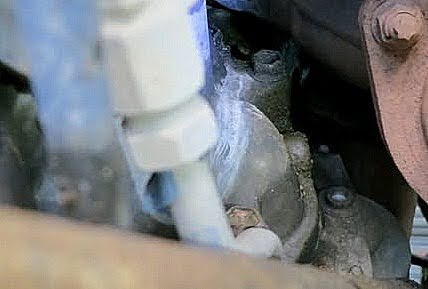
Once internal damage is confirmed, replacing the starter as a complete assembly makes far more sense than chasing internal parts in the driveway.
What You Need Before Replacement
Most starter jobs fall into the intermediate DIY category. Access is what makes the job straightforward or miserable. For example, Toyota V8 engines may require the removal of the intake manifold or the removal of the passenger-side exhaust manifold. A 2007 Toyota Tundra starter replacement can be a 5-hour job.
Pro Tips are nuggets of information direct from ASE-certified automobile technicians working with CarParts.com, which may include unique, personal insights based on their years of experience working in the automotive industry. These can help you make more informed decisions about your car.
Pro Tip: Mid-1990s four-cylinder S10 pickups have a starter that is almost impossible to access. Find out everything you can about how to replace your starter before you even attempt it.
Have the following ready before you start:
- Vehicle-specific service information
- Socket set, ratchet, and long extensions
- Wrenches and a torque wrench
- Floor jack and jack stands or ramps
- Wheel chocks
- Multimeter or test light
- replacement starter
- Any required shims, braces, heat shields, or correct starter bolts
Disconnect the negative battery cable first, support the vehicle on a stable surface, and never let the starter hang by its wiring. If your vehicle uses a brace, centering sleeve, shim, or special starter bolts, reinstall them exactly as they were designed.
How to Replace a Starter
The basic process is straightforward: disconnect the battery, gain access, remove the wiring and bolts, compare the new unit to the old one, install the replacement squarely, and test it before final reassembly. The sequence below covers the job on most layouts.
- Confirm the diagnosis and compare parts. Match the connector style, mounting ear pattern, nose length, tooth count, and any shims or braces before removing the old starter.
- Disconnect the negative battery cable. The main starter cable is live at all times, so this step is not optional. For a quick safety refresher, see negative battery terminal.
- Raise and secure the vehicle if needed. Some starters are top-access jobs, but many sit low on the bellhousing near the exhaust.
- Gain clear access. Remove only the shields, braces, ducts, or covers that block the starter. Take photos of wire routing before you begin.
- Remove the electrical connections. Disconnect the trigger wire first, then the main battery cable. Inspect the cable ends for corrosion, heat damage, or a loose crimp.
- Support the starter and remove the mounting bolts. Some upper bolts require wobble extensions or a universal joint. Do not let the starter hang on the last bolt.
- Remove the old starter and inspect the ring gear. Missing or heavily chipped flywheel or flexplate teeth will keep causing grind complaints regardless of how new the replacement starter is.
- Install the new starter carefully. The mounting face must sit flush, all bolts should start by hand, and any shim, brace, or locating sleeve must go back in its original position.
- Torque the fasteners and reconnect the wiring. Follow the vehicle spec whenever possible. Many starter bolts land in the 20 to 35 pound-feet range, though the exact number varies by application.
- Reconnect the battery and test before full reassembly. Crank the engine before reinstalling every shield and panel. If it grinds, stop and recheck alignment, bolt seating, and ring gear condition.
If a vehicle has a brace or shim and you leave it out, the starter may work briefly before it begins damaging the gear teeth.
How Long Does It Take and When Should You Stop?
On an easy-access vehicle, replacing a starter typically takes about 1 to 2 hours. On a cramped transverse engine layout or a rusted vehicle that requires additional parts removed first, 3 to 4 hours or more is realistic.
Several factors affect the total time:
- Whether the starter is accessible from the top or from underneath
- How much hardware is blocking access
- Rusted or seized fasteners
- Damaged battery cables or ring gear that need attention
- Whether the design includes braces, shims, or special bolts
Most DIYers can handle this repair, but stop and reconsider the job if there is no trigger voltage reaching the starter, if the ring gear has serious tooth damage, if the starter remains engaged after the engine starts, or if completing the job requires major exhaust or mount removal.
One final note: if the engine cranks normally after replacement but still will not start, the starter job is complete. A no-start with good cranking points to a fuel, spark, timing, compression, or immobilizer problem instead.
Keep Reading: Related Posts




Any information provided on this Website is for informational purposes only and is not intended to replace consultation with a professional mechanic. The accuracy and timeliness of the information may change from the time of publication.