Walk into any riding circle and ask about 2-stroke vs 4-stroke, and you’ll get opinions louder than an unmuffled expansion chamber. The truth is that both engine types still earn their place in modern powersports, just for different reasons.
Whether you ride a dirt bike, rip across a frozen lake on a snowmobile, or carve glassy water on a personal watercraft, understanding how these two engines actually behave will change how you buy, ride, and wrench. This guide goes beyond the usual motocross comparison and looks at how each engine fits the broader powersports world.
How Each Engine Actually Works
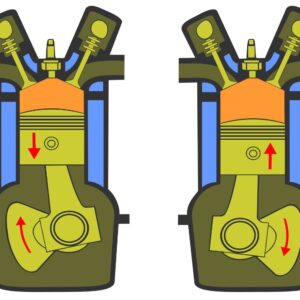
The names describe the combustion cycle. A 2-stroke completes intake, compression, power, and exhaust in one crankshaft revolution, firing every time the piston reaches the top. A 4-stroke needs two full revolutions and uses dedicated valve trains for intake and exhaust. That single difference between these two engine types cascades into everything else: weight, power character, maintenance schedule, fuel system, and even the smell coming out of the pipe.
Because a 2-stroke fires twice as often per crank revolution, it produces more power per cubic centimeter than an equivalent thumper. That’s why a 250cc smoker can hang with a 450cc four-banger on a tight trail. The trade-off is a narrower powerband, more vibration, and the need to mix oil with fuel or run an injection system.
Dirt Bikes: Where the Debate Sits
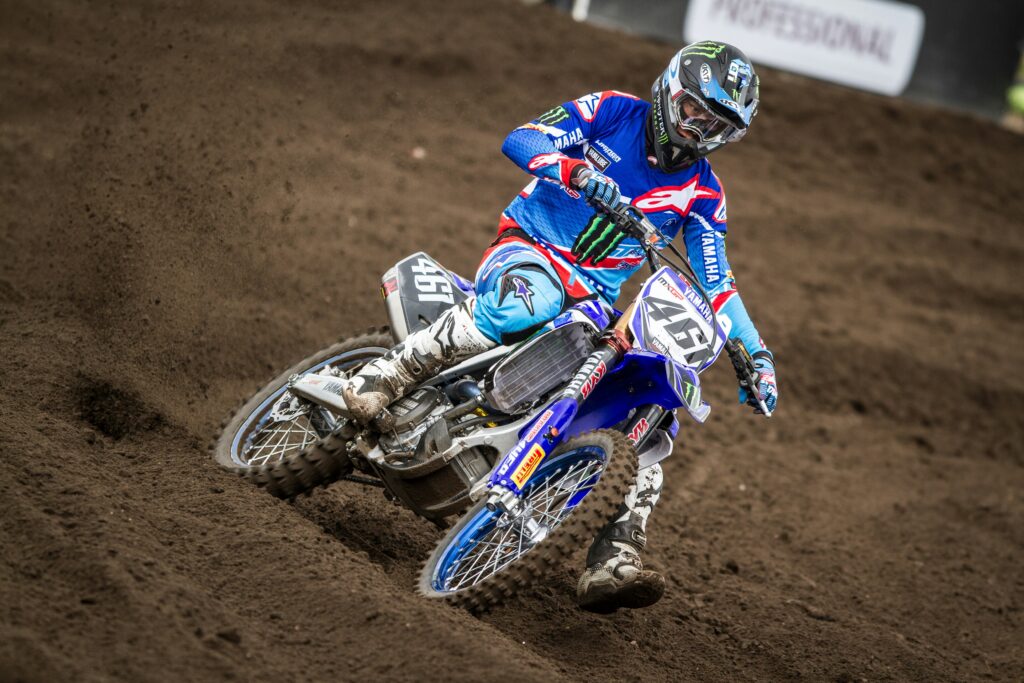
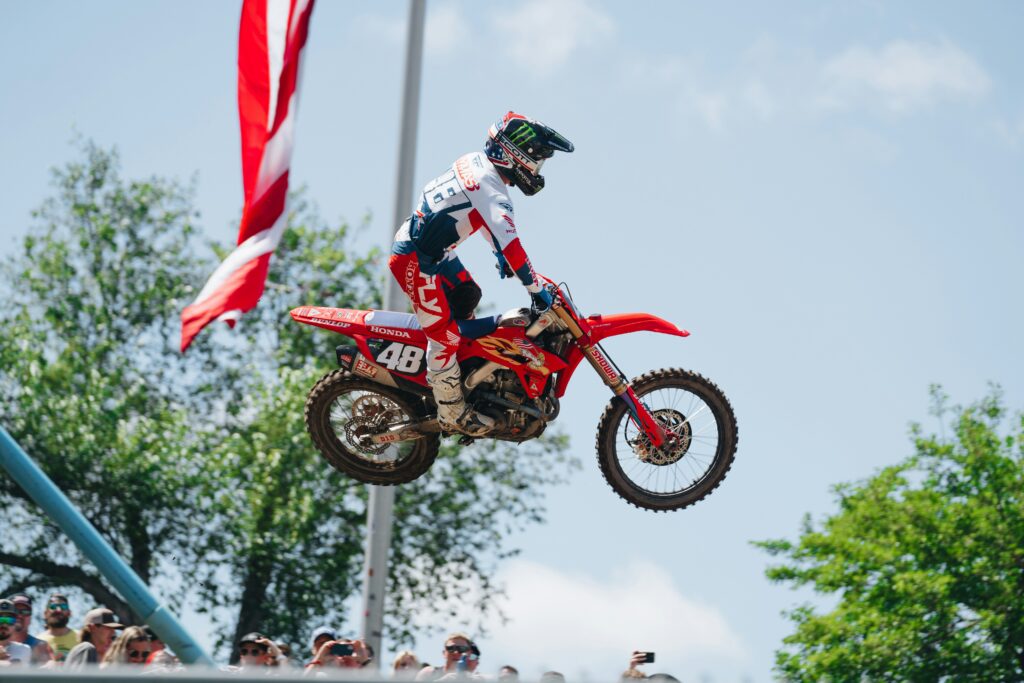
Modern motocross is dominated by 450cc 4-strokes because they put massive torque to the ground and stay planted in deep ruts. Pro-level riders love how a 4-stroke hooks up out of corners and tractors up faces that would spin a 2-stroke into oblivion. The downside shows up in the maintenance bay, where top-end rebuilds every 50 hours and valve checks every 30 hours add up fast.
Off-road and woods riding tells a different story. Tight singletrack, log crossings, and slow technical sections favor a lighter bike that resists stalling, and that’s exactly what a modern enduro 2-stroke delivers. Brands like KTM, Husqvarna, GasGas, Yamaha, and Beta now offer fuel-injected 2-strokes (TPI and TBI systems) that meet emissions rules while keeping the snappy character riders crave. If you ride east-coast woods or Pacific Northwest trails more than groomed motocross tracks, a 250 or 300cc smoker often makes more sense than any 4-stroke.
Snowmobiles, PWCs, and ATVs
Snowmobiling is one place where the two-stroke engine still dominates the high-performance segment. Mountain sleds and deep-snow machines lean heavily on 2-stroke power because every pound matters when you’re carving a sidehill at 9,000 feet. Trail and touring sleds, on the other hand, often use 4-strokes for smoother power, better fuel economy, and longer maintenance intervals.
Personal watercraft went the opposite direction years ago. Modern PWCs from Sea-Doo, Yamaha WaveRunner, and Kawasaki Jet Ski are essentially all 4-stroke now, because emissions regulations and the desire for quiet, fuel-efficient cruising made 2-strokes impractical on the water.
ATVs and side-by-sides also run almost exclusively on 4-stroke power for the same reasons: cleaner exhaust, predictable torque, and no premix to deal with on long rides. Outboard boat motors followed the same path, with direct-injected 2-strokes and modern 4-strokes splitting the market.

Power Delivery and Ride Feel
A 2-stroke hits hard. The power comes on quickly and concentrates in a narrower rpm window, which feels exciting on the trail and rewards riders who use the clutch and gearbox actively. Skilled riders can use this explosive delivery to loft the front wheel over obstacles and ride above trail chatter. New riders sometimes find it intimidating because the bike rewards aggressive inputs.
A 4-stroke spreads its power across a much wider rpm range. You get tractable torque from idle, smooth midrange, and a long pull to redline. This linear delivery makes hill climbs less dramatic and slick conditions more manageable, which is why 4-strokes are often recommended for beginners and recreational riders. The trade-off is more reciprocating mass, which makes the bike feel heavier and less flickable in tight terrain.
Maintenance and Cost of Ownership
Here’s where things get misunderstood. Both engines need attention, just different kinds. A 4-stroke has a valve train, cam chain, oil filter, and engine oil that all require scheduled service. Manufacturer manuals on race-spec 4-strokes often call for valve checks every 30 hours and top-end rebuilds around 100 hours, and a full pro rebuild can run $500 to $1,200 depending on the engine. Trail riders who keep air filters clean and avoid dusty conditions often go much longer between services.
A 2-stroke has fewer moving parts, no valves, and no oil filter. Top-end rebuilds happen more often, but they’re simpler and cheaper since you’re swapping a piston, rings, and gaskets without worrying about valve timing. Budget around $150 to $300 for a DIY top-end on most 250 to 300cc smokers. You’ll burn premix oil with every tank, and carbureted models need occasional jetting changes for elevation or temperature swings, but the overall cost of ownership is generally lower for casual riders.
Practical Notes That Save You Money
A few things keep both engines running well. Always use quality premix oil at the manufacturer’s recommended ratio (usually 32:1 to 50:1) on a 2-stroke, and shake the tank before each ride to keep the oil suspended. On a 4-stroke, change the oil and filter on schedule even if it looks clean, because shear and fuel dilution degrade protection long before the oil looks dirty. Keep your air filter spotless on either engine; dirt ingestion is the fastest way to ruin a top end.
If you ride at altitude or in cold weather, jetting matters on a carbureted 2-stroke. Fuel-injected models handle this automatically, but you still want to check the spark plug color occasionally for a proper tan-brown appearance. On a 4-stroke, pay attention to coolant condition and radiator fan operation, because these engines run hotter and overheating during slow technical riding can warp valves and damage the head.
Choosing the Right Engine for You
Match the engine to the riding, not the other way around. Hardcore motocross racers, trail riders who want set-and-forget power, and recreational ATV or PWC owners are usually best served by a 4-stroke. Woods riders, weight-conscious snowmobilers, and anyone who prefers wrenching on a simpler engine often find a modern fuel-injected 2-stroke more rewarding. Budget, riding skill, and local terrain all factor in, and many serious riders end up owning one of each.
Gearing Up for the Total Garage
Whichever side you land on, your machine needs the right parts to keep performing, and the truck or trailer that gets you to the trailhead deserves the same attention. The JC Whitney Performance Hub at CarParts.com is built for riders who think tow-to-toy, with parts for the rig that hauls and the machine that performs. From 2-stroke premix oil and air filters for your 2-stroke or 4-stroke to suspension, brakes, and accessories for your tow vehicle, it’s one ecosystem covering everything in your driveway. Backed by JC Whitney’s century of performance heritage and CarParts.com’s automotive-grade fitment data, you can shop with confidence and get back to what actually matters: more time riding.
Keep Reading: Related Posts




Any information provided on this Website is for informational purposes only and is not intended to replace consultation with a professional mechanic. The accuracy and timeliness of the information may change from the time of publication.