An ignition coil is a transformer that converts your battery’s low voltage into the tens of thousands of volts needed to fire the spark plugs. Because it’s such an integral part of the ignition system, a failing coil almost always produces noticeable symptoms, most commonly a misfiring engine, an illuminated check engine light, or a car that cranks but won’t start.

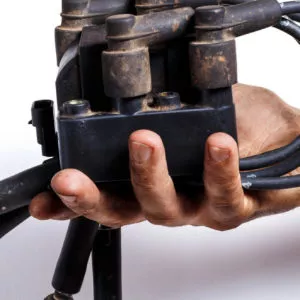
What a Bad Ignition Coil Looks Like
- Definition: An ignition coil converts battery voltage into the high voltage (tens of thousands of volts) required to fire the spark plugs.
- What it affects: Combustion in one or more cylinders, which affects how the engine runs, starts, and performs.
- How serious it is: Serious enough to address promptly. A faulty coil can damage thecatalytic converter, the powertrain control module (PCM), and even the engine.
- Most common symptoms: Engine misfire, check engine light, no-start, stalling, and reduced fuel economy.
- What to do first: Confirm the symptom (misfire, warning light, or no-start), then perform or arrange a power balance test to isolate the faulty coil.
- Can you keep driving it: Not recommended. A faulty coil should be replaced right away to avoid bigger, costlier problems.
- Typical cost: Roughly $40 to $300 or more for the part, depending on your vehicle, plus labor.

What Does an Ignition Coil Do?
An ignition coil is a transformer that converts battery voltage into the tens of thousands of volts needed to fire the spark plugs. Its operation is based on electromagnetic induction, a process that uses a magnetic field to generate electrical current.
There are two sets of windings inside the coil. The primary windings contain roughly a hundred coils of wire, while the secondary windings have thousands.
When the coil is energized, battery voltage flows through the primary windings and creates a magnetic field. Opening the coil’s circuit causes this field to collapse, inducing tens of thousands of volts in the secondary windings. That high voltage then travels from the coil to the rest of the ignition system.

Types of Ignition Coils
- Single coil with distributor (older vehicles): One ignition coil connects to a distributor via an ignition wire. The distributor sends the high voltage to each spark plug and wire.
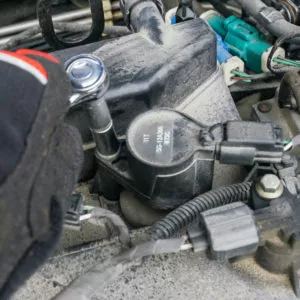
- Coil-on-plug (COP): Newer engines use one coil per cylinder, with each coil sitting directly on top of a spark plug.
- Coil packs: A group of coils combined in a single molded block. Each cylinder gets its own ignition tower but shares a coil with a companion cylinder.
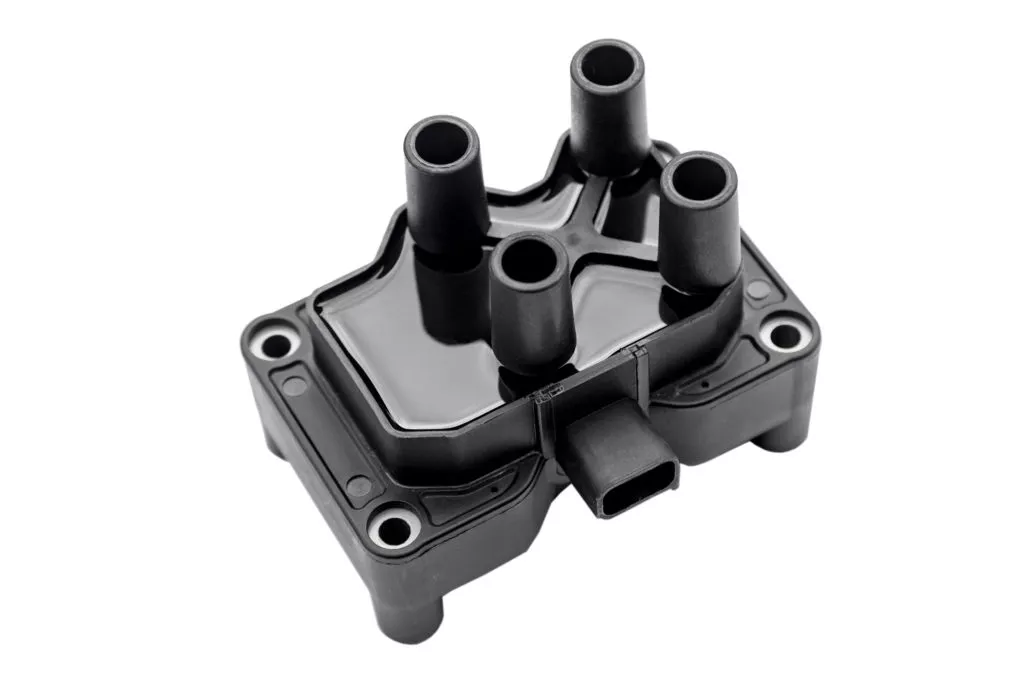
Here’s a video about how ignition coil works:
What Are the Symptoms of a Bad Ignition Coil?
The most common faulty ignition coil symptoms are ones you can actually notice while driving or starting your vehicle. These ignition coil failure symptoms range from an engine misfire to a check engine light or a no-start condition.
Engine Misfire
Because ignition coils help ignite the engine’s air-fuel mixture, a faulty coil can easily cause amisfire, which is incomplete or zero combustion in one or more cylinders. You’ll typically feel it as hesitation or shaking while your vehicle is running, and it often intensifies under heavy load, such as during acceleration.
Illuminated Check Engine Light
In modern cars, the PCM watches for problems that could increase emissions, including a misfire caused by a faulty coil. When it detects the misfire, and possibly a problem in the coil’s electrical circuit, it turns on the check engine light.
Car Won’t Start
Most modern engines have one coil per cylinder, but older vehicles use a single coil to supply all the spark plugs. If this lone coil fails, no cylinder gets spark, so the engine cranks but won’t start.
Engine Stalls
Like most electrical devices, ignition coils can fail intermittently. When this happens, the engine might stall unexpectedly. Stalling is most common in engines with just one ignition coil.
Reduced Fuel Economy
A faulty coil usually makes the engine misfire and run poorly, which lowers fuel economy.
How Serious Is a Bad Ignition Coil?
A faulty ignition coil can damage other parts of the vehicle, including the catalytic converter, the PCM, and even the engine. Because the damage can spread to more expensive components, a faulty coil should be replaced right away to avoid bigger problems down the road.
How Do I Know If My Ignition Coil Is Bad? (Step-by-Step Test)
You must test the coil to confirm it’s the problem. Several test methods exist, as covered in this guide on how totest a coil pack or ignition coil, but a quick power balance test can isolate a failing coil.
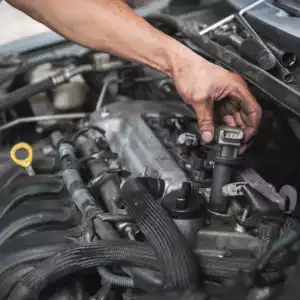
- Locate the ignition coil. In most cases there’s a coil for each cylinder, found above the engine.
- Start the engine. Let it idle so you can monitor its RPMs.
- Disconnect one coil at a time. With the engine running, disconnect an individual coil and watch the RPMs. Ignition systems carry high voltage, so use insulated tools, avoid touching connectors with bare hands, and take extra care around moving engine parts.
- Read the result.
- RPMs drop: This coil is working at full capacity. Reconnect it and move to the next one.
- No change in RPMs: This coil has no effect on the engine and is the one that needs replacement.
- Repeat for each coil until you identify the faulty one.
This method should only be performed by someone with the necessary auto-repair knowledge. If you aren’t comfortable doing a diagnostic test yourself, and your vehicle still runs, take it to a nearby repair shop and have a professional handle it.
Check out these tutorial videos in case you need to replace your ignition coil:
How Do You Fix a Bad Ignition Coil?
- If a single coil (COP or coil pack) has failed,replace the individual coil.
- If an older single-coil system has failed, replace the coil that feeds the distributor.
- If the engine cranks but won’t start in a single-coil vehicle, a failed lone coil is a likely culprit and typically requires replacement to restore spark.
- Choose a replacement coil that matches your vehicle’s specifications so it fits and functions correctly.

How Do You Confirm the Fix?
After replacing the coil, verify the repair by rechecking for the original symptoms. The engine should run without the previous misfire or shaking, and once the underlying fault is resolved the check engine light should turn off, either on its own after several drive cycles or after the diagnostic trouble codes are cleared with a scan tool.
Jeep Wrangler Ignition Coil Replacement
The diagnosis and repair steps above apply to a Jeep Wrangler ignition coil replacement as well. Many modern Jeep Wranglers, like most current vehicles, use a coil-on-plug setup with one coil per cylinder, so a single failed coil can usually be diagnosed with the power balance test and replaced individually rather than as a full set.
Before buying, confirm the coil type and the correct part for your specific Wrangler year and engine so that the replacement fits and functions correctly.
How Much Does an Ignition Coil Replacement Cost?
The cost of a new ignition coil largely depends on your vehicle’s specifications. Some coils cost as little as $40, while others run $300 or more. You’ll also pay labor fees on top of the part cost if a shop does the work.
FAQs
It’s a transformer that converts your battery’s low voltage into the tens of thousands of volts needed to fire the spark plugs. It relies on electromagnetic induction using primary and secondary windings.
Watch for an engine misfire, an illuminated check engine light, a no-start condition, stalling, or reduced fuel economy. To confirm, perform a power balance test: with the engine running, disconnect each coil in turn, and the one that causes no change in RPMs is the faulty coil.
It isn’t recommended. A faulty coil can damage the catalytic converter, the PCM, and even the engine, so it should be replaced right away to avoid more expensive repairs.
Yes. Because coils help ignite the air-fuel mixture, a faulty coil commonly causes a misfire, felt as hesitation or shaking that often worsens under acceleration.
Often, yes. The PCM detects the resulting misfire, and sometimes a fault in the coil’s circuit, and turns on the check engine light.
In older vehicles with a single coil, yes, because none of the cylinders receive spark if the coil fails. In modern engines with one coil per cylinder, a single failed coil usually causes a misfire rather than a full no-start.
A coil-on-plug (COP) system uses one coil per cylinder, mounted directly on each spark plug. A coil pack combines several coils in one molded block, where each cylinder has its own ignition tower but shares a coil with a companion cylinder.
Yes. A misfiring engine that runs poorly typically burns fuel less efficiently, lowering fuel economy.
A quick check is the power balance test described above, but several test methods exist. Testing should be done by someone with the proper auto-repair knowledge.
The same diagnosis and replacement principles apply, and most modern Wranglers use one coil per cylinder that can be replaced individually. See the Jeep Wrangler ignition coil replacement section above, and always confirm the correct part for your Jeep’s specific year and engine.
When Should You Get Professional Help?
Have a professional inspect and repair the vehicle if you aren’t comfortable performing a diagnostic test, if the engine won’t start, or if the misfire persists after replacing a coil. Because a faulty coil can damage the catalytic converter, PCM, and engine, prompt attention helps prevent more costly repairs. When buying a replacement, choose a coil that matches your vehicle’s specifications so that it fits and works correctly.
Where To Get a Dependable Ignition Coil for Your Vehicle
A bad ignition coil will cause serious problems for your ride’s engine, such as misfires and stalling. If left unattended, the malfunctioning part can also affect other engine parts that cost more to repair or replace. Fortunately, we make it easy to get a replacement ignition coil.
Here at CarParts.com, it’s our mission to help you quickly get your vehicle back on the road where it belongs. Order now and get your new ignition coil in as fast as two business days. We provide accurate and detailed information on a part’s fitment to guarantee it will fit your vehicle perfectly. And if for some reason you aren’t fully satisfied with your order, we accept returns within 60 days of purchase with money-back guarantee.
Don’t wait for an old or damaged ignition coil to give up the ghost. Check out our extensive selection of dependable ignition coils and shop now at CarParts.com.
Products Mentioned in this Guide
 Ignition Coil
 Spark Plug
Keep Reading: Related Posts


Any information provided on this Website is for informational purposes only and is not intended to replace consultation with a professional mechanic. The accuracy and timeliness of the information may change from the time of publication.