Yes, you can replace a car mirror cover on its own as long as the rest of the side mirror assembly still works. The cover is the painted outer shell that clips onto the main mirror housing. It protects the internal wiring and components from moisture and road debris, but it carries no motors or mirror glass itself. If your vehicle’s mirror cover is cracked or scuffed but the mirror still adjusts, heats, and signals correctly, swapping just the cover is a legitimate fix. If any function fails, diagnose the problem before ordering parts. Depending on the vehicle and the failed component, you may need a component-level repair or a full side mirror assembly replacement.
Key Takeaways
- The cover is primarily cosmetic and protective. It’s the outer shell that shields the assembly, not a structural part of the mirror mechanism.
- Test before you buy. Confirm every mirror function works before ordering a cover-only part.
- Replacement covers often come unpainted. Most arrive in black plastic and need paint to match your vehicle.
- Not every model sells the cover separately. Some manufacturers only offer the full housing.
- Cover work can cost nearly as much as a full swap once you factor in paint, tools, and time.
How To Check the Side Mirror Assembly First
Before you order anything, make sure the assembly itself is sound. You don’t want to pay for a cover only to find that a motor or wiring harness inside is broken.
Grip the mirror with both hands and gently rock the whole assembly in every direction. Then test the glass on its own. For power mirrors, use the controls next to the driver’s seat to move the glass through its full range. For manual mirrors, use the control lever to do the same. If everything responds the way it should, the assembly is fine and the cover is all you need to replace. If the glass itself is the problem, replacing the mirror glass is its own separate fix.
Run through the rest of the functions too. Confirm that the heating element clears the glass, check that any turn signal lights in the housing work, and look for loose or damaged mounting points. If adjustment, heating, lighting, and mounting all check out and only the shell is damaged, this points to a cover replacement. If a function doesn’t work, diagnose that problem before choosing a replacement. Some components can be serviced separately, while others may require a complete mirror assembly. Our guide on common power mirror malfunctions can help you isolate what’s actually failing.
Replacing Just the Cover
Swapping the cover looks like the obvious budget choice, and sometimes it is. The catch is that it’s more involved than it sounds.

Pro Tips are nuggets of information direct from ASE-certified automobile technicians working with CarParts.com, which may include unique, personal insights based on their years of experience working in the automotive industry. These can help you make more informed decisions about your car.
Pro Tip: Identify your exact vehicle (year/make/model/trim) and check part diagrams online or at a parts store to confirm the shell is sold separately. For complex mirrors with cameras, blind-spot monitors, and other electronics, be extra careful with connectors.
Mirror shells, covers, caps, and housings are available separately for many popular applications, but availability still depends on the exact year, model, trim, and mirror configuration. Examples include:
- Toyota: Covers or caps are available separately for many models, including the Prius, RAV4, Camry, Highlander, Tacoma, and 4Runner.
- Honda: Upper or outer covers and caps are available separately for many applications, including the Civic, CR-V, Accord, and Fit.
- GM/Chevrolet/GMC: Mirror caps and covers are available for many trucks and SUVs, including Silverado, Sierra, and Equinox applications.
- Ford: Mirror caps and housings are available separately on many trucks and cars, including some F-150 applications.
- Mazda: Some applications, including the CX-5, use separately serviceable exterior mirror components.
- BMW: Mirror caps and housings, including alternative finishes, are available for many models.
- Subaru: Covers can be replaced separately on some applications, including the Ascent and Forester.
- Lexus: Individual exterior mirror pieces are available for many applications.
Many plastic replacement covers arrive unpainted, primed, textured, or in a basic black finish, depending on the application. If the part needs paint to match your vehicle’s body color, that means buying paint, gathering tools, and investing time in prep and finish work. Even then, the result may not match your vehicle’s existing paint exactly. For mirrors with complex housings, the cover can also be genuinely difficult to remove and refit without disturbing other parts.
It’s still worth checking whether an OEM cover already painted to your vehicle’s color is available for its year and model. A pre-matched cover removes the paint headache entirely. A chrome-finish cover is another route if you want that look or an easier project. When you weigh paint, tools, and the value of your time, a [RED]side view mirror cover replacement[/RED] can cost almost as much as a full assembly, so price both before committing. Aftermarket makers like A-Premium offer cover options in several finishes.
What a Mirror Cover Actually Does
A mirror cover car shell handles three jobs: it shields the internal mechanisms from weather and road debris, it gives the mirror a finished appearance, and it helps direct airflow around the assembly. The cover itself is usually a lightweight plastic shell and typically doesn’t contain the adjustment motors or mirror glass, although some mirror designs incorporate or surround lighting, cameras, or sensor-related components. That’s why the cover can often be removed and replaced on its own when the part is sold separately.
A Full Mirror Assembly Replacement
A full mirror assembly typically includes the housing, glass, mounting bracket, and the adjustment components appropriate for the vehicle. Depending on the application, it can also include heating elements, turn signal lights and wiring, mounting hardware, cameras, blind-spot equipment, and internal wiring harnesses. Always match the replacement assembly’s features to the original mirror.
Replacing the whole unit is often easier than a cover swap because you don’t have to take the mirror apart, and there are more online tutorials walking through a full side mirror replacement.
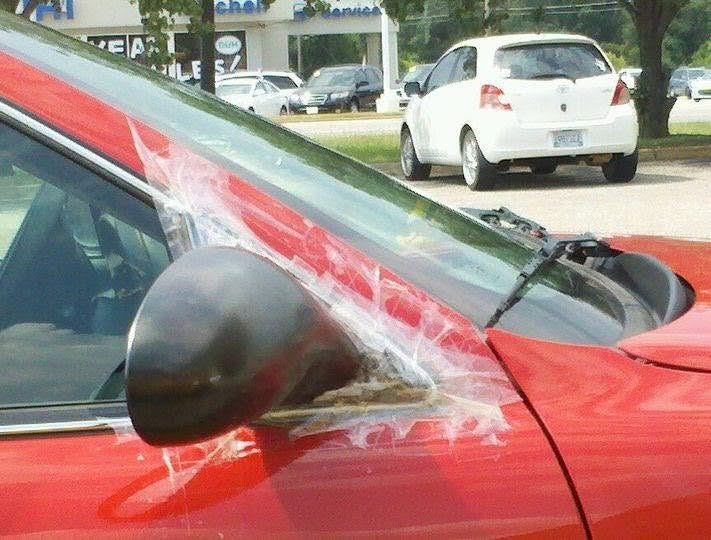
Choose a full replacement when damage reaches past the shell. A mirror that won’t adjust or moves intermittently can have a failed internal motor, but the mirror switch, fuse, wiring, or electrical connectors can also cause adjustment problems.
Cracked or broken structural housing, severely damaged mounting points, or damage to several components at once often makes a complete assembly the practical choice. Turn signal or heating failures do not automatically require a complete mirror on every vehicle because some designs allow those components to be serviced separately. High-speed impacts and vandalism that wreck multiple parts fall here too. When you’re shopping for a replacement, it helps to know which side mirror brands deliver reliable fit without a dealership markup.
The Simple Rule
If every function works and only the cover is damaged, replace the cover. If a mirror function fails, diagnose the fault and check which components are separately serviceable on your exact vehicle before deciding to replace the whole assembly. Test movement in all directions, verify defrost operation, confirm the signal lights, and check mounting stability. Surface-only damage generally points to the cover, while visible damage to the mechanisms, wiring, structural housing, or mounting points can make an assembly replacement necessary.
A Quick Safety Note
A mirror that’s loose at the base, won’t hold its adjustment, or has a cracked housing can shift while you drive and cut your rear visibility. If the assembly rocks excessively or the glass won’t stay put, have it inspected and repaired before relying on it in traffic. A clear, stable mirror isn’t optional equipment.

FAQ
Often, yes. Many owners report removing the old cover and clipping on a new one with help from a short video. Difficulty depends on your vehicle, since some housings come apart easily, while others resist a clean removal.
Test every mirror function systematically. If adjustment, heating, lighting, and mounting all work and only the cover is damaged, you’ll need a cover. If another function is faulty, identify the failed component and determine whether it can be replaced separately on your vehicle. A complete assembly is necessary when the damaged component isn’t separately serviceable or when several parts of the mirror are damaged.
Sometimes. Many aftermarket and OEM covers ship in black plastic and need paint to match your vehicle’s body color, but pre-matched OEM covers exist for some models. Searching your exact year and model is the only way to know.
Not always. Once you add paint, tools, and your time, a cover job can approach the cost of a full assembly. Price both before deciding.
There’s no guarantee. Painted plastic can come close, but matching aged factory paint precisely is difficult. A pre-matched OEM cover gives you the best shot at a seamless finish.A damaged mirror cover doesn’t have to mean replacing the whole mirror, and knowing the difference can save you real money. Test your mirror’s functions first, then decide between a cover swap and a full assembly based on what’s actually broken. You can find both mirror covers and complete mirror assemblies for your vehicle’s exact year and model here at CarParts.com.
Keep Reading: Related Posts





Any information provided on this Website is for informational purposes only and is not intended to replace consultation with a professional mechanic. The accuracy and timeliness of the information may change from the time of publication.