A failing door lock cylinder is easy to ignore until the key stops turning on a cold morning in a parking lot. The cylinder is the tumbler mechanism built into the exterior door handle where the key goes. When it wears out, the fix is usually a direct swap, not a full door hardware replacement. The job often takes 30 to 60 minutes per door with basic hand tools. However, that estimate does not apply to every vehicle. Some lock cylinders can be removed in minutes, while others require much more door disassembly and can take one to two hours or longer.
When Changing a Car Door Lock Cylinder Is the Right Move
The cylinder wears out gradually and usually gives some warning before it quits entirely. Replace the door lock cylinder when the key requires extra jiggling or force to turn, when the key goes in but won’t rotate, when it gets stuck and has to be worked free, or when the keyway feels noticeably loose compared to how it used to feel. A visibly damaged cylinder after a break-in attempt is another clear signal.
Don’t assume a stiff cylinder means it needs replacement. A worn-down key can make a healthy cylinder feel gummy. Try a spare key first, and if the spare turns cleanly, just cut a new primary key.
A light application of dry graphite or PTFE lock spray in the keyway can also revive a slightly sticky cylinder. Avoid WD-40 inside the keyway. It works short-term but attracts dust and gums up the mechanism over time.
If the cylinder spins freely without engaging the latch, the problem’s likely in the linkage rods or the door latch assembly, not the cylinder itself. Pull the door panel and check the rod connections before ordering parts.
The Key Matching Problem Every Buyer Needs to Know About
This is where most people get tripped up. Automotive door lock cylinders are cut to match a specific key code. The replacement cylinder needs to match the key already in use, or the vehicle will end up with two different keys, one for the door and one for the ignition.
Most aftermarket cylinders ship with their own keys, which won’t match the existing ignition lock cylinder key. That’s fine for some owners, but inconvenient for most. The cleaner solution is to order a cylinder matched to the vehicle’s VIN, which a dealer can supply, or to have a locksmith rekey the new cylinder to match the existing key after installation.
If replacing both door cylinders, the trunk lock cylinder, and the ignition tumbler, order a matched set. Several suppliers sell lock cylinder sets for specific year, make, and model applications with a single matching key included.
Tools Needed for the Job
- Plastic trim removal tools (essential for prying panel clips without cracking plastic)
- Phillips and flathead screwdrivers
- Socket set and ratchet
- Needle-nose pliers (for C-clips and retaining clips)
- Trim clip removal tool or a wide flathead wrapped in tape
- Flashlight or work light
Some vehicles also require a Torx driver for interior panel fasteners. Look up the specific fastener types for the year and model before starting.
How Difficult Is It to Change a Car Door Lock Cylinder?
The exact process depends heavily on the vehicle’s door design. Some manufacturers make the lock cylinder accessible from the edge of the door, while others place the retaining hardware, linkage, or lock module behind several layers of door hardware.
Relatively Easy Examples
Some late-model Ford trucks, such as the Ford F-150 truck and Ford Ranger
The Setup: Ford uses a technician-friendly design on some modern truck platforms.
The Process: You open the door, remove a small access plug from the door jamb in line with the exterior handle, and use the appropriate Torx driver, often a T27 or T30 depending on the application, to loosen a captive screw. You don’t have to back the screw all the way out. Once the retaining mechanism is released, the lock cylinder assembly can be pulled from the exterior handle.
Time: In a straightforward application, removal can take less than five minutes once the access point is located
Some European and Asian vehicles, including certain VW, BMW, and Toyota applications
The Setup: Similar designs can use a set screw or sliding locking collar that’s accessible from the side edge of the door shell.
The Process: Loosen the hidden retaining screw through the door edge. Depending on the application, inserting the key and turning it slightly can help position the cylinder while you pull the cylinder housing out of its pocket.
Time: About 5 to 10 minutes in simpler applications.
More Involved Examples
Other vehicles require substantially more disassembly before the cylinder, linkage, or related lock hardware can be serviced.
Volkswagen/Audi modular doors, including some Volkswagen Golf and Volkswagen Jetta applications
The Setup: While the exterior lock cylinder housing can be relatively easy to release on some models, servicing the inner lock housing, lock module, or linkage can be a much larger job. The exact procedure varies by generation and door design.
The Process: Depending on the platform, deeper service can require removing the interior trim and additional door structure, supporting or detaching the window glass, or moving components that block access to the lock and linkage. If the door lock actuator or internal linkage clips are seized or broken, additional disassembly and repair can be necessary.
Time: A deeper door-lock or linkage repair can take about 1.5 to 2.5 hours.
Certain late-1990s to mid-2000s GM trucks and SUVs, such as Chevrolet Silverado 1500 trucks and the Chevrolet Tahoe
The Setup: Some GM applications place the lock cylinder and its spring-steel retaining hardware deep inside the door shell, where access requires removal of other door components.
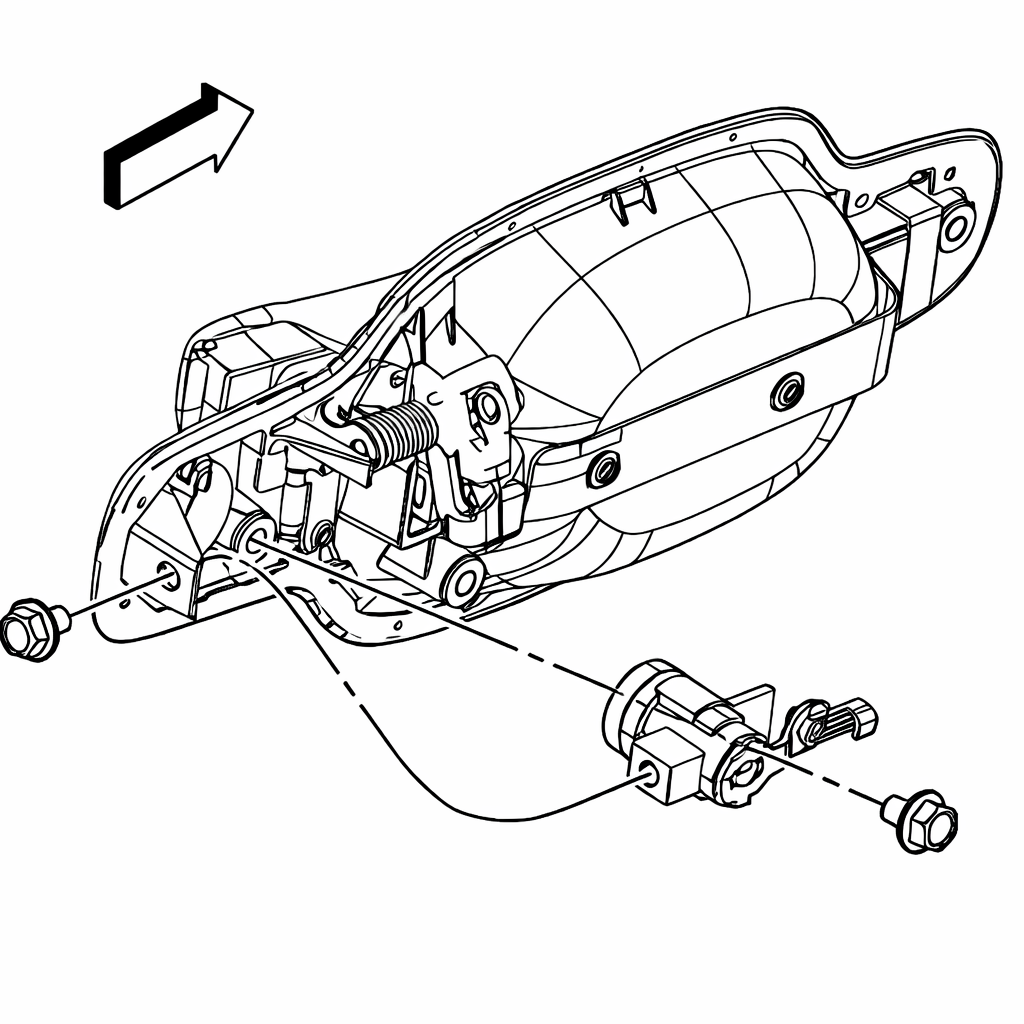
Removal procedure:
- Remove the front door trim panel.
- Remove the front door water deflector.
- Remove the front outside door handle.[/RED]
The Process: After removing the inner door panel and peeling back the water deflector, you may have to work through a cramped opening inside the door shell. A pick or hook tool can help remove a stiff retaining clip. The cylinder can also be connected to the lock mechanism through a control rod and plastic retaining clip. Aging plastic clips can break during disassembly, so work carefully.[/RED]
Time: Depending on access and the condition of the hardware, about 45 to 90 minutes.
Classic sports cars and vehicles with flush handles, such as the C4 Corvette
The Setup: Tight exterior styling and compact door packaging can make access to the cylinder, retaining hardware, linkage, and anti-theft switch connections more difficult.
The Process: On a C4 Corvette, the lock cylinder sits in a tight area near window hardware and inner reinforcement. Accessing retaining hardware and electrical connections can require working partly by feel or using an inspection mirror. During reassembly, make sure the retaining hardware and linkage are fully seated so nearby door and window components operate without interference.
Time: About 1 to 2 hours.
How to Change a Car Door Lock Cylinder: Step-by-Step
These steps cover the general procedure for most front door applications. Exact clip locations, panel fasteners, and retention methods vary by vehicle, so pull a model-specific guide or factory service manual before starting. Vehicles with power door locks may have additional electrical connectors and actuator hardware to deal with inside the door cavity.
1. Park on a flat surface and engage the parking brake. If the vehicle has power locks, disconnect the battery before working inside the door.
2. Remove the interior door panel. Pop out any screw covers, remove screws behind the door pull and armrest, then use a plastic trim tool to release the clips along the bottom and sides. Lift the panel upward to clear the window sill. On some vehicles the exterior door handle must be unbolted from inside the door before the panel fully clears.
3. Disconnect any wiring harness connectors for power locks or windows before setting the panel aside.
4. Peel back the plastic moisture barrier. It’s usually adhesive-held, so work carefully to keep it intact for reinstallation.
5. Reach into the door cavity and locate the lock cylinder at the exterior handle. It’s typically held by a C-clip or a small retaining bracket.
6. Remove the retaining clip with needle-nose pliers, or the retaining screw if the application uses one. Drop the hardware into a small container so it doesn’t fall into the door.
7. Disconnect the lock rod from the back of the cylinder. This is the linkage bar connecting the cylinder to the door latch. It usually snaps into a clip on the cylinder’s cam.
8. Insert the key and turn it slightly to align the cam, then slide the old cylinder out from the exterior side of the door.
9. Compare the old and new cylinders. Confirm the length, cam style, and linkage connection point all match before proceeding.
10. If the new cylinder needs rekeying to match the ignition key, take it to a locksmith now, before finishing installation.
11. Insert the new cylinder from the exterior, align the cam with the housing slot, and seat it fully.
12. Reconnect the lock rod, reinstall the retaining clip or screw, and test the key with the door open. Confirm the latch engages and releases cleanly.
13. Reseal the moisture barrier, reconnect electrical connectors, and reinstall the door panel. Press firmly along the edges to seat all clips.
14. Reconnect the battery if it was disconnected, then test the lock with the door closed.
Tip: Photograph the rod routing and clip positions before disconnecting anything. Reassembly goes much faster with a reference.
Warning: Don’t force a cylinder that isn’t seating cleanly. A misaligned cam will bind in the housing and the key won’t turn after installation.
Cylinder Types Worth Knowing Before You Buy
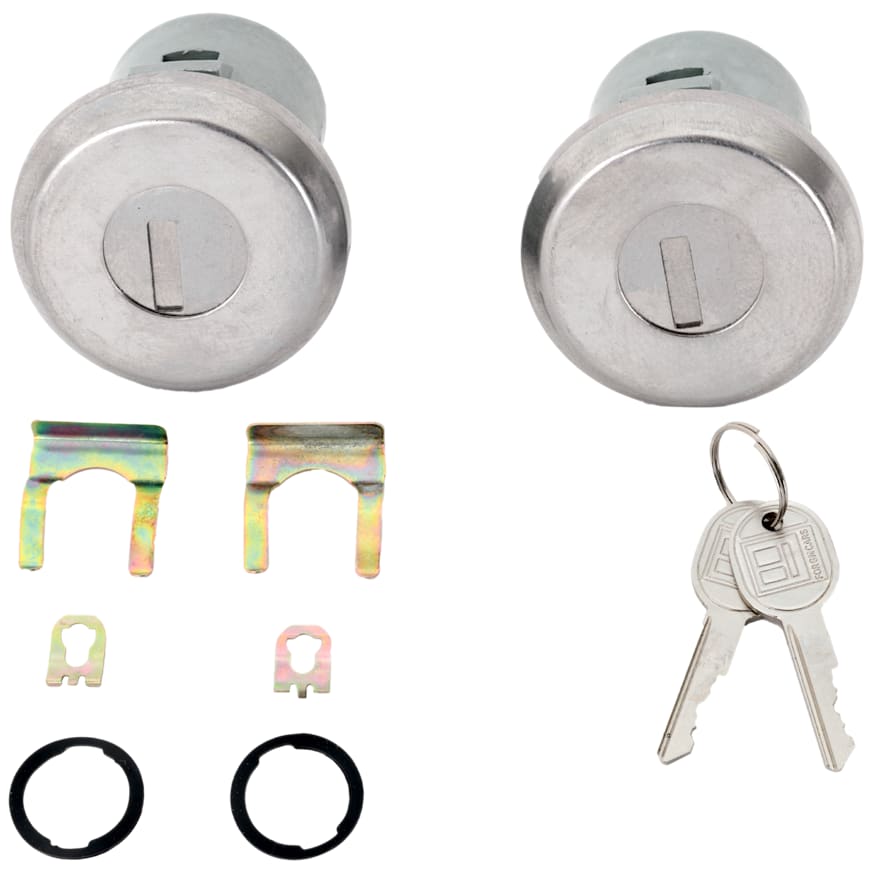
Most passenger vehicles use a key-in-door cylinder integrated into the exterior door handle. The cylinder sits inside the handle housing and connects to the latch via a linkage rod. Some older trucks and body-on-frame SUVs mount the cylinder in a standalone bezel on the door skin rather than inside the handle itself. The removal steps differ slightly between the two, so confirming which setup the vehicle has before starting saves time.
Certain vehicles, particularly older domestics and some imports, use a separate lock rod clip and cam assembly that must be transferred from the old cylinder to the new one. Always inspect what comes off the original before discarding it. If you’re also dealing with a door handle replacement at the same time, it makes sense to tackle both jobs during the same door panel removal.
Avoid anything marketed as a universal replacement without confirming exact dimensions and keyway compatibility. These products rarely fit as described. They also tend to use softer alloys that fail faster than the hardware they replace.
Fitment Checks to Run Before Ordering
Most cylinder returns come down to a fitment mismatch that a two-minute check would have caught. Confirm the lock brand and model number, usually printed on the lock body or faceplate. Verify whether the lock uses a proprietary cylinder or a standard keyway. Check whether the cam is fixed or adjustable, since some housings only take one type. If replacing the cylinder on both the driver and passenger doors, confirm whether keyed-alike options exist for that part number.
Tip: No brand marking and an unusual keyway means taking the cylinder to a locksmith before ordering. Guessing wrong on a proprietary format costs more than a professional consultation would have.
Shopping for the Right Part and Things to Watch Out For
Aftermarket door lock cylinders from reputable suppliers typically run $15 to $60 per door. OEM parts from a dealer cost more but guarantee exact fitment and hardware compatibility. For vehicles where key matching matters, spending a bit more on a dealer-sourced or VIN-matched cylinder saves the hassle of a locksmith visit afterward.
When shopping online, skip any listing that doesn’t specify vehicle compatibility in the product details. A cylinder listed only by generic description rather than year, make, and model is a likely fitment problem. Also, check whether the listing includes the retaining hardware. Some budget cylinders ship without clips. If the vehicle also has issues with its door lock actuator, that’s a separate part worth inspecting before assuming the cylinder is the only problem.
CarParts.com carries door lock cylinders organized by year, make, and model, which takes the guesswork out of compatibility. Ordering the correct part the first time is the real time saver on this job.
Keep Reading: Related Posts





Any information provided on this Website is for informational purposes only and is not intended to replace consultation with a professional mechanic. The accuracy and timeliness of the information may change from the time of publication.