If your convertible’s rear glass has separated from the soft top, you can usually fix it by cleaning both bonding surfaces, applying a flexible adhesive made for vinyl and fabric tops, and clamping the glass firmly in place while it cures. This works well when the window itself is intact and only the seam between the glass and the top fabric has failed. If the top material around the window is torn, brittle, or pulling apart in multiple spots, a reglue is a short-term fix and replacing the top is the more durable answer.
The repair itself is straightforward, but it’s fussy. Success depends almost entirely on surface prep, the right adhesive, and even clamping pressure while it dries. Rush any of these and the seam will fail again on the first hot day.
Key Takeaways
- Clean first. Strip old adhesive and contaminants from the glass edge and the top fabric before anything else. A weak bond almost always traces back to skipped prep.
- Use flexible adhesive. Silicone sealant or a urethane window-weld product handles heat cycling and flexing. Rigid glues like cyanoacrylate fail fast.
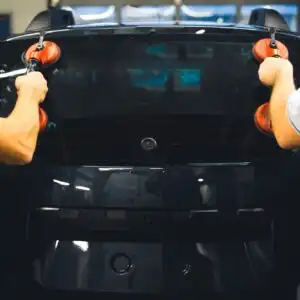
- Clamp evenly. Suction-cup clamps designed for convertible windows keep steady pressure across the whole seam while it cures.
- Know when to replace. Torn or degraded top fabric means a new top is the lasting fix, not another reglue.
- Mind the cure time. Most adhesives need a full day or more before the top is folded or your convertible is driven.
Why Convertible Rear Windows Separate
The convertible rear window on a soft top is bonded to the fabric or vinyl with an adhesive seam. Over time, sun exposure, repeated folding of the top, and temperature swings break this bond down. Heat is the usual culprit. The glass and the fabric expand and contract at different rates, and the seam between them takes the stress every cycle.
Aftermarket and lower-quality tops tend to fail sooner than original equipment. If the glass dropped out completely and landed in the trunk well or on the package shelf, the adhesive simply gave up. The good news is that a clean separation, where the glass is undamaged and the fabric edge is still solid, is the easiest version to repair.
Glued-In Glass vs. Zip-Out Windows
Two main designs exist. Older and some economy tops use a glass panel bonded directly into the fabric. Many soft tops, especially on roadsters, use a flexible plastic rear window that zips out. The zip-out style rarely needs gluing. The fix here focuses on the bonded-glass design, where the panel has separated from the surrounding top material.
What You’ll Need
Gather everything before you start so the glass isn’t sitting loose while you hunt for supplies.
- Adhesive: A flexible, weatherproof option such as clear silicone sealant or an automotive urethane window-weld product with primer.
- Clamps: Suction-cup convertible window clamps. These press the glass to the fabric without marring either surface.
- Cleaning supplies: Isopropyl alcohol, clean rags, and a plastic scraper or razor for old adhesive.
- Masking tape: To align the glass and hold it while you position the clamps.
- Optional backing support: A thin board or rigid panel behind the fabric can give the clamps something to press against and keep the seam flat.
How To Reglue the Rear Window
This is the core of any convertible back window repair, so take your time on each step.
- Clean both surfaces. Scrape off all old adhesive from the glass edge and the top fabric. Wipe both with isopropyl alcohol and let them dry fully. Any residue, oil, or moisture weakens the new bond.
- Dry-fit the glass. Set the glass into its opening without adhesive. Mark the correct position with masking tape so you can drop it straight back in once the adhesive is on. Glass that sits even slightly off looks wrong and seals poorly.
- Apply the adhesive. Lay a continuous bead along the bonding surface. Keep it even and avoid gaps. A moderate bead works for silicone. For urethane, follow the product’s primer-and-bead sequence.
- Seat and align the glass. Press the glass into place using your tape marks as a guide. Smooth out any squeeze-out and confirm the panel sits flush all the way around.
- Clamp and support. Position the suction-cup clamps around the seam for even pressure. If the fabric flexes, place a backing board behind it so the clamps have something firm to work against. Press the glass into firm contact with the fabric and leave it.
- Let it cure. Give the adhesive its full cure time, often 24 hours or more, before removing clamps. Don’t fold the top or drive until it’s fully set.
When you’re fixing a convertible rear window this way, patience during the cure is what separates a lasting repair from a do-over.

When To Replace the Top Instead
Regluing makes sense when the glass and fabric are both in good shape. It’s the wrong call when the top itself is failing. Look for these signs:
- The fabric around the window is torn, cracked, or pulling apart in more than one place.
- The vinyl has gone brittle and stiff with age.
- A previous reglue already failed.
- The seam is separating along a long stretch rather than one clean edge.
In these cases, a new convertible top is the more sensible spend. A reglue on worn fabric tends to hold for a season at most before the next section lets go. Weigh the cost of repeated repairs against a single top replacement. It’s also worth checking the convertible top weatherstrip while you’re at it, since a hardened seal often ages alongside the fabric and lets water in even after a good repair.
Shops and upholstery specialists can quote both options. Interior and trim shops often price the work more competitively than general mechanics, and getting more than one estimate is worth the effort.
A Brief Safety Note
A loose or detached rear window isn’t a mechanical hazard the way brakes or steering are, but a panel that’s fully separated can shift while driving and block rear visibility or rattle free. Until it’s repaired, avoid highway speeds with the top up and the glass loose. If you notice that the surrounding top hardware, latches, or convertible top motor is straining or the frame is bent, have it inspected so the new bond isn’t fighting a misaligned frame.
Frequently Asked Questions
A flexible, weatherproof adhesive works best. Clear silicone sealant and automotive urethane window-weld products both handle heat and flexing. Avoid rigid super-glue-type adhesives, which crack and release once the top moves or heats up.
Most flexible adhesives need at least 24 hours, and some need longer. Leave the clamps on for the full cure time and don’t fold the top or drive until it’s set. Cooler or humid conditions can extend the wait.
If the glass is intact and the fabric is solid, fixing convertible rear window separation at home is realistic with clamps, adhesive, and a free weekend. If the fabric is torn or degrading, a shop replacing the top is the better value.
Prices vary widely by region and top type. Quotes for replacing just the rear window curtain can run into the hundreds, and a full top can cost more. Call upholstery shops and compare a few estimates to find a fair price.
Heat cycling, sun exposure, and repeated folding break down the original adhesive seam. Aftermarket tops tend to fail sooner than factory ones. A clean drop-out usually means the bond aged out rather than anything being structurally wrong with the glass. Keeping the fabric conditioned helps, so it’s worth learning how to clean a convertible top properly to slow that breakdown.
Get Your Convertible Road-Ready Again
A separated rear window is one of the more fixable convertible problems when you’ve got the right adhesive and the patience to let it cure. If the top fabric is past saving or you’d rather start with quality parts, CarParts.com carries convertible top components and supplies to get the job done right. While you’re tackling the top, it’s a good time to look at the right interior cover to protect the cabin when the top is down, and if your roof gives out entirely, here’s a look at pillarless roof designs worth knowing. Shop our selection and bring your soft top back to its best.
Keep Reading: Related Posts



Any information provided on this Website is for informational purposes only and is not intended to replace consultation with a professional mechanic. The accuracy and timeliness of the information may change from the time of publication.