White lithium grease is the go-to product for car door hinges. Apply it directly to the hinge pin and knuckles, wipe away the excess, and you’re done. It takes about ten minutes per door and can silence squeaks, smooth out stiff swings, and add years to your hinges’ service life.

Pro Tips are nuggets of information direct from ASE-certified automobile technicians working with CarParts.com, which may include unique, personal insights based on their years of experience working in the automotive industry. These can help you make more informed decisions about your car.
Pro Tip: That doesn’t mean white lithium grease is the best choice for every car door hinge, though. White lithium grease is a petroleum-based lubricant specifically designed to be water-resistant and provide a heavy-duty barrier against moisture. However, it does have a few drawbacks for car door hinges: it’s a thick grease that stays on the surface, meaning it doesn't always penetrate deep into the hinge pins where the friction actually occurs. It also tends to attract dust and grit over time, which can turn into an abrasive paste. We’ll talk about some other alternatives a bit later.
Key Takeaways
- White lithium grease is the most widely recommended car door hinge lubricant, though silicone spray is a solid alternative for lighter-duty use, and dry PTFE lubricant works well too.
- You don’t need to remove the door or the hinges to get the job done.
- Open the door fully and work the lubricant into every pivot point and knuckle on the hinge.
- Wipe up any drips before they stain your paint or weatherstripping.
- Aim to lubricate door hinges every 12 months or any time you notice squeaking or resistance.
Why Door Hinges Need Lubrication
Car door hinges are under constant mechanical stress. Every time you open and close a door, the hinge pin rotates inside the knuckle, creating friction. Over time, the factory grease dries out, rust starts to form, and that friction adds up. The result is a squeaky, stiff door that’s harder to open and puts unnecessary strain on the hinge pins and bushings.
The problem compounds faster for two-door vehicles. The doors are heavier and open wider, so the hinges take a bigger load with every cycle. Neglect them long enough and you’ll eventually deal with sagging doors, worn-out hinge pins, and alignment problems that affect how well your door seals and latches work. Lubrication is cheap insurance against all of that.

Pro Tips are nuggets of information direct from ASE-certified automobile technicians working with CarParts.com, which may include unique, personal insights based on their years of experience working in the automotive industry. These can help you make more informed decisions about your car.
Pro Tip: Pickup truck door hinges can wear out too. Even though the doors are not especially long, work trucks in particular can get much more door use than a standard passenger vehicle.
What To Use as a Car Door Hinge Lubricant
Not all lubricants are created equal, and using the wrong one can actually cause problems.
White lithium grease
This is the most recommended option for door hinges. It’s thick enough to stay in place under load, it doesn’t fling off at highway speeds, and it handles heat and moisture well. It comes in spray cans with a thin red nozzle that lets you direct the grease exactly where you need it, or in tube form if you prefer more control.
Silicone spray
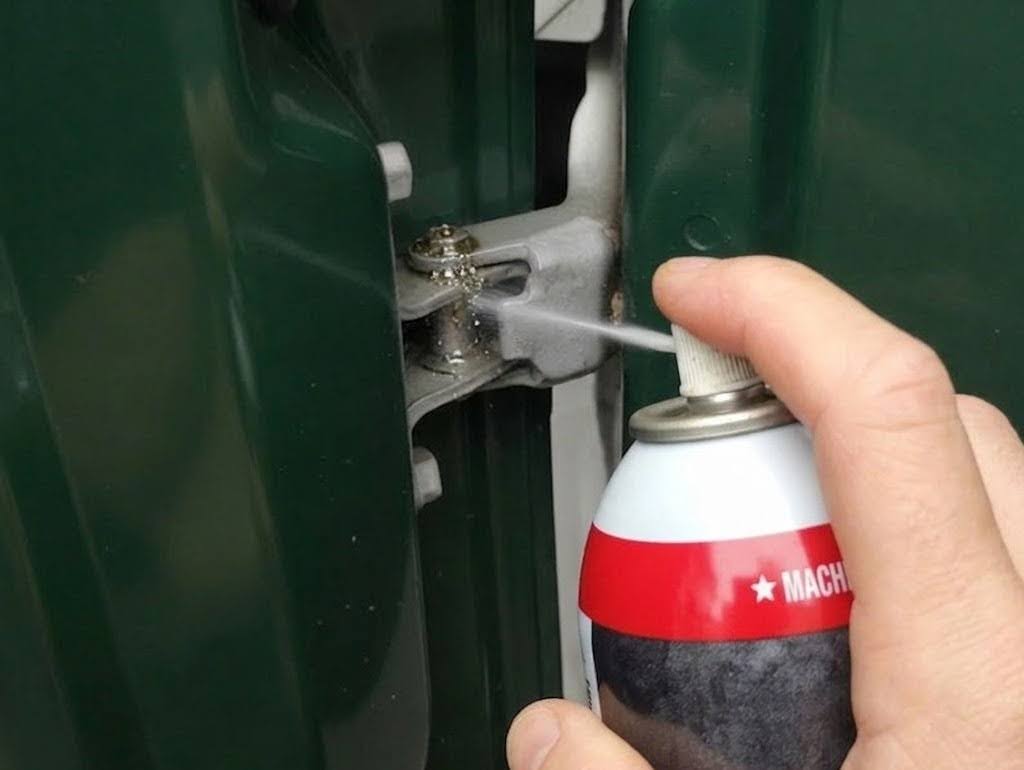
Silicone spray is a good choice if you want something cleaner. It doesn’t attract dirt the way grease does, and it’s safe to use near rubber weatherstripping and plastic trim. It’s slightly less durable than white lithium for heavy hinges, but it works well and is easy to apply.
WD-40 (with a caveat)
Standard WD-40 is a water displacer, not a true lubricant. It’ll silence a squeak temporarily, but it evaporates quickly and can actually wash away existing grease, leaving your hinges drier than before. If you’re in a pinch, WD-40 Multi-Use is fine as a short-term fix, but follow up with white lithium grease. WD-40’s dedicated White Lithium Grease spray, however, is a legitimate option.
What to avoid
Don’t use heavy axle grease or chassis grease on door hinges. It’s overkill, hard to apply cleanly, and will absolutely end up on your paint, clothes, or the door frame’s rubber seal. Motor oil

How to Lubricate Car Door Hinges
You’ll need a can of white lithium grease spray (or silicone spray), a few shop rags or paper towels, and about ten minutes per door.
Step 1: Open the door fully
Swing the door open as far as it’ll go so both hinges are fully exposed and accessible. If your car has a door check strap, which is the mechanism that holds the door at certain angles, expose that as well.
Step 2: Clean the hinges
Wipe down the hinge with a dry rag to remove any dirt, old grease buildup, or surface rust. For heavily corroded hinges, a quick spray of a rust penetrant and a wire brush will help, though at this point you might want a shop to inspect the pins and bushings for wear.
Step 3: Apply the lubricant
Direct the nozzle at the hinge pin and the knuckles on both the door side and the body side. Spray or apply grease into every gap and moving joint. Work the door back and forth several times to help the lubricant work its way into the pivot points.
For a broader guide to car hinges and locks, it helps to understand that different parts can call for different lubricants.
Step 4: Don’t forget the door check strap
The rollers and spring mechanism on the check strap need lubrication too. A small amount of white lithium grease on the rollers keeps the door from feeling jerky as it opens and holds at its detent positions.
Step 5: Wipe up the excess
Before closing the door, wipe off any grease that’s dripped onto the hinge face, the door frame, or the weatherstripping. Lithium grease on rubber won’t immediately cause damage, but it can attract dirt and grime over time. Keep the weatherstripping clean.
Step 6: Repeat for all hinges and doors
Do every door while you’re at it, including the hood hinges and trunk lid hinges if they’re feeling stiff. A few extra minutes now prevents a call to the shop later.
How Often Should You Lubricate Door Hinges?
Once a year is a reasonable baseline for most drivers. If you live in a high-humidity area, near the coast, or somewhere with harsh winters and road salt, do it every six months. You’ll also want to lubricate any time you notice squeaking, resistance, or a door that doesn’t swing as smoothly as it used to.
The good news: car door lubrication takes almost no time and costs almost nothing. Adding it to your annual maintenance routine alongside tire rotations and fluid checks is the simplest way to keep it from slipping through the cracks.
FAQ
Can I use WD-40 on car door hinges? The original WD-40 formula isn’t a long-term lubricant. It’ll stop a squeak temporarily but won’t last. Use white lithium grease or silicone spray for a fix that actually holds. WD-40’s own White Lithium Grease spray is a different product and works fine.
Do I have to remove the door to lubricate the hinges? No. You can lubricate door hinges in place without removing anything. Open the door fully, apply grease or silicone spray directly to the hinge pin and knuckles, and work the door back and forth a few times. That’s all it takes for routine maintenance.
Why is my door still squeaking after lubrication? If the squeak persists after lubrication, the hinge pins or bushings may be worn enough that grease alone can’t compensate. Have a mechanic inspect the hinges. Worn pins can cause door sag and affect the latch, which is worth addressing before it gets worse.
Is silicone spray or white lithium grease better for car door hinges? White lithium grease is generally preferred for metal-on-metal hinge contact because it’s thicker and longer-lasting. Silicone spray is a good choice when you want a cleaner application and aren’t dealing with heavily loaded hinges. Either one is far better than nothing.
Can lubricating door hinges damage weatherstripping or paint? White lithium grease won’t immediately damage rubber or paint, but it can leave stains and attract grime if left on those surfaces. Wipe up any drips promptly and keep grease off the rubber door seals. Silicone spray is gentler on surrounding materials if you’re concerned.
How do I know if my hinges are too worn to just lubricate? Check for door sag (the door drops when you open it) or play in the hinge when you lift the door by its edge. If you can feel or see movement in the hinge pin itself, lubrication isn’t enough. That’s a hinge pin or bushing replacement job.
Squeaky, stiff door hinges are a quick fix when you catch them early, and a can of white lithium grease is all it takes to handle how to lubricate car door hinges at home in under an hour. CarParts.com carries the lubricants, shop supplies, and hinge hardware you need to get the job done right. Grab what you need and keep every door on your vehicle opening and closing like new.
Keep Reading: Related Posts





Any information provided on this Website is for informational purposes only and is not intended to replace consultation with a professional mechanic. The accuracy and timeliness of the information may change from the time of publication.