You open it by reaching the latch directly instead of pulling on the cable. Start by finding where the cable failed. If it snapped at the handle, clamp pliers or vise grips onto the exposed steel wire under the dash and give it a firm yank. If it snapped near the latch, pop the grille out and push the latch lever sideways with a long thin screwdriver or hook tool. If you can’t see the latch, lift the front onto ramps or jack stands and trip the catch from underneath. Almost every car responds to one of those three routes.
Key Takeaways
- Find the break first. Cables usually fail at the handle end, which is the easiest failure to work around.
- Pliers beat prying. Gripping the inner steel wire, not the sheath, releases the latch the same way the handle would.
- The grille is the main access point. Driver’s side, right above the latch.
- Support the car properly. Ramps or jack stands only, never a jack by itself.
- Opening the hood is step one. Plan on a cable replacement or a temporary pull wire before you close it again.
Car Hood Release Cable Broken? Find the Failure Point First
Hood cables are a two-part system: a steel inner wire inside a plastic housing. Most failures happen at the handle end, where the wire terminates in a small barrel fitting. Years of pulling fatigue the wire until it separates and the handle flops with no resistance. The next most common break is at the latch end, where the cable transitions from the cabin to the core support. A third possibility isn’t a break at all: the wire pops out of its housing, which feels like a snap but reseats easily and can be secured with zip ties.
What the Handle Tells You
A handle that travels its full distance with no tension means the wire has parted, most likely right behind the handle. A handle with normal travel and resistance that still doesn’t pop the hood usually means the cable is fine and the latch is binding. This distinction saves you from tearing a grille apart for no reason.
Safety Setup Before You Start
Park on level ground, set the parking brake, and put the transmission in Park or in neutral with the wheels chocked. Wear gloves and eye protection, since you’ll be working blind around sharp sheet metal and spring-loaded mechanisms. A bright flashlight and a helper go a long way.
Don’t pry repeatedly at plastic trim without checking how it’s fastened, since grille clips break easily. If you need to get under your car, use ramps or jack stands rated for your vehicle and confirm it’s stable first.
Step-by-Step Methods To Open the Hood
Pull the Cable Stub Under the Dash
Look under the dash near the release handle and find the remaining length of inner wire. Clamp onto the bare steel with needle-nose pliers, or better, vise grips, and pull straight and hard. Grip the wire itself, not the housing, or nothing happens. On many cars the hood pops on the first pull.
Reach the Latch Through the Grille
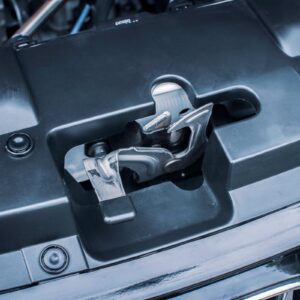
Remove the grille or the grille section nearest the latch, typically on the driver’s side. Shine a light in and locate the latch lever where the cable attaches. Push this lever toward the cable casing, which for most designs means pushing toward the driver’s fender, using a thin flat-blade screwdriver at least six inches long or a hook pick. Some latches have a primary and secondary catch, and one push releases both. For vehicles with twin latches, a crossover cable links them, so freeing one side frees the other. If a short length of cable remains, a single screw on the plastic lever can free enough wire to grab with pliers.
Work From Underneath the Car
Drive the front wheels onto ramps or support the front on jack stands, then chock the rear wheels. Remove the lower splash shield fasteners, usually 10 mm bolts or Phillips screws. Reach up with a long screwdriver, find the catch at the cable end, and push to release. If it’s stiff, have a helper press down on the hood while you push.

Go In Through the Wheel Well
Some vehicles route the cable where no one can see it, partly as theft deterrence. Pull the front wheel and peel back the fender liner, then use a 90-degree pick to hook the cable or reach the latch lever from the side. This takes the longest, but it works when the grille is solid or the latch sits too deep to reach head on.
When the Latch Is Seized, Not Broken
If the handle still has tension, the mechanism is likely stuck. Lay a rolled towel on the hood over the latch area to prevent denting, then have a helper thump downward while you pull the release. If this fails, spray penetrating oil through the grille onto the latch, let it sit overnight, and try again. A hood that doesn’t lock securely is a highway risk, so once you’re in, have the latch and safety catch inspected and replaced if they’re corroded or worn.
After the Hood Pops Open
Prop the hood safely, then clean and lubricate the latch while you have access. If the wire jumped out of its housing, reseat it and secure the routing. If it snapped, order a replacement cable for your vehicle’s exact year and model, since routing and end fittings aren’t interchangeable across trims.
As a stopgap, you can attach stiff wire to the latch lever and run it out through the grille to open the hood by hand. This leaves the latch accessible to anyone standing in front of your car, so treat it as a bridge to a proper repair, not the repair itself.
FAQs
Sometimes. On some designs the latch lever sits close enough to the grille opening that a key shank can reach and push it. It’s worth 30 seconds before you start removing trim, though a long screwdriver gives better leverage.
The cable runs from the interior handle, through a firewall grommet, along the inner fender, to the latch. Disconnect both ends, tie a string to the old cable before pulling it out, then use that string to route the new one along the same path. Most jobs run one to two hours with hand tools.
Fatigue and corrosion. The inner wire flexes every time you pull the handle, and moisture in the housing accelerates wear at the end fittings. A stiff, gritty handle is the usual warning sign.
The hood is still latched, so it isn’t going to fly open. The real risk is losing access to check oil, coolant, or the battery, so resolve this small maintenance issue before it becomes bigger.
If the cable is fully hidden and the grille doesn’t come off easily, yes. Forcing access can cost more in broken clips and bent sheet metal than the labor would.
Keep the Latch Working Like It Should
A broken cable is an inconvenience, not an emergency, and patience beats force every time. Once the hood is open, replace the cable and service the latch. Shop replacement hood cables, latches, and grille clips here at CarParts.com and finish the job properly.
Keep Reading: Related Posts





Any information provided on this Website is for informational purposes only and is not intended to replace consultation with a professional mechanic. The accuracy and timeliness of the information may change from the time of publication.