The P0451 trouble code means the vehicle’s powertrain control module (PCM) has detected abnormal readings from the evaporative emission system (EVAP) pressure sensor. Specifically, the sensor’s signal is outside the manufacturer’s expected range during system operation or testing.
Quick Answer
- Meaning/Definition: P0451 indicates an EVAP pressure (fuel tank pressure) sensor range or performance problem.
- What it affects: EVAP system monitoring and emissions control.
- How serious it is: Usually low drivability impact, but it can prevent emissions tests from passing.
- Most common causes: Faulty EVAP/fuel tank pressure sensor, wiring or connection issues.
- What to do first: Inspect EVAP pressure sensor wiring and connections, then test the sensor.
- Can you keep using it / is it safe: The vehicle is usually safe to drive, but the issue should be addressed.
What Does the P0451 Code Mean?
P0451 is defined as “Evaporative Emission Control System Pressure Sensor/Switch Range/Performance.” The code is set when the PCM detects pressure or vacuum readings from the EVAP pressure sensor that fall outside the specified range for too long.
The PCM is programmed to set this code if the EVAP pressure sensor (FTP sensor) shows predictable pressure/vacuum changes during purge and vent operations. P0451 sets when the signal is erratic, too high or too low, slow to respond, or outside the manufacturer’s expected range
The EVAP pressure sensor—also called the fuel tank pressure (FTP) sensor—measures pressure and vacuum inside the EVAP system. This data helps the PCM detect leaks and verify proper system operation during EVAP self-tests and normal driving.
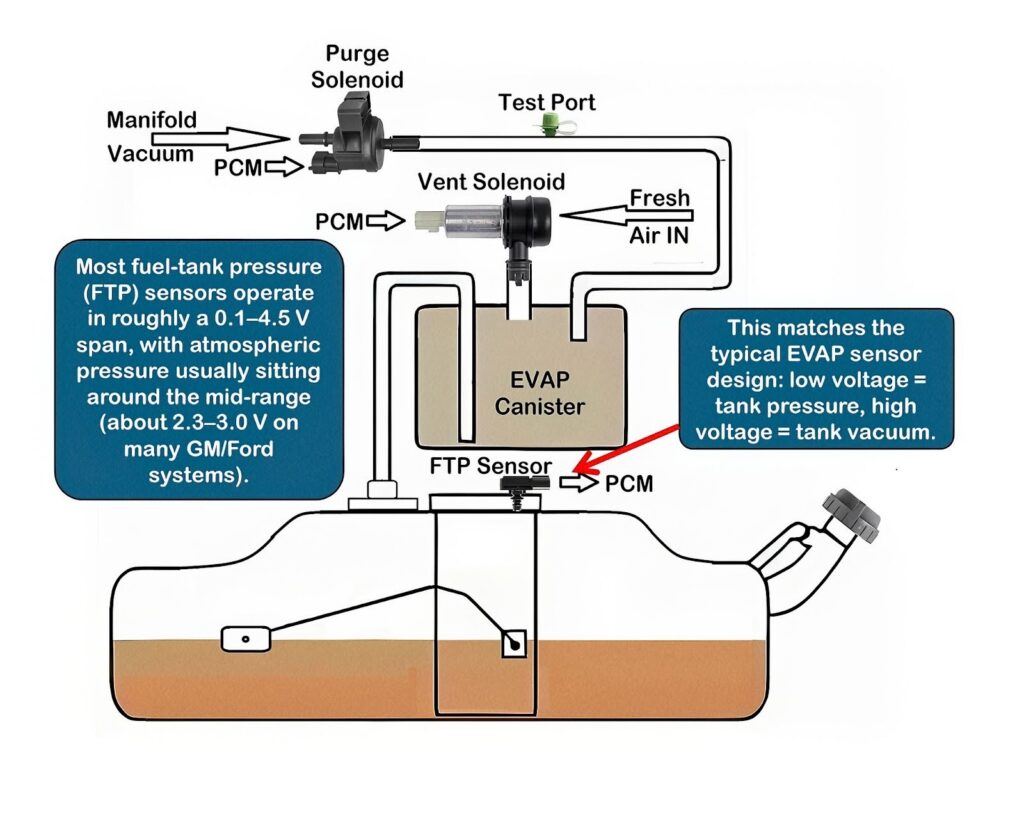
What Is the EVAP Pressure (Fuel Tank Pressure) Sensor?
The EVAP pressure sensor measures changes in pressure or vacuum within the EVAP system. It is typically located on top of or inside the fuel tank.
When the PCM commands an EVAP test, it expects pressure readings to change in a predictable way. If the readings don’t match expected values, the PCM may interpret this as a sensor performance issue and store code P0451.
Common Symptoms / What You’ll Notice
In most cases, the only noticeable symptom of a P0451 code is:
There are usually no drivability problems, performance loss, or unusual sounds associated with this code.
Common Causes of the P0451 Code
Possible causes of a P0451 code include:
- Defective EVAP pressure sensor (fuel tank pressure sensor)
- Damaged wiring or poor electrical connections in the EVAP pressure sensor circuit
- PCM malfunction or software issue (rare)
This code is generally considered straightforward, with a failing EVAP pressure sensor being the most typical cause.
How Serious Is the P0451 Code?
P0451 is usually not an urgent or immediately dangerous code. However, it can prevent the EVAP system from running properly and may cause the vehicle to fail emissions or inspection testing.
Ignoring the code for long periods may also make it harder to detect real EVAP system leaks in the future.

How to Diagnose the P0451 Code (Step-by-Step Decision Path)
- Confirm the code using a scan tool.
- Verify that P0451 is present and check for related EVAP codes.
- Visually inspect wiring and connectors.
- Look for corrosion, broken wires, or loose connections at the EVAP pressure sensor.
- Test the EVAP pressure sensor.
- Compare sensor readings to manufacturer specifications.
- Check PCM operation if needed.
- In rare cases, the PCM may require a software update or further testing.
If you’re not confident with electrical diagnosis or sensor testing, professional diagnosis is recommended.
How to Resolve the P0451 Code
Repairs depend on the confirmed cause of the problem:
- If the EVAP pressure sensor is faulty, replace it.
- If wiring or connectors are damaged, repair or replace them as needed.
- If a PCM issue is identified, further diagnosis or reprogramming may be required.
Because there is no universal fix, accurate diagnosis is essential before replacing parts.
How to Confirm the Fix
After completing repairs, clear the code using a scan tool. Drive the vehicle and allow the EVAP monitor to run to confirm the code does not return and the repair was successful.
FAQs
P0451 stands for “Evaporative Emission Control System Pressure Sensor/Switch Range/Performance.”
Not directly. P0451 points to a sensor range or performance issue, not a confirmed leak.
Usually no. Most vehicles show no drivability symptoms beyond the check engine light.
The EVAP pressure sensor is typically mounted on top of or inside the fuel tank.
Yes. Damaged wiring or poor electrical connections can cause incorrect sensor readings.
Yes. It belongs to a group of related EVAP pressure sensor codes, including P0450 through P0459.
Yes. An active check engine light or incomplete EVAP monitor can result in a failed emissions inspection.
It’s possible but rare. PCM issues are usually considered only after sensor and wiring problems are ruled out.
When to Get Professional Help
If wiring checks and basic sensor testing do not reveal the cause, or if accessing the fuel tank is required, professional service is recommended. A qualified technician can safely diagnose EVAP system faults and confirm the correct repair.
Keep Reading: Related Posts




Any information provided on this Website is for informational purposes only and is not intended to replace consultation with a professional mechanic. The accuracy and timeliness of the information may change from the time of publication.