Order the wrong set of spark plug wires and the car stays on jack stands. It sounds like a simple part, but spark plug wires carry enough fitment variables and enough commonly missed companions that a wrong or incomplete cart is surprisingly easy to build. The question to lead with isn’t “which set looks right?” It’s “what exactly needs to go in the cart to finish this job once?”
The smartest choice you can make is to buy the best wires you can afford, not necessarily wires built around marketing claims such as dual-core designs. Choose good, dependable wires. OE or reputable OE-style replacements are often the safest choice for fit and routing.
Spark plug wires connect the ignition coil or distributor to each spark plug, delivering the high-voltage pulse that fires the combustion cycle. The category sounds straightforward until the order arrives and one wire’s two inches short, the connector boot style doesn’t match, or the set covers the wrong cylinder count. Engine size, cylinder count, and ignition system type all change the correct part. That creates real order risk even on a familiar job.
The Job in One Sentence
The repair isn’t just about swapping wires. It’s about returning the full spark delivery path to factory spec so every cylinder fires cleanly.
Replacing spark plug wires restores a reliable high-voltage path so each cylinder can fire when the ignition system commands it.
A deteriorated or breached wire or boot can leak voltage before it reaches the plug. If the path of least resistance is somewhere other than the tip of the spark plug, the spark may discharge there instead, leaving insufficient spark at the plug gap and causing a misfire.

Pro Tips are nuggets of information direct from ASE-certified automobile technicians working with CarParts.com, which may include unique, personal insights based on their years of experience working in the automotive industry. These can help you make more informed decisions about your car.
Pro Tip: If the spark plug wire core is burned or damaged to the point that resistance becomes too high for sufficient spark energy to reach the plug, a misfire can result. Don’t replace the wires just for the sake of replacing them. But if you do replace them, make sure you route them through their looms properly. More about that in a minute.
That’s why the order has to account for the complete repair scope, whether that is one verified failed wire or the full set, and why what ships in the box needs to match the cylinder count and ignition system architecture of the specific engine.
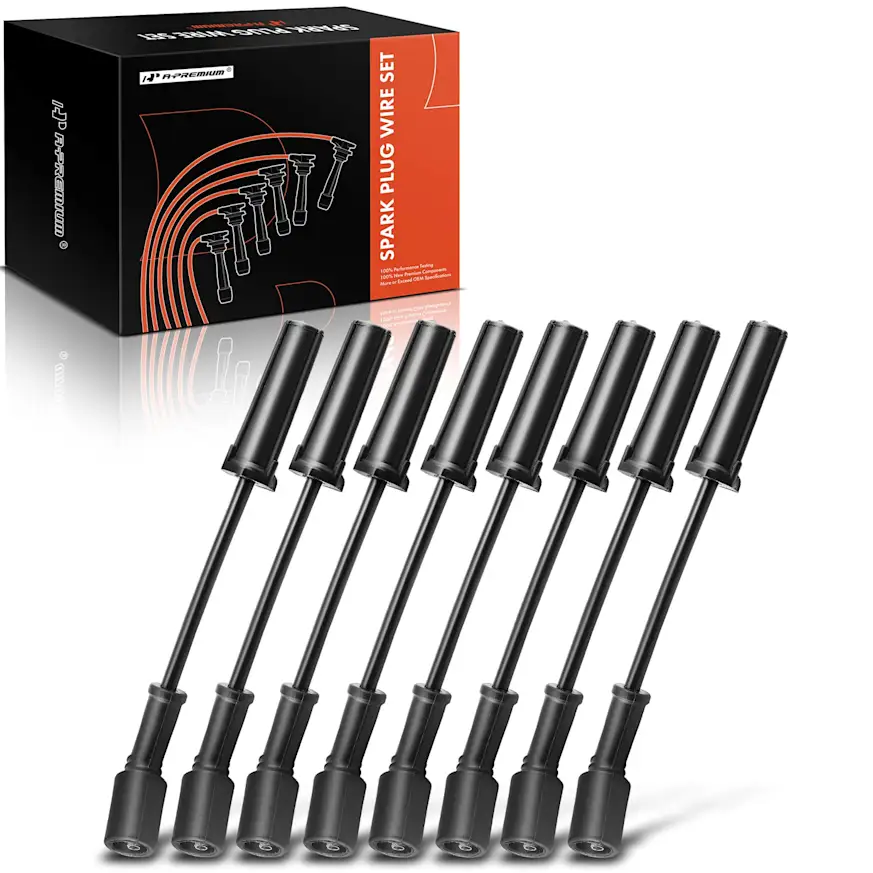
Spark plug wires are sold individually, in sets matched to cylinder count, and occasionally in kits bundled with spark plugs. Know which format applies before ordering. A good direct-fit set should not have wires that are too long or too short for the intended routing.
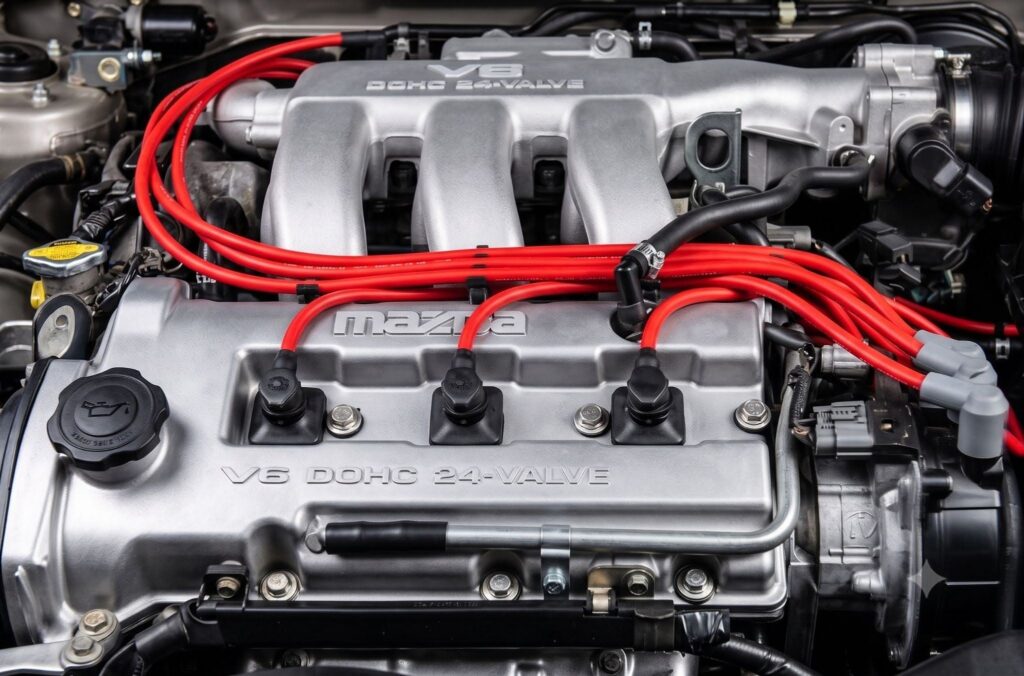
Most DIYers with minimal experience will replace the wires one at a time rather than risk a firing-order mix-up. On an engine with a distributor, if two cylinders are adjacent in the firing order and their wires also run next to each other, do not route those wires parallel from the cap to the plugs. That can cause inductive crossfire and, in some cases, pre-ignition or detonation that can damage the engine.
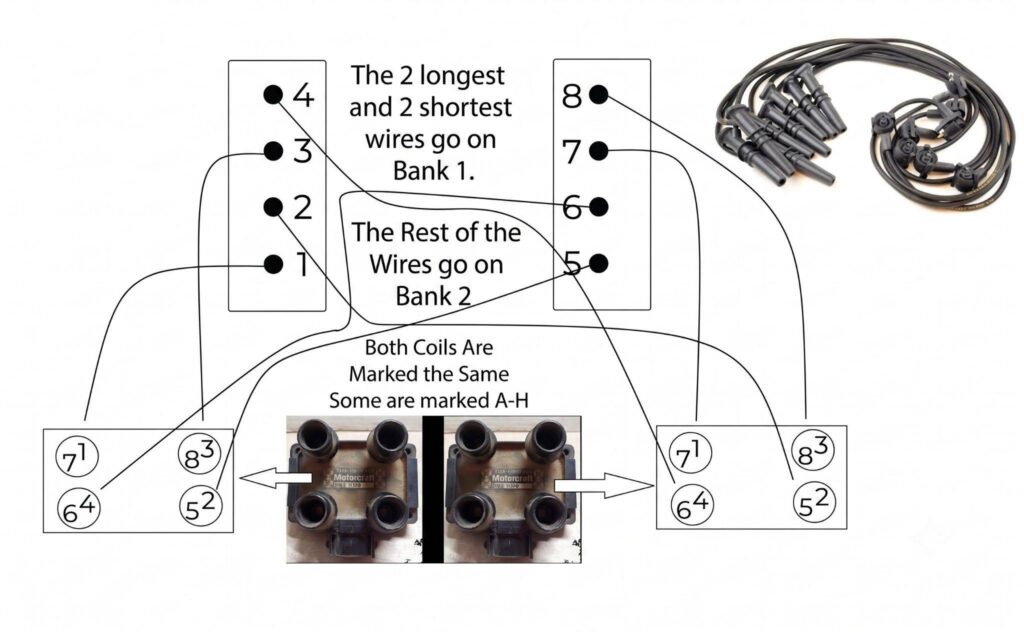
A classic example is cylinders 5 and 7 on a small-block Chevrolet V8 with the 1-8-4-3-6-5-7-2 firing order. On Ford V8s using the 1-3-7-2-6-5-4-8 firing order, cylinders 6 and 5 are another example. Route the affected wires from the cap or coil towers to their respective plugs with other wires between them in the loom when the factory routing calls for separation.
Sometimes making yourself a drawing helps, particularly on pre-COP Ford Crown Victoria and Lincoln Town Car applications with coil packs.
Choose Your Cart Size
The right cart size depends on how old the wires are, what else is due in the same access zone, and how long the owner plans to keep the car.
1. Minimum Viable Repair
One wire failed. The rest of the set is recent, in good shape, and from the same replacement interval.
Choose it if:
- The car has low to moderate miles
- The existing wires were replaced recently and are confirmed undamaged
- The failure’s isolated and clearly verified
Typical cart:
- Replacement wire(s) for the affected cylinder(s) matched to the existing set spec
- Dielectric grease if the boots were cracked or dry on removal
2. Smart Same-Access Refresh
The wires are original or aging, and the plugs are coming out anyway.
Choose it if:
- The car’s past the manufacturer’s recommended plug interval
- The wires show cracking, brittleness, or scorch marks on visual inspection
- Labor’s already planned for plug removal
Typical cart:
- Full spark plug wire set matched to the engine
- Spark plugs (full set, correct heat range and electrode type for the engine)
- Dielectric grease
- Coil-on-plug boots or distributor cap and rotor, if applicable to the ignition system
3. High-Mileage / Do-It-Once Reset
The ignition system hasn’t been touched in a long time, and the engine’s running rough or flat.
Choose it if:
- The car’s over 50,000 to 80,000 miles with original ignition components
- Multiple misfires or rough running suggest system-wide ignition wear
- The goal’s a clean, long-term ignition refresh rather than patching one part
Typical cart:
- Full spark plug wire set
- Spark plugs
- Distributor cap and rotor (if distributor-based ignition)
- Ignition coil inspection or replacement, depending on condition
- Dielectric grease
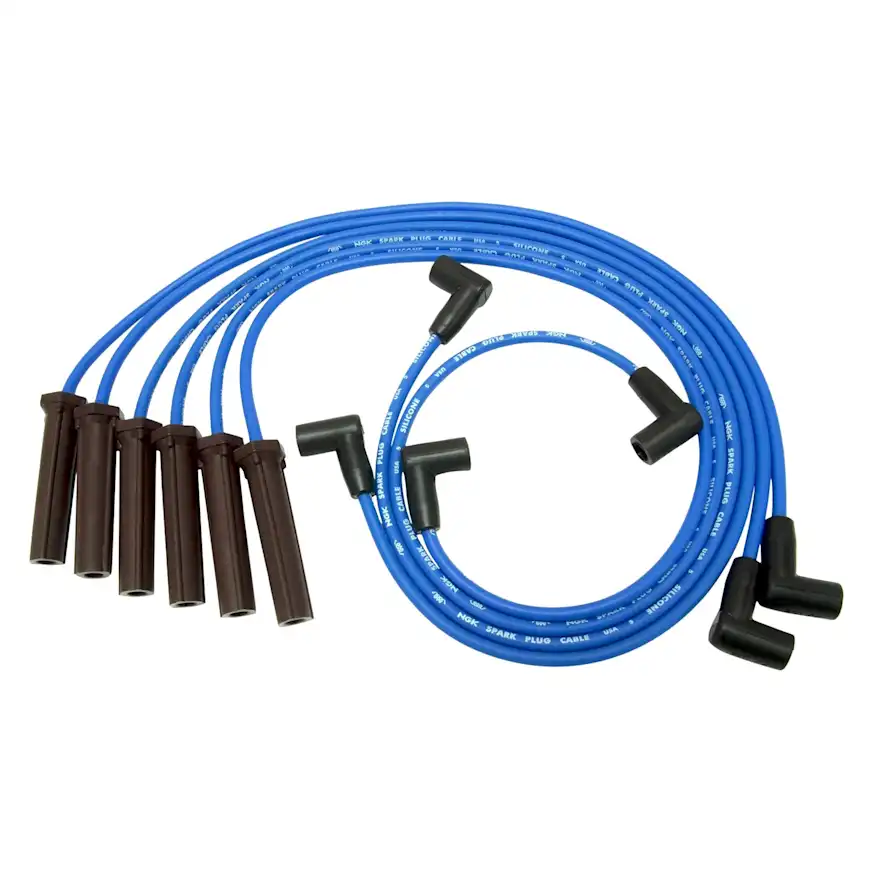
What’s Commonly Ordered Together on This Job
Several items belong in the cart, not because they failed, but because they share the same service interval or the same access path as the wires.
Spark Plugs
Spark plugs and wires wear together. If the wires need replacement, assume the plugs are at or near the same point in their service life. Replacing wires without addressing worn spark plugs means the ignition system’s only half-restored.
Dielectric Grease
Apply a thin film of dielectric grease to the inside of each boot where it seals around the plug insulator or coil tower.
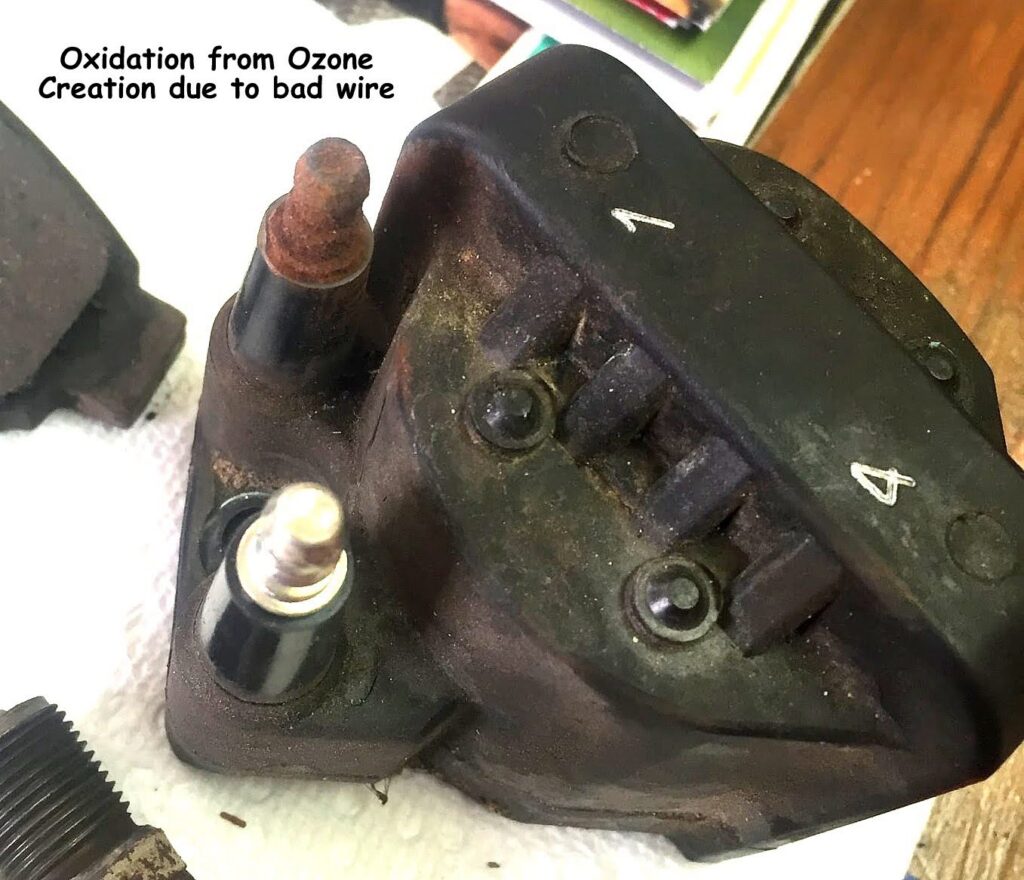
Dielectric grease is nonconductive. Applied correctly, it helps insulate and seal the boot area while the metal terminal still makes direct contact with the plug or coil tower. It helps reduce external arcing and seals out moisture. By helping prevent arcing, it can also reduce ozone formation around the connection.
It also makes future removal easier and helps prevent the boot from sticking to the spark plug ceramic. Often overlooked, it costs relatively little.
Distributor Cap and Rotor
Relevant only to cars with distributor-based ignition. If the wires are degraded, the distributor cap and rotor are almost certainly in similar condition since they share the same service interval and access path. Learn more about bad distributor cap symptoms before heading into teardown.
Ignition Coil
On some applications, damage at the ignition coil tower or terminal can promote arcing and damage the wire boot. If the wires show burn marks near the coil tower or if the misfire persists after a wire replacement, the coil deserves a close look before or alongside the wire job.
Coil-on-Plug Boots
Cars with coil-on-plug ignition generally don’t use traditional spark plug wires. If the car uses COP ignition, the relevant parts are the coil boots and the coil itself, not a wire set. Confirm the ignition system type before ordering.
What People Forget Until the Car’s Already Apart
These are the details that feel obvious in hindsight and cost real time when missed on delivery day.
- Confirm cylinder count matches the wire set exactly
- Know whether the engine uses a distributor, coil pack, or coil-on-plug ignition since only the first two use a traditional wire set
- Check whether the set includes individual wire lengths matched to cylinder routing or ships as a universal cut-to-fit set
- Verify the connector boot style at both ends (plug end and coil or distributor end)
- Confirm the wire diameter if the engine uses performance plug wire brackets or separators
- Note the routing path since some engines require specific wire lengths per cylinder due to tight clearances near exhaust headers
- Dielectric grease is rarely included, so add it separately
- On older cars, inspect the distributor cap terminals while access is open, since a corroded cap defeats a new wire set
When Replacing Only the Spark Plug Wire’s False Economy
The decision to replace one wire or the full set comes down to the age of the set and the cost of going back in.
Replacing a single wire on a set that’s got 60,000 miles on it is usually a short-term fix. Spark plug wires degrade from heat cycling, ozone exposure, and mechanical wear. If one wire’s failed visibly, the others are likely close behind. Going back in a few months to replace the rest of the set costs more in total time and aggravation than replacing the full set once.
That said, replacing only the failed wire is completely reasonable when the set’s genuinely recent, the car’s low mileage, and the other wires pass a resistance test.
Learn how to test spark plug wires before pulling everything apart. The logic’s labor overlap is not an automatic upsell. If re-accessing those wires means pulling bodywork or a tank again, replace the set. If the wires are young and the failure was a fluke from heat damage or a loose bracket, replace the affected wire and fix the root cause.
The Fitment Splits That Break Spark Plug Wire Orders
Most wrong-part returns on spark plug wires trace back to one of five variables that shoppers either skip or guess on.
Engine Size and Cylinder Count
This is the primary split. A wire set built for one engine doesn’t fit a different displacement or cylinder count in a similar car. Cylinder count and displacement determine the number of wires, their individual lengths, and the routing geometry.
Ignition System Type
Distributor, coil pack, and coil-on-plug are three different ignition architectures, and only the distributor and some coil pack systems use conventional spark plug wires. Confirm the system type before ordering, since this single mistake accounts for a large share of wrong-part returns.
Engine Position and Production Date
Some platforms used multiple engines across model years and wire routing changed even within the same engine family depending on production date, so a wire set that lists the correct year and model can still be wrong if the car falls in a mid-year production change.
Wire Diameter
Most OE replacement sets use standard diameter wire, but performance sets often use larger diameter wire (8mm, 8.5mm, 9mm, or larger). If the engine uses wire separators or retaining clips, confirm diameter compatibility before ordering a performance set.
Connector Boot Style
Straight, 90-degree, and 135-degree boot styles exist at both the plug end and the coil or distributor end. The wrong boot angle causes real fitment problems in tight engine bays or near exhaust headers.

Delivery-Day Inspection Checklist
Run through this list before touching the old wires so a mismatch gets caught on the bench, not mid-teardown.
- Wire count matches the cylinder count of the engine
- All individual wire lengths are present and logically match the routing of the engine, with the longest wires going to the furthest cylinders
- Boot style at the plug end matches the existing wires
- Boot style at the coil or distributor end matches the existing terminal towers
- Wire diameter is consistent with the engine’s bracket and separator hardware if applicable
- No physical damage to insulation, boots, or connectors from shipping
- If sold as a kit with plugs, plug heat range and thread size match the application
- Packaging identifies the correct year, make, model, and engine
Your One-Job Order Sheet for Spark Plug Wires
Work through these six steps before checkout and the order covers the job from the right part to the right companions.
- Confirm the Vehicle: year, make, model, and engine size. Add the trim level or VIN if the vehicle has a known mid-year production split or engine option.
- Confirm the Ignition System: distributor, coil pack, or coil-on-plug. Only the first two use conventional spark plug wires.
- Confirm the Repair Scope: full set or one wire. Consider wire age and mileage before ordering individual wires for a set that’s due for replacement.
- Confirm the Listing Inclusions: wire count, included hardware, boot styles, and whether dielectric grease is in the box.
- Add the Companions: spark plugs if they’re due, dielectric grease, distributor cap and rotor if applicable.
- Choose the Right Ownership Logic: minimum repair for a recent set with an isolated failure, or full ignition refresh for a high-mileage car or one that hasn’t had ignition service in years.
The Smart Way to Shop Spark Plug Wires
A spark plug wire set that looks compatible on a category page isn’t the same thing as one that fits the engine, matches the ignition system, and includes the right boot geometry for the application.
The “close enough” order wastes time and delays the repair. The correct order starts with the vehicle, works through the ignition system, and accounts for everything the job actually needs.
Cart logic depends on mileage, ignition system type, and what else is coming off while access is open. Confirm those three things before checkout and the right order practically builds itself.
Keep Reading: Related Posts




Any information provided on this Website is for informational purposes only and is not intended to replace consultation with a professional mechanic. The accuracy and timeliness of the information may change from the time of publication.