An unknown fault code usually means the scan tool can see a stored DTC but cannot translate it into plain language. In most cases, the problem is limited scan-tool coverage, outdated software, or a manufacturer-specific code, but low system voltage, network faults, and control module configuration issues can also trigger a real fault that shows up as Unknown.
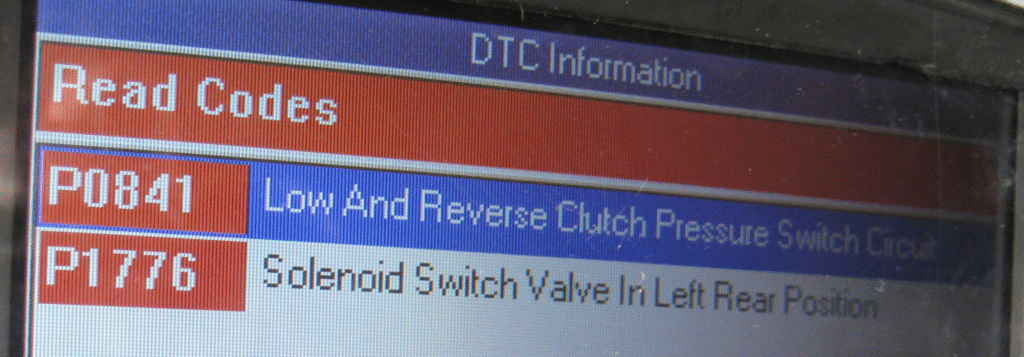
In other cases, a code may be misdefined by the tool because of typos or other errors in the scan tool’s internal code-list library. The scan tool screen shot below shows a P1776 where the library typist said “Left Rear” instead of “Low Reverse” because they were confused by “LR.”
What does an unknown fault code mean?
An unknown fault code does not automatically mean the ECU is bad.
Most of the time, it means the module stored a valid fault, but your scanner or app does not have the right database, software version, or brand-specific data to decode it.
This happens often with manufacturer-specific and enhanced codes. Generic OBD-II readers are strongest with standardized emissions-related powertrain faults, while newer vehicles also store brand-specific engine, network, body, and chassis faults that need better coverage. On late VW and Audi platforms, for example, a missing or outdated data set can leave you with a code number and freeze-frame data but no readable text. On BMW, a generic reader may show only part of the picture while BMW-capable software can decode the underlying fault path.

Pro Tips are nuggets of information direct from ASE-certified automobile technicians working with CarParts.com, which may include unique, personal insights based on their years of experience working in the automotive industry. These can help you make more informed decisions about your car.
Pro Tip: An undefined, invalid, or “nonsense” fault code can point to an engine control module problem, but it is not the most common cause. If other modules set a U0401 code, it means they’re receiving invalid or corrupted data from an ECM that has internal issues or is dropping off the CAN bus at times.
What some mechanics do not realize is that a module can expose both federally standardized OBD-II data and OEM-enhanced fault data through different service modes or data paths. Because of that, an OEM code can sometimes be retrieved through the generic side without a matching definition in the federal code library.
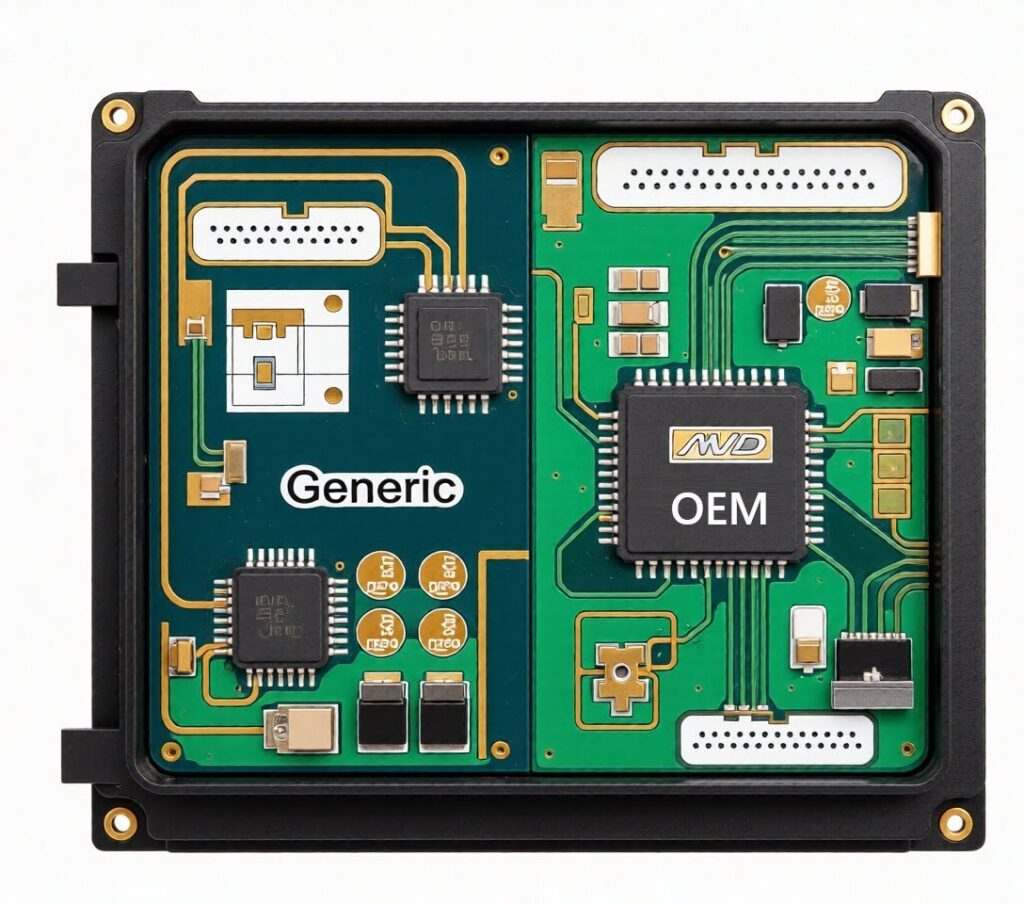
Many unknown diagnostic engine fault codes are not mysterious failures at all. They are normal faults being viewed through the wrong tool.
| Scan result | Likely meaning | Best next step |
| Unknown code with a generic P-code also present | Scanner can read standard OBD data but not enhanced data | Save both scans and rescan with a brand-capable tool |
| Unknown U-code with low terminal voltage in freeze-frame | Network fault may be caused by low battery voltage | Test battery and charging system before chasing modules |
| Unknown code after module replacement, coding, or flashing | Module configuration, software, or part-number mismatch | Verify coding, calibration, and correct module application |
| Unknown code returns with clear drivability symptoms | Real fault exists, but the current tool cannot label it | Use live data, wiring checks, and a second scanner |
| Unknown code with corrupted data or odd freeze-frame values | Scan data may be incomplete or unstable | Stabilize vehicle voltage and scan again |
What usually causes an unknown fault code?
The most common cause is scanner limitation, not a mystery failure. Start by assuming the code translation is incomplete, then work forward from the supporting data.
Common causes include:
- Outdated scan-tool software or firmware
- Wrong vehicle selection in the app or scan tool
- Generic reader trying to decode manufacturer-specific faults
- Weak battery or low charging voltage during startup or scanning
- CAN communication faults or poor module power and ground
- Recently replaced control module with incorrect coding or software
- Aftermarket electronics causing network noise
- Corroded grounds, fuses, unstable terminal voltage, damaged battery cables, or a compromised engine wiring harness
If you want more background on the electrical side of that checklist, see our guides to car batteries, testing an alternator, automotive fuses, and battery cables.
If the scan result reads like “got error unknown fault status code,” treat it as a translation failure first, not proof that the engine computer has failed.
A practical warning here: do not clear the code before saving freeze-frame, module ID, software version, and battery voltage. Unknown codes are much harder to diagnose after that context is gone.
How do you diagnose an unknown fault code without guessing?
The fastest way to diagnose an unknown fault code is to verify power supply, confirm tool coverage, and then compare the result with a second scan source. That order prevents pointless parts swapping.
Tools that help:
- Scan tool with live data and freeze-frame access
- Digital multimeter
- Battery tester or load tester if available
- Wiring diagram or service information
- Access to updated scan-tool software
- Brand-specific or enhanced scan tool when possible
Follow these steps:
- Save the original scan data.
Record every module, code number, fault status, freeze-frame value, mileage, and battery voltage. Unknown entries become much more useful when you can compare what changed after testing. - Check battery and charging voltage first.
A healthy resting battery is usually around 12.4 to 12.6 volts, and charging voltage is commonly around 13.8 to 14.7 volts once the engine is running. If the freeze-frame shows voltage around 11 volts or lower, stop and test the battery, terminals, and alternator before chasing modules. - Update the scanner and confirm the vehicle profile.
Make sure the tool is on current software and that the exact year, engine, and chassis were selected. This matters on vehicles with multiple control module variants in the same model line. - Rescan with a better tool if the first one is generic.
A second scan often changes everything. If a cheap reader gives you only a generic P-code and the app shows Unknown, the issue may be tool coverage, not a hidden mechanical failure. - Use the code family and freeze-frame to choose the next test.
A P-code points you toward engine or emissions data. A U-code pushes you toward network health, module voltage, grounds, and CAN basics. Idle speed, coolant temp, load, and system voltage in freeze-frame tell you whether the fault happened during cranking, warm idle, or driving. - Test the circuit or network before replacing parts.
Check powers, grounds, relevant fuses, connector fit, and harness condition. On communication faults, verify module power and ground before condemning the module itself. If the pattern starts to look module-related, compare the symptoms with our guide to bad ECM symptoms before assuming the computer itself is the problem.
What do DIYers most often miss?
The biggest miss is treating Unknown like a diagnosis. It is only a scan result, not a root cause.
Other common misses:
- Replacing a sensor because a generic P-code looked close enough
- Ignoring low voltage because the car still cranks and drives
- Clearing faults before saving freeze-frame
- Assuming all scan tools have the same code library
- Overlooking a wrong or partially coded replacement module
- Chasing a network code without checking grounds and fuse feeds
Here is a realistic example. A late-model VW or Audi shows an intermittent unknown U-code, no drivability complaint, and freeze-frame terminal voltage around 10.9 volts with engine speed at zero. That pattern points toward a low-voltage event during startup or wake-up, not a dead module. The smart move is battery and charging-system testing first, then a rescan with updated software. That one sequence can save hours.
A second warning: if the vehicle has a flashing MIL, reduced power, stalling, or hard starting, do not let the unknown label distract you. Diagnose the symptom path immediately.
When should you stop DIY diagnosis and escalate?
Escalate when the code keeps returning after power supply checks, software updates, and a second scan. At that point, you likely need better factory-level coverage, guided diagnostics, or module programming capability.
That is especially true if you find:
- Repeated communication faults with normal battery voltage
- A recent module replacement or programming event
- Multiple modules setting related unknown codes
- Immobilizer, gateway, or control module internal faults
- Drivability problems with no reliable code text
The bottom line is simple. An unknown fault code usually means your information is incomplete, not that the fault is unknowable. Verify voltage, update the tool, compare scan sources, and let freeze-frame data choose the next test.
Keep Reading: Related Posts





Any information provided on this Website is for informational purposes only and is not intended to replace consultation with a professional mechanic. The accuracy and timeliness of the information may change from the time of publication.