Need car parts? Select your vehicle
Reading Time: 3 minutes

Summary

  • A car radiator is a finned, rectangular metal heat exchanger with an inlet pipe to an inlet tank and a lower outlet pipe from an outlet tank.

  • Design varies by era. Early units use a vertical copper core with brass tanks on the top and bottom, while newer units use a horizontal aluminum core with plastic end tanks and rubber seals.

  • Coolant flows from the engine to the inlet tank, through tube-and-fin cores, then to the outlet tank and back to the engine. Systems may include a reservoir with a pressure cap or a pressurized surge tank, and many automatics integrate a transmission cooler (sometimes an engine oil cooler) inside the radiator.

A car radiator is a finned, rectangular component made of metal. It maximizes heat dissipation to keep the engine at peak operating temperatures by circulating coolant through its body. 

The exact design of a car radiator can vary depending on the exact vehicle it’s made to fit. However, the typical car radiator will have an inlet pipe at the top that feeds coolant into the inlet tank from the engine. 

See also  Radiator Fluid Colors Vary and How To Pick the Right One

Technically, the radiator is a heat exchanger that uses the heat transfer principles of conduction and convection to keep the engine cool. The heat is conducted into the coolant from the head and cylinders and then conveyed in the coolant to the radiator, where it is conducted from the tubes into the fins so that the air passing through the fins conveys the heat away.
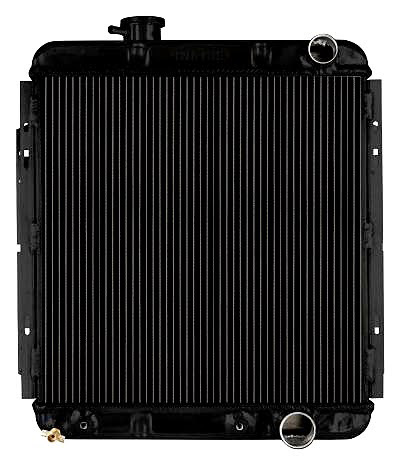
early radiators
Early radiators have a vertical copper core with brass tanks soldered on the top and bottom ends of the core. | Image Source: Richard McCuistian
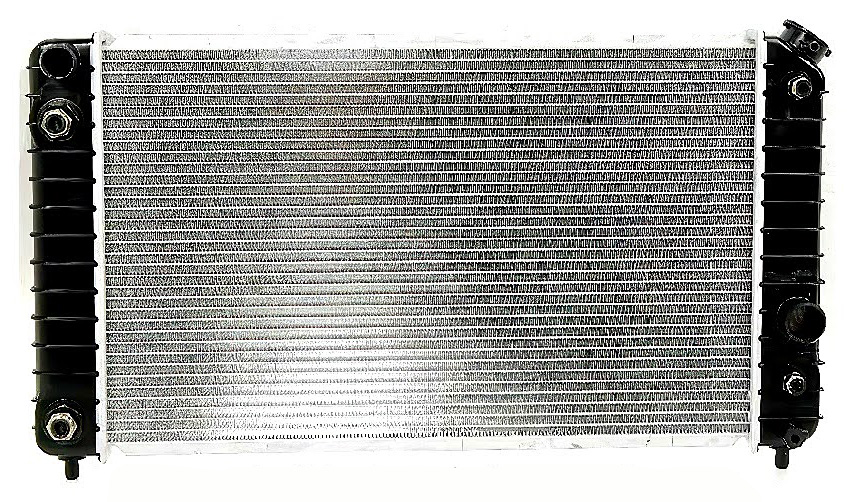
recent radiators
More recent radiators have a horizontal aluminum core with plastic tanks on each and rubber seals where the tanks connect to the core. | Image Source: Richard McCuistian

Older vehicles frequently had the core running vertically with tanks on the top and the bottom. The tanks are where the hoses connect. Newer vehicles always have the tanks and hose connections on each end with the core running horizontally.
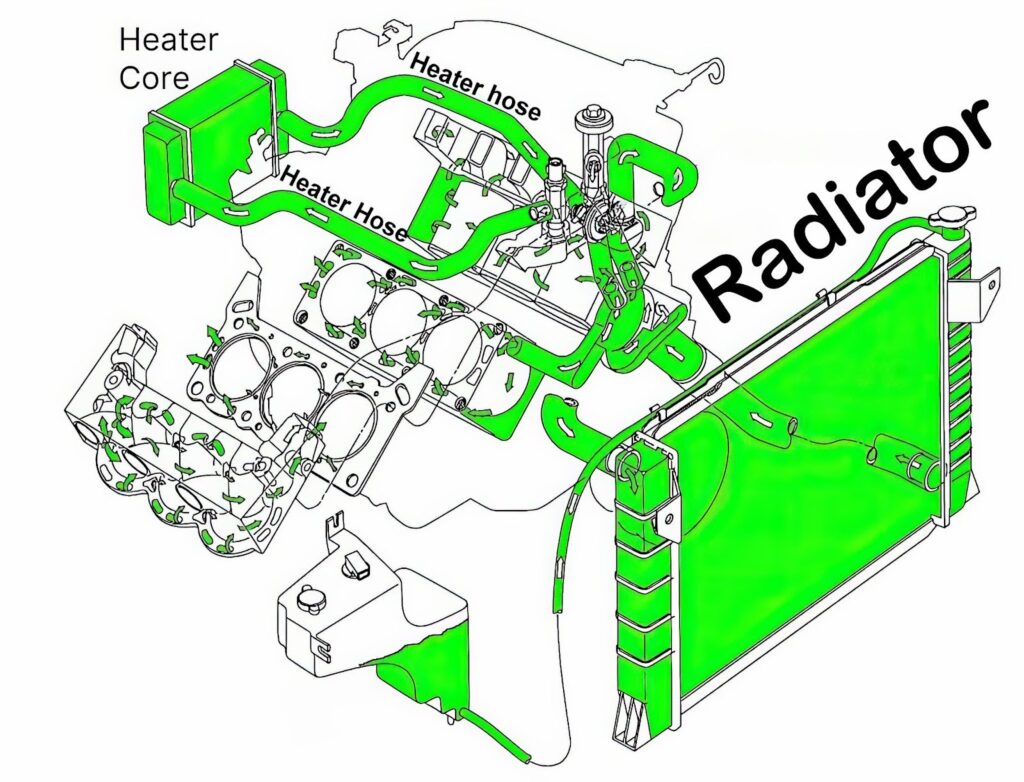
radiator diagram
From the inlet tank, the coolant passes through the radiator’s core, which consists of many tubes encased in fins. The coolant then passes to the outlet tank. The outlet tank has a lower outlet pipe that returns the cooled coolant to the engine. | Image Source: Richard McCuistian
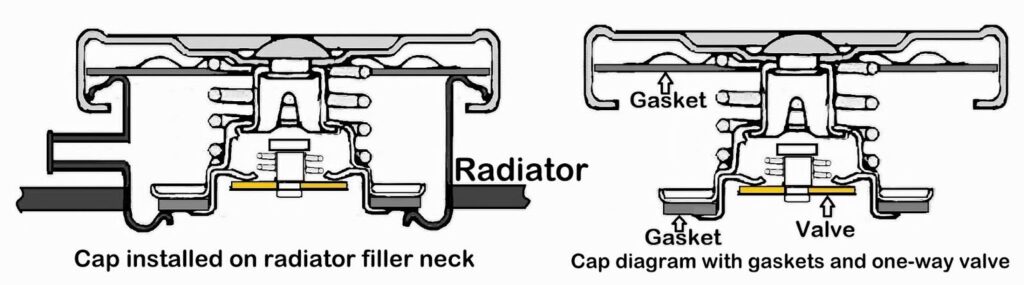
cap installed on radiator filler neck
This diagram shows a system with a reservoir, which is designed to hold coolant that the radiator pressure cap releases. The radiator cap has a one-way valve in the center that allows coolant to return from the reservoir tank to the radiator as the coolant contracts as the engine cools down. | Image Source: Richard McCuistian
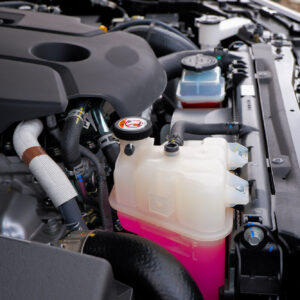
coolant reservoir and surge tank
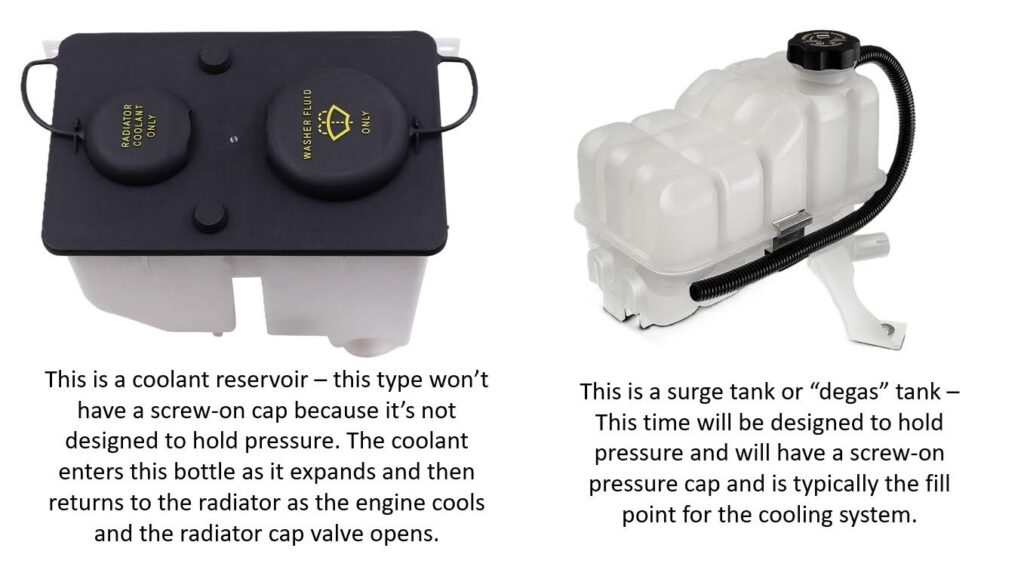
Newer systems won’t have a fill cap on the radiator. Those will have a heavy plastic surge tank designed to hold cooling system pressure. This heavier bottle will have a heavy cap with threads and an internal valve for pressure release (see diagram). | Image Source: Richard McCuistian

Most automatic transmission vehicles also have a transmission cooler installed inside the radiator’s outlet tank and some will have an engine oil cooler in the opposite tank. Transmission fluid and engine oil passes through their respective coolers to remove heat from the transmission fluid and engine oil.

About The Authors
Written By Automotive and Tech Writers

The CarParts.com Research Team is composed of experienced automotive and tech writers working with (ASE)-certified automobile technicians and automotive journalists to bring up-to-date, helpful information to car owners in the US. Guided by CarParts.com's thorough editorial process, our team strives to produce guides and resources DIYers and casual car owners can trust.

Reviewed By Technical Reviewer at CarParts.com

Richard McCuistian has worked for nearly 50 years in the automotive field as a professional technician, an instructor, and a freelance automotive writer for Motor Age, ACtion magazine, Power Stroke Registry, and others. Richard is ASE certified for more than 30 years in 10 categories, including L1 Advanced Engine Performance and Light Vehicle Diesel.

Any information provided on this Website is for informational purposes only and is not intended to replace consultation with a professional mechanic. The accuracy and timeliness of the information may change from the time of publication.

File Under : Cooling System , Auto Repair , DIY Tagged With :
CP Mobile App
Subscribe
Notify of
guest
0 Comments
Oldest
Newest Most Voted
Inline Feedbacks
View all comments
expand_more
CarParts.com Fix-It-Forum BE PART OF OUR COMMUNITY: Share your knowledge & help fellow drivers Join Now