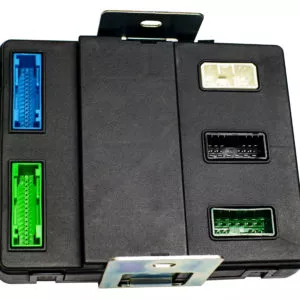
In many vehicles, the body control module (BCM) is underneath the dashboard on the center console’s driver side. This puts the computer near the cabin switches. Other possible locations include the center console and engine compartment. Some also have it integrated into the inside fuse panel or “piggy backed” onto the panel and plugged into a mating connector.
- Ford, Chrysler, and Hyundai often integrate the BCM into a junction box or fuse panel.
- European brands (BMW, Mercedes, Renault) tend to distribute BCM functions across multiple specialized modules.
- Early Ford BCMs were called “Generic Electronic Module” (GEM).

Pro Tips are nuggets of information direct from ASE-certified automobile technicians working with CarParts.com, which may include unique, personal insights based on their years of experience working in the automotive industry. These can help you make more informed decisions about your car.
Pro Tip: Terminology differs, so what one brand calls a BCM, another might call a SAM, JBE, or BSI.

The body control module is the electronic control unit that monitors and operates various electrical and electronic systems inside the car’s body. The computer handles central locking, HVAC, interior lighting, power windows, power mirrors, and many other systems. Here’s a generic list of BCM functions on a recent “base” model vehicle:
- Keyless entry and security
- Interior and exterior lighting
- Power windows and locks
- Climate control
- Communication with other modules via the CAN bus
The BCM controls the accessories and systems through load drivers, the actuating relays that perform actions like engaging and disengaging the door lock or adjusting the interior lighting. Furthermore, the body control module also talks with the car’s other computers through the CAN bus system.
Tips on How to Access the Body Control Module
It’s extremely important to note that there are multiple modules and you can easily misidentify another module believing it to be the BCM. Furthermore, even if you get the right BCM for your vehicle, it will typically need to be programmed by a dealer or well-equipped shop. Most modules are that way on newer cars, so be aware of that before you attempt to replace your BCM or any other module. They aren’t “plug and play” the way they used to be.
You can start by consulting your owner’s manual, but you won’t usually find the location of the body control module there. Typically, you’ll need to check a shop manual or an online source like a forum for the precise location of your specific vehicle’s BCM.
Always disconnect your car’s battery before accessing the body control module. The battery supplies the BCM with a trickle of power. Disconnecting it will reduce the chance of electric shocks while you handle the part. Cutting off the power will also prevent potential electrical damage to the computer.
Keep Reading: Related Posts






Any information provided on this Website is for informational purposes only and is not intended to replace consultation with a professional mechanic. The accuracy and timeliness of the information may change from the time of publication.