
Key Takeaways
- The W stands for Winter, not Weight, and both oils flow identically on cold starts.
- 10W40 holds a stronger oil film at operating temperature, which helps with towing, hot weather, and worn engines.
- 10W30 reduces drag, helping fuel economy and cold-weather circulation in newer powersport engines.
- Many air-cooled motorcycles, ATVs, and UTVs run hot enough to favor 10W40, but your manual is the final word.
- Switching grades is fine when both oils meet the same API, ILSAC, or OEM spec your machine requires.
What the Numbers Actually Mean
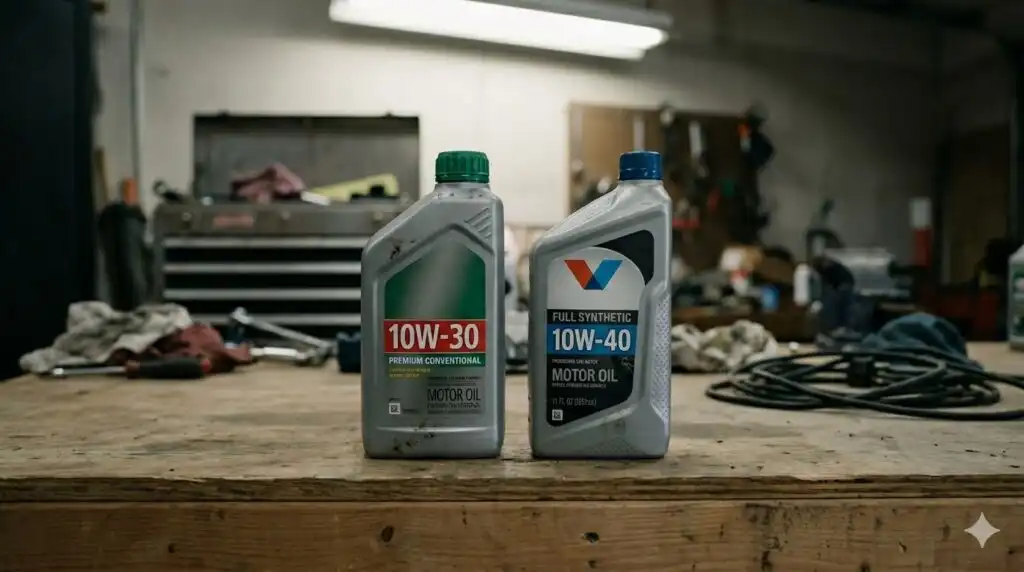
Every motor oil label has two numbers split by a W. The first number, with the W, rates how the oil flows in winter on a cold start. The second number rates how thick the oil stays once your vehicle’s engine reaches operating temperature. 10W30 and 10W40 share the same 10W cold rating, so they crank, circulate, and protect identically on a cold engine. The split shows up at operating temperature, where 10W40 holds a thicker film than 10W30.
Forty years ago, oils came as straight winter or summer grades. Modern multigrade oils stay close to the right viscosity across a wider temperature range, so one fill works year-round for most powersport applications.
How They Behave at Operating Temperature
Once the engine warms up, the second number takes over. 10W30 thins out faster, which lowers internal friction and improves fuel economy. 10W40 stays thicker, building a stronger cushion between moving parts under heat and load. Neither grade is universally better. Each is tuned for a different workload.
In cold conditions, the two oils act nearly identically. The real divide opens up after the engine reaches full operating heat, especially in air-cooled motorcycles, dirt bikes, and ATVs that run hotter than typical car engines.
When 10W30 Fits Your Powersport Build
10W30 leans toward efficiency and cold-weather flow. It’s a strong match for newer ATVs, UTVs, and street bikes with tight bearing clearances. It works well for cold-climate riding, spring track-day prep, and shoulder-season trail runs. It’s also a sensible pick for daily scooters and urban commuters where fuel economy matters, and for snowmobiles operating in genuinely cold conditions when the manual approves it.
If your manual lists 10W30 as the primary recommendation, sticking with it usually delivers the smoothest cold cranking and the lowest drag during warm-up.

When 10W40 Earns Its Keep
10W40 leans toward protection and high-heat stability. It’s the practical pick for hot-climate riding, summer trail seasons, and desert ATV use. UTVs and side-by-sides used for towing, hauling, or working benefit from the extra film strength, as do older or higher-mileage engines with looser clearances. Many air-cooled motorcycles, especially cruisers and vintage bikes, run 10W40 from the factory.
For machines that run hot, sit at idle, or pull serious loads, the thicker high-temperature film cuts metal-on-metal contact and keeps oil pressure stable.

High-Mileage and Older Engines
Engines pick up wear as miles or hours stack up. Clearances widen between bearings, pistons, and valvetrain components. Thinner oil can struggle to bridge those gaps, leading to ticking, tapping, and faster oil burn once the engine’s fully warm. 10W40’s heavier high-temperature body fills those gaps better, quiets worn components, and slows oil consumption without forcing an immediate teardown. Many builders running vintage cruisers or restored ATVs switch to 10W40 (or a synthetic-blend 10W40) once the original tolerances loosen up.
Why Powersport Engines Often Prefer 10W40
Powersport engines run at higher RPM and higher temperatures than most cars. Air-cooled motorcycles shed heat slower than liquid-cooled engines, so the oil takes on extra cooling duty. That’s why many cruisers, dirt bikes, and air-cooled ATVs spec 10W40 from the factory.
Modern liquid-cooled sportbikes and high-revving UTVs sometimes call for lighter blends to protect clutch performance and meet tighter emissions targets. If you ride hard in summer heat or load down a UTV with cargo and passengers, 10W40 typically earns its place. For wet-clutch motorcycles, also confirm the oil carries a JASO MA or MA2 rating, since some passenger-car oils contain friction modifiers that can cause clutch slip.
Can I Use 10W40 Instead of 10W30?
Yes, if your owner’s manual lists 10W40 as an approved option or shows a viscosity range that includes it. Many manuals approve both grades depending on ambient temperature. Going outside the approved range can affect engine response, oil pressure, and in some cases warranty coverage.
If you notice unusual knocking, low oil pressure, dark smoke, or a clear drop in throttle response after switching grades, have a technician inspect for leaks or internal wear before piling on more miles.
Switching Grades the Right Way
Moving between 10W30 and 10W40 won’t damage an engine when both oils meet the same API, ILSAC, or OEM specification your machine requires. A few habits will keep the swap clean: confirm the new grade is approved in your manual, warm the engine before draining old oil, replace the filter every change, and track oil color, level, and smell between rides. For wet-clutch bikes, verify JASO compatibility on the bottle.
Synthetic and synthetic-blend versions of both grades cost more up front but generally extend the safe interval between changes, which is worth weighing for high-hour ATVs, UTVs, and snowmobiles.
FAQ
Which oil is better for hot weather?
10W40 holds up better in sustained heat. Riders in southern states, desert regions, or anywhere summers stay above 90°F often run 10W40 through the warm months, even when their manual lists 10W30 for cooler conditions.
Will 10W40 hurt fuel economy?
It can trim a small amount of mileage compared to 10W30 because it creates slightly more internal drag. The trade-off is stronger high-temperature protection under load.
Is 10W40 better for high-mileage powersports engines?
Often, yes. The heavier high-temperature body fills widened clearances, cuts oil consumption, and quiets ticking from worn valvetrain parts.
Does thicker oil cause more wear?
Not directly. Within the manufacturer’s approved range, thicker oil cushions parts better at high temperatures. Going thicker than the manual allows can slow oil flow on cold starts and raise wear during warm-up.
Can I mix 10W30 and 10W40?
Topping off with the other grade in a pinch won’t damage the engine when both oils meet the same standard. Long-term, pick one grade and stick with it.
Gear Up Your Total Garage at the JC Whitney Performance Hub
The right viscosity keeps every machine in your driveway running cleaner, cooler, and longer, whether you’re prepping an ATV for spring trails or a cruiser for a summer ride. The JC Whitney Performance Hub on CarParts.com pulls together oils, filters, and maintenance gear for the truck, the trailer, and the toy. Stock up for the season ahead and keep every ride dialed in.
Keep Reading: Related Posts




Any information provided on this Website is for informational purposes only and is not intended to replace consultation with a professional mechanic. The accuracy and timeliness of the information may change from the time of publication.