Yes, most quality weatherstrip kits are car specific. They’re designed and shaped to match the exact contours, channels, and mounting points of a particular make, model, and year. A kit built for a 1963 to 1964 Impala 2-door hardtop won’t fit a different body, because the seal profiles, lengths, and clip patterns are matched to the original factory design. You can buy universal, all-purpose weatherstripping by the roll. It can be useful for repairs or when a vehicle-specific seal is unavailable, but it usually takes more measuring, trimming, and fit checking to get a clean result.
Key Takeaways
- Most kits are vehicle-specific. They match the shape, length, and attachment points for a particular year, make, model, and often body style or door configuration.
- Universal weather stripping exists but trades exact fit for flexibility. It can be useful for repairs or applications where a vehicle-specific seal isn’t available.
- Kit contents vary. Some basic kits focus on door and trunk seals, while more complete kits may add window felts, vent seals, and quarter window pieces.
- Seals wear out. Heat, UV, and time harden rubber and break down adhesive, so older seals eventually need replacing.
- Installation is straightforward, but it takes patience to seat the rubber evenly.
Why Weatherstrip Kits Are Built for Specific Vehicles
Weather stripping seals the gaps around your vehicle’s doors, windows, and trunk so that water, air, dust, and road noise stay out. To do this well, each seal has to match the geometry of the opening it fills. The profile of the rubber, the length of each run, and the way it clips or glues into a channel are all engineered around a single body design.That’s why a weatherstrip kit assembled for one car won’t reliably transfer to another. Even within the same brand, the seal that fits one model often sits in a completely different location or channel on the next. A kit replicates the original factory shape, so it follows the contours of the door frame and presses firmly into place for a tight seal.
Vehicle-Specific vs. Universal
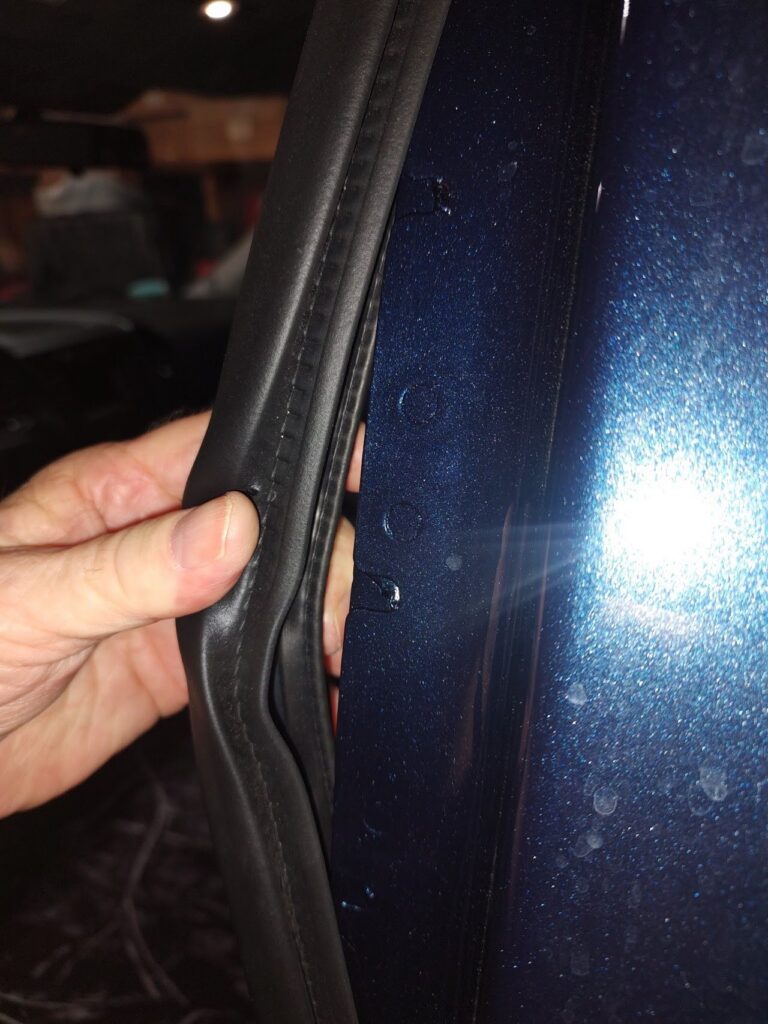
Vehicle-specific kits come pre-cut and pre-formed to your application. You match the kit to your vehicle’s year, make, and model, and the parts line up where they should. This is the route worth taking if you care about a clean result.
Universal weatherstripping is sold by the roll and bent to fit a range of openings. It can work for a quick patch or when exact-fit parts are unavailable, but it may require more trimming and fitting to follow the original contour. If a vehicle-specific kit exists for your car, that’s usually the better choice for a factory-style result.
What’s Inside a Weatherstrip Kit
Kit contents depend on the brand and package. Some restoration suppliers group their kits into basic and deluxe tiers:
Basic Kits
A basic weatherstrip kit may include the door seals and trunk seal. Some packages include adhesive, while others require it separately.
Deluxe Kits
A deluxe or more complete kit may add extras such as quarter window vertical seals, vent window seals, and a window felt kit. If you want to refresh more than just the doors and trunk in one purchase, a more complete kit can cover additional openings in a single box.
The Different Types of Weather Stripping
Seals come in several forms, each suited for a different job. Common types include the following:
- Gasket: fills the space between two surfaces, like the channel aroundglass.
- Edge trim: covers a rough edge where a seal also needs to grip.
- Insert trim: slides into a track for a clean, factory-style replacement.
- Push-on seal: clips over a flange or lip and holds without adhesive.
- Peel-and-stick seal: backed with adhesive for a fast, permanent bond.
- Sponge and dense rubber: sponge compresses for soft-close seals, while dense rubber resists impacts and wear.
How To Weather Seal Your Car
So how do you weather seal your car? It comes down to removing the worn rubber and seating fresh seals cleanly. Note that steps can vary slightly between kits.
Step-by-Step
- Remove the old weatherstrip, including any pieces seated in a track or channel.
- Clean the mounting surface thoroughly. If old adhesive remains, take it off with an adhesive remover so that the new seal bonds to bare metal or trim.
- Dry-fit the new seal and confirm it follows the opening before committing.
- Apply adhesive where the kit calls for it, or peel the backing on stick-on pieces.
- Press the seal firmly and evenly along the edge so that it seats fully and bonds in line.
- Work slowly and let the adhesive grab before moving to the next run. A rushed installation leaves gaps that defeat the seal.

A Note on Fit and Safety
Weather stripping isn’t a brake or steering component, but a poor seal still causes problems. Water that gets past a bad door seal can pool in floor pans, feed rust, and reach electrical connectors. If you notice moisture, fogging, or wind noise after a wet drive, inspect the seals and reseat or replace any that have hardened, cracked, or pulled loose. Catching a failing seal early keeps small leaks from turning into bigger repairs.
How To Tell When Seals Need Replacing
A few signs point to worn weatherstripping. Water creeping in when it rains is the clearest one, often starting as light dampness near the door before it worsens. Increased wind and road noise is another, since a failing seal no longer blocks outside air. You can also press a finger into the rubber: if it feels hard and doesn’t spring back, it’s lost its sealing ability and should be replaced. Visible cracks, gaps, or holes confirm it.
Classic cars used weatherstripping around doors, glass, trunks, and other openings long before the 1970s. The bigger concern today is that surviving original seals may be decades old. Heat, UV exposure, ozone, repeated compression, and age can harden or crack rubber and weaken adhesive over time.
Frequently Asked Questions
Yes. Factory-style kits are shaped to match the bends, seal profiles, channels, and contours of a specific vehicle and, in many cases, a specific body style, which is why they fit more cleanly than a generic roll.
Yes. Universal weather stripping can be a practical option for repairs or when a vehicle-specific replacement isn’t available. It usually requires more measuring, cutting, and fitting, while a vehicle-specific kit generally provides the more predictable factory-style fit.
It depends on the material quality, installation, climate, UV exposure, use, and maintenance. Vehicle-specific fitment does not by itself guarantee a longer service life than universal weatherstripping.
Very little. Cleaning the seals and periodically applying a rubber conditioner or protectant specifically labeled safe for automotive weatherstripping can help keep the rubber flexible. Follow the product manufacturer’s instructions and avoid treatments that leave an incompatible greasy residue.
It’s a seal formed to follow the contours and curves of a specific door, opening, or body area so it maintains consistent contact along the sealing surface. Molded seals are especially useful where the weatherstrip must follow corners or compound curves that a straight universal extrusion cannot duplicate as precisely.
Weatherstrip kits are car specific because a clean seal depends on matching the exact shape of your vehicle’s openings. Pick a kit made for your vehicle’s year, make, model, and body style when applicable, and take your time seating the rubber. Your ride’s interior stays dry, quiet, and protected. When you’re ready to reseal your car, CarParts.com carries model-specific weatherstripping to get the job done right.
Keep Reading: Related Posts




Any information provided on this Website is for informational purposes only and is not intended to replace consultation with a professional mechanic. The accuracy and timeliness of the information may change from the time of publication.