Fixing weather stripping on a car door window starts with identifying which piece failed. If the rubber is dry, faded, or squeaking but still in one piece, clean it and treat it with a rubber conditioner. If it’s torn, sagging out of the door, or the clips have let go, replace the strip instead of patching it. Most door window seals clip onto the top edge of the door, so replacement typically runs 20 to 40 minutes per door with basic hand tools.
Key Takeaways
- Dried, chalky rubber that’s still intact responds well to cleaning and conditioning.
- Ripped or stretched strips won’t seal again once pushed back in, so plan on replacement.
- The belt weatherstrip at the base of the glass usually fails first.
- Water getting past a bad seal reaches door electronics and bare metal, so don’t let it sit.
- Aftermarket parts vary in clip strength and lip height, so check fitment before you buy.
What Actually Fails on a Door Window
Each piece of black rubber around the glass does a different job and fails differently.
The Belt Weatherstrip
This is the strip along the bottom edge of the window opening, where the glass disappears into the door. There’s an outer piece, often called a window sweep, and an inner piece, and both wipe water and grit off the glass as it moves. They see the most sun and friction, so they dry out and tear first. When one lets go, it hangs out of the door slot as soon as you lower the window.
The Run Channel and Door Seal
The run channel is the U-shaped track along the front, top, and rear of the frame that guides the glass. The door seal is the thicker loop around the door opening that presses against the body. Neither wipes the glass the way a belt strip does, so both harden and crack with age rather than tear.
Signs Your Seal Needs Attention
Wind noise that worsens above 50 mph usually points to a hardened door seal or a run channel that’s no longer gripping the glass. Water on the door panel, damp carpet, or a musty smell after rain points to the belt weatherstrip. A window that moves slowly or squeaks is dragging against dry rubber, and black streaks on the glass mean the strip is shedding material.
Water inside a door reaches the window motor, wiring connectors, and seam welds. If your carpet has been wet more than once, pull the panel and check for corrosion and standing water before resealing.
Repair or Replace: How To Choose
Restoring Dry but Intact Rubber
If the strip is faded and stiff but has no tears, clean and condition it. Wipe it with a dedicated rubber and plastic cleaner to lift oxidation and road film, then let it dry. Apply a rubber conditioner with a foam applicator and work it in evenly. Heavily neglected rubber may need two or three passes until it stops soaking the product up right away, and letting it sit overnight gives the best result. Wipe off the excess the next day with a microfiber towel. Treating the rubber trim on car window frames every three to six months keeps it flexible, especially on a vehicle that lives outside.
Skip greasy silicone dressings that sit on the surface, and keep cleaner off adjacent textured trim like the B-pillar, where it can leave a permanent mark.
Patching Small Tears
Adhesive works for a short split or a strip pulling away at one end, not for a full-length tear. Clean both surfaces with isopropyl alcohol, apply a weatherstrip adhesive rated for automotive rubber, tape it in place, and let it cure before rolling the window. Treat this as temporary, since the repaired section stays stiffer and tends to fail again in the same spot.
Replacing the Strip
Once the rubber has ripped, stretched, or lost its clips, pushing it back in won’t restore the seal. The lip that meets the glass has to sit at the right height and hold tension, which a damaged strip can’t do.

Step-by-Step Belt Weatherstrip Replacement
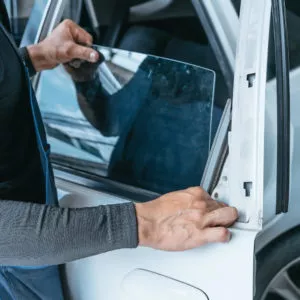
Start with the window down about halfway so you can reach the strip and the glass edge. Work the old strip up with a plastic trim tool rather than a screwdriver, since metal will mar the paint at the door’s top edge. Most belt strips use clips spaced a few inches apart, and they release with steady upward pressure.
Remove any clips left behind in the pinch weld, wipe the channel clean, and scrape off hardened adhesive with a plastic razor. Rinse the area with a damp rag so no cleaner sits on the paint.
Line the new strip up at one end, confirm the lips face the correct direction, and press it down clip by clip until each one seats. Run the window up and down a few times to check that the glass moves freely and the lips contact it along the full length. Do one door at a time so the other side stays available as a reference for orientation and installation depth.
OEM vs. Aftermarket
Aftermarket strips cost noticeably less, and plenty of owners replace all four doors for what a dealer charges for one. The trade-offs show up in clip strength and lip height. Weak clips pop loose over time, and a short lip doesn’t reach the glass all the way up, which lets water past even though the part looks correct. Confirm the part number matches your trim and body style, and test-fit one strip before buying a full set.
Keeping the New Seal in Shape
New rubber lasts longer with the same care that restores old rubber. Clean the strips when you wash your car, condition them twice a year, and keep the drain holes at the bottom of each door clear so trapped water has somewhere to go. Conditioned rubber is also less likely to freeze to the glass and tear in winter.
FAQs
Only if the strip is intact and simply came loose. If it ripped on the way out, glue holds it in place but won’t restore a working seal.
Restoration supplies run under $30. Replacement strips vary widely by vehicle, with aftermarket parts often a fraction of dealer pricing, and shop labor adds to this. Prices change, so check current listings.
The new lips grip more firmly than worn ones, so some drag is normal at first. If it doesn’t ease within a week, check that the strip is seated evenly and no clip is sitting proud of the door edge.
Pull the door panel and look for water stains on the vapor barrier, damp insulation, or rust along the bottom seam. Clogged drain holes cause the same symptoms, so check these too.
Ready To Seal It Up?
A torn window seal is one of the few water leaks you can fix in an afternoon with hand tools and the right part. Match the part number to your vehicle’s exact year, trim, and door position before ordering, since belt weatherstrips are side-specific and rarely interchange. CarParts.com stocks weatherstripping, window sweeps, and door seals for a wide range of makes and models, so you can fix the leak before the next storm.
Keep Reading: Related Posts




Any information provided on this Website is for informational purposes only and is not intended to replace consultation with a professional mechanic. The accuracy and timeliness of the information may change from the time of publication.