Good news: you can bypass an auxiliary water pump on most vehicles, and plenty of owners have done it successfully. Whether it’s the right call depends on your engine, your climate, and what the pump does on your car. Knowing that difference separates a clean fix from a repeat repair.
Can You Bypass an Auxiliary Water Pump Safely?
A bypass is a safe bet when the pump only boosts heater flow or handles cabin comfort. It gets riskier when the pump protects the engine after you shut it off. Both kinds are out there, so the first job is figuring out which one you have.
On many cars, this pump is an electric booster that helps the main belt-driven pump. The main pump circulates coolant through the whole system. The electric unit just adds flow at idle or after shutdown. Bypass it and the main pump keeps doing its job normally.
Owners on BMW, Mercedes, and Dodge forums report years of smooth driving with the pump gone. The after-run pump on engines like the VW VR6 is a different story. On that engine, the radiator sits below the cylinder head, so heat soak can create air pockets after shutdown. On those platforms, replacing the pump is the wiser long-term move.
What Does an Auxiliary Coolant Pump Actually Do?
Understanding the part explains why results vary so much between cars. The auxiliary coolant pump is a small electric pump mounted low in the engine bay or near a wheel. Its role changes depending on the vehicle, and that role decides how a bypass turns out.
Here are the main jobs a secondary coolant pump handles across different platforms:
- Boosts coolant flow to the heater core when the main pump moves little water at idle
- Circulates coolant after shutdown to prevent hot spots and trapped air
- Feeds residual heat to the cabin on some luxury models with parked-car ventilation
Because this pump is a common wear item, the housing seal usually fails first. Much like the symptoms of a failing water pump, coolant seeps through and the motor eventually quits. Watch for small coolant spots near a front wheel or dried coolant on the pump body. Keep in mind a dead pump often still lets coolant pass through under main-pump pressure.
Will a Bypass Leave You Without Heat?
This is where a little planning pays off, because hose routing decides your outcome. Do it right and you keep cabin heat. Do it wrong and you get no heat or heat you can’t control. The good part is that the right approach is straightforward once you know your car.
If you couple the two pump hoses together with an elbow, coolant still reaches the heater core. Many owners keep full heat this way with no trouble. On some cars, though, the pump shares a loop with the heater control valve. In that case you’ll want to keep a valve in the circuit so cabin heat stays adjustable.
It helps to know how a heater control valve works before you cut anything. Live somewhere warm and never run the heater? Unplugging the pump electrically is often all you need. A bad pump can set a dashboard code, but that secondary error is harmless.
What Parts Do You Need for the Bypass?
A clean bypass takes only a few affordable parts, and the right materials make it last. You’ll want fittings rated for engine coolant temperatures and a snug clamp connection. Here’s a quick checklist before you start the job.
Auxiliary Water Pump Bypass Parts
Gather these items and confirm the hose size on your car before you begin:
- A 90-degree or straight heater hose fitting sized to your hoses, commonly 3/4 inch
- Fresh heater hose and clamps, or the originals if they’re still in good shape
- A length of new hose if you’re replacing old hose during the delete
- A heater control valve if your car needs one to keep heat adjustable
Brass and automotive-grade nylon fittings both hold up well to coolant heat, so reach for one of those. If your original clamps are clean and tight, reusing them works fine. A little planning here keeps the repair solid for the long haul.

How to Bypass an Auxiliary Water Pump
The job is simple once you can reach the pump, and access is easier than it looks. Removing the airbox usually opens enough room to work from above. That means you can often skip crawling underneath the car. Here’s the step-by-step once you’re set up.
- Let the engine cool fully, then disconnect the negative battery cable.
- Drain about a half to full gallon of coolant, just below the pump.
- Remove the airbox and any intake piping blocking access.
- Loosen the hose clamps with channel-lock pliers and pinch off the hoses.
- Pull the electrical connector and zip-tie it to the bracket.
- Slide the pump off its bracket and out of the hoses.
- Insert your fitting into the two hoses, then secure with clamps.
- Refill the coolant, run the engine, and check for leaks.
Save the rubber mounting bracket if you might install a new pump later. After refilling, bleed air from the system so you avoid noise and weak heat. Then run the engine to temperature and confirm everything stays dry.
When Should You Replace Instead?
Replacement is the better choice whenever the pump does real work on your car. Cold winters, towing, or an engine that relies on after-run circulation all point to a new part. Ruling out a stuck thermostat first is smart, since a cool-running engine mimics a weak pump.
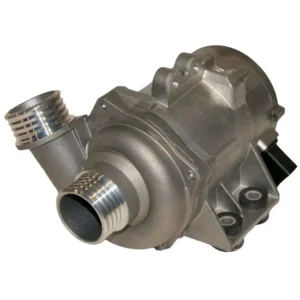
Aftermarket pumps have come a long way and now cover hundreds of makes and models. A dependable auxiliary water pump often costs far less than a dealer quote. If poor cabin heat continues, compare the signs of a bad heater core so you fix the true culprit. Before ordering, confirm fitment with your VIN, since some model years use different connectors.
Run these fitment checks before you buy:
- Match the connector style, since early and late builds can differ
- Confirm the port sizes and orientation against your old pump
- Verify year, make, model, and engine using your VIN
Where to Buy an Auxiliary Water Pump Online
Shopping online beats dealer pricing and lets you compare brands and warranties easily. CarParts.com stocks a deep range of pumps with guaranteed fitment for your ride. That makes it simple to match the exact part your car needs.
Popular fitments include the BMW auxiliary water pump lineup, Volkswagen auxiliary water pump options, and Chevrolet auxiliary water pump replacements. Bypassing instead? Add heater hose and clamps to the same order. If the real culprit turns out elsewhere, a fresh thermostat is a smart companion buy.
CarParts.com backs your replacement auxiliary water pump with a lowest-price guarantee, free 30-day returns, and fast shipping to your door. That lets you fix it right without overpaying or waiting on a dealer. Either way, you’ll have what you need in as little as two business days.
Keep Reading: Related Posts


Any information provided on this Website is for informational purposes only and is not intended to replace consultation with a professional mechanic. The accuracy and timeliness of the information may change from the time of publication.