So, does JC Whitney sell motorcycle parts? The short answer is no. The company doesn’t offer motorcycle parts anymore, but it did at one point. The shift happened gradually over the past couple of decades as the company adapted to changing customer needs and the rise of online shopping.
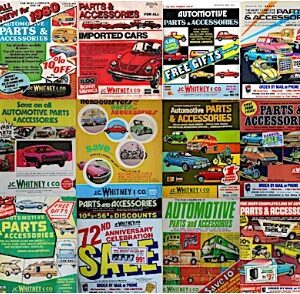
This might disappoint riders who remember flipping through those thick JC Whitney motorcycle catalogs back in the day. Those catalogs were something special. They gave generations of builders a chance to dream up their next project while sitting at the kitchen table. The good news is that vintage JC Whitney motorcycle catalogs have become collectibles in their own right, and plenty of enthusiasts still hunt them down to recapture that old-school browsing experience.
Today, JC Whitney carries a wide range of automotive parts and accessories. That focus helped them build a stronger replacement and performance selection for SUV, Jeep, and truck owners.
How It All Started: JC Whitney in Early Chicago
JC Whitney got its start in 1915 when Israel Warshawsky, a Lithuanian immigrant, opened up shop on Chicago’s South Side. The business model was pretty straightforward. Warshawsky had a knack for finding good inventory that other people overlooked. He bought up surplus parts and stock from manufacturers that had gone under, then turned around and sold those parts to customers who needed affordable solutions.
This approach really paid off during the Great Depression. When money got tight, people stopped buying new vehicles and started fixing what they already had. JC Whitney became the go-to source for folks who wanted to keep their cars and motorcycles running without breaking the bank. The company built its reputation on variety and value, especially for customers who lived far from big cities where parts stores were scarce.
In 1934, Roy Warshawsky came on board and saw an opportunity that would change everything. He pushed the company into mail-order distribution. According to company lore, a modest ad in Popular Mechanics (which cost around $60) introduced the JC Whitney catalog to readers across the country. That single move created the foundation for what JC Whitney would become. For the next several decades, those thick catalogs defined the brand and put hard-to-find parts within reach of mechanics and builders everywhere.
The Glory Days of JC Whitney Motorcycle Catalogs
When Motorcycles Were King
The 1960s kicked off a golden era for motorcycle customization in America. More people were riding, and the idea of building your own custom bike really took hold. JC Whitney’s catalog model fit perfectly into this world. The company started printing dedicated motorcycle catalogs, and these became must-have resources for anyone who worked on bikes.
Collectors today still seek out specific editions from this period. You’ll find people looking for the 1972, 1973, 1974, and 1978 catalogs, plus later editions like the 1998 version. Each one packed hundreds of pages with parts, accessories, and upgrades for all kinds of motorcycles.
These weren’t just parts lists. The catalogs actually taught you things. If you didn’t know what a component did or how it worked, the descriptions and illustrations walked you through it. Remember, this was decades before YouTube tutorials and online forums. The JC Whitney catalog was your encyclopedia, your shopping guide, and your inspiration all rolled into one.
More Than Just Shopping
For a lot of riders, browsing the JC Whitney motorcycle catalog became a hobby in itself. People treated it the way they scroll through Instagram today. Riders would sit down with a catalog, flip through the pages, and start planning their next build. They’d circle a few items, dog-ear some pages, and show their buddies what they were thinking about ordering.
That catalog also democratized customization. It showed regular people that they didn’t need a professional shop to build something cool. You could do it yourself in your garage with the right parts and a little determination. This DIY spirit created a whole community of builders who learned from each other and shared tips about what worked and what didn’t.
Even now, decades later, riders who grew up with those catalogs get a rush of nostalgia when they see the old covers and page layouts. It reminds them of a simpler time when shopping meant waiting for the mail and building meant getting your hands dirty.
The Business Side: Corporate Shuffles and Strategy Shifts
Like many American retail companies, JC Whitney underwent major ownership changes in the 2000s and 2010s. These moves reshaped what the company would become.
The Riverside Company bought JC Whitney on June 26, 2002. Five years later, in 2007, Riverside created something called the Whitney Automotive Group to bring several related automotive brands under one roof.
The next big change came on August 17, 2010, when U.S. Auto Parts (which later became CarParts.com) acquired JC Whitney through a deal that included the Whitney Automotive Group. This acquisition firmly established JC Whitney in the modern e-commerce world and set the stage for its current focus on automotive parts.
Why the Motorcycle Parts Disappeared
The Catalog’s Last Stand
As shopping moved online throughout the 2010s, the motorcycle catalog gradually became more of a historical artifact than an active sales tool.
The company kept printing catalogs for a while, but the focus steadily moved toward automotive categories. Eventually, JC Whitney stopped producing motorcycle catalogs altogether, though the vintage editions remain popular with collectors who appreciate that piece of motorcycling history.
The Online Evolution
By the late 2010s, the motorcycle section had shrunk considerably. JC Whitney made a strategic choice to concentrate on what most of their customers were actually shopping for, which turned out to be automotive parts. Building a really strong online parts catalog takes serious resources. You need accurate fitment data, detailed product information, good photos, and customer service people who know the products inside and out. JC Whitney decided to put those resources into automotive rather than spreading themselves thin across multiple vehicle types.

What JC Whitney Looks Like Today
Back to Automotive Roots
These days, JC Whitney is all about cars and trucks. The company focuses on serving DIY mechanics who like to work on their own vehicles. You’ll find OE-style replacement parts for routine maintenance, a solid selection of tools, and plenty of garage essentials that help you keep your ride in top shape.
The company also carries a strong lineup of aftermarket and performance parts for people who want to modify and upgrade their vehicles. This connects back to that old JC Whitney spirit of helping builders create something unique, just with a different type of vehicle than the motorcycles of decades past.
Trucks and Off-Road Take Center Stage
If you browse the JC Whitney site today, you’ll notice they really lean into the truck and Jeep market. This makes sense when you look at what people are buying. Truck owners love to customize, and JC Whitney stocks the parts they need.
The product mix includes suspension components like leveling kits and lift kits, plus all the hardware you need to install them properly. You’ll also find plenty of exterior upgrades that appeal to off-road enthusiasts and people who use their trucks for work. Think off-road lighting, bed racks, grille guards, heavy-duty bumpers, and cargo management systems.
This focus on trucks and off-roading actually keeps the JC Whitney tradition alive in a different form. People are still building, upgrading, and personalizing their rides. They still want to do the work themselves. The wrenches just turn on different vehicles now. The company adapted to where the demand went, and for a lot of truck owners, JC Whitney remains a solid resource for building the rig they want.
Keep Reading: Related Posts




Any information provided on this Website is for informational purposes only and is not intended to replace consultation with a professional mechanic. The accuracy and timeliness of the information may change from the time of publication.