Your Easter weekend car prep checklist starts here: check tire pressure and tread depth, inspect the battery, test wiper blades and top off washer fluid, verify coolant and oil levels, walk around for burned-out lights, feel for brake pull or vibration, and confirm your emergency kit is stocked. That covers the non-negotiables. Everything here is things to check before a road trip that can reveal a problem while you still have time to fix it, not after you’ve merged onto the freeway with a car full of passengers.
Key Takeaways
- Tires, battery, and brakes are the three systems most likely to strand you; check them first and do it at least a week before you leave.
- A battery more than three to four years old is a legitimate trip risk, especially after a cold winter.
- Low fluid levels in closed systems like brakes and coolant often indicate a slow leak worth investigating before you hit the highway.
- Cars that sat most of the winter need extra scrutiny: rubber degrades, connections corrode, and tires develop flat spots.
- Pack a basic emergency kit regardless of how well-maintained your car is; it’s the one prep that covers every scenario.
The Core Pre-Trip Checklist
Tires: pressure, tread, and condition
Check tire pressure cold, before driving your car. The correct spec is on the door jamb sticker, not the max rating molded into the tire sidewall. Tires lose roughly 1–2 PSI for every 10-degree drop in ambient temperature, so if your car spent the winter in a cold garage or parked outside, pressures are almost certainly off.
For tread depth, use the penny test: insert a penny into the tread groove with Lincoln’s head pointing down. If you can see the top of his head, the tire is at or past the wear limit and needs replacing before a highway run. Check all four corners, since uneven wear indicates an alignment or rotation issue worth addressing.
Also look for sidewall cracking, bulges, or any tire that’s been consistently low. A slow leak that you’ve been topping off for weeks won’t survive a 300-mile drive.
Battery: age and cold-weather wear
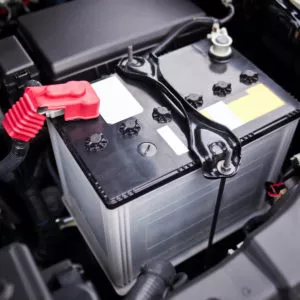
If your battery is three or more years old, test it before the trip. Most auto parts stores will load-test a battery for free. A battery that barely survived the winter cold may fail completely when temperatures warm up and heat stress enters the equation.
Watch for slow engine cranking, a dash warning light, or headlights that dim noticeably when you start the car. Any of those symptoms before a long drive means the battery deserves a closer look. Clean any visible corrosion off the terminals with a wire brush and confirm that the cable connections are tight.
Wiper blades and washer fluid
Winter wiper blades take a beating from ice, freezing temperatures, and the physical force of scraping. Replace them if they’re skipping, streaking, or chattering across the glass even on a clean windshield. Check your owner’s manual or look up your car’s year, make, and model to confirm the correct blade size for driver and passenger sides.
Top off the washer fluid reservoir with a spring/summer formula. Plain water leaves mineral deposits in the lines and can freeze overnight if temperatures drop again before the holiday weekend.
Engine oil and coolant
Verify oil level on the dipstick and note the color. Dark brown to black oil that’s well overdue for a change should be addressed before a long trip, not after. If the oil looks milky or foamy, that’s a potential head gasket issue requiring immediate attention.
Check the coolant level in the overflow reservoir with the engine cold. Low coolant in a closed system points to a leak somewhere in the cooling circuit. Overheating on a packed Easter weekend highway is a miserable and preventable situation. If you’re not sure when the coolant was last replaced, check your maintenance records — most manufacturers recommend a flush every 30,000 to 50,000 miles or every two to five years.

Brake feel and brake fluid
Press the brake pedal firmly before you pull out of the driveway. It should feel solid and stop well before it reaches the floor. Any sponginess, pulsation underfoot, pulling to one side, or grinding or squealing noise when you stop warrants an inspection before your trip. Brake issues aren’t a situation to monitor while driving through holiday traffic.
Check the brake fluid level in the reservoir under the hood. Brake fluid is a closed system, so a noticeably low level usually means either the pads are worn down or there’s a leak in the system. If the fluid is dark brown rather than light amber or clear, a flush is overdue.
Exterior lighting
Walk around your vehicle with a helper and cycle through every light: headlights, high beams, brake lights, tail lights, turn signals, reverse lights, and hazard flashers. A burned-out brake light is invisible to the driver and is an easy rear-end collision trigger in heavy holiday traffic. Replace any dead bulbs before the trip.
Spare tire and emergency kit
Confirm that your spare tire is inflated. A flat spare found on the side of the road is useless. Make sure the jack and lug wrench are accessible and that you know how to use them. A basic emergency kit should include jumper cables or a jump-start pack, a flashlight, a reflective triangle or flares, a basic first-aid kit, and a phone charger cable.
What Can Wait vs. What Can’t Before a Trip
Not everything on the deferred maintenance list needs attention before Easter weekend, but some items are genuine no-gos.
Items that can wait a week or two without significantly increasing trip risk include cabin air filter replacement, an exterior detail, minor paint chips, interior vacuuming, and scheduled maintenance items that are a few hundred miles away.
Items that can’t wait: any brake symptom, a battery showing signs of weakness, a tire at or near the wear limit, a coolant level that’s been dropping, a check engine light accompanied by drivability symptoms, or any fluid that looks contaminated. These are trip-enders waiting to happen.
How Far in Advance Should You Inspect?
Inspect at least five to seven days before you plan to leave. This window gives you time to order parts, schedule a shop appointment if something needs professional attention, and receive parts if you’re doing the work yourself. Doing your pre-trip check the night before a holiday weekend is how you discover a problem you can’t fix in time.
The Be Car Care Aware program recommends building maintenance check-ins into predictable calendar moments, and a major holiday weekend departure is exactly that kind of moment.
Signs Your Car Isn’t Ready for Easter Weekend Travel
These are the clearest signals that your vehicle needs attention before you load up.
The check engine light is on. It might be something minor, but you won’t know that until it’s diagnosed. A failing O2 sensor or catalytic converter won’t strand you immediately, but an engine misfire or fuel system fault could.
Your car pulls noticeably to one side under braking. This is a brake or suspension issue that gets worse at highway speeds and in emergency stops.
You hear grinding or a consistent metallic squeal when braking. Both indicate worn brake pads and potentially scored rotors.
Your car cranks slowly or hesitates before starting, especially on warmer mornings after a cold night. This is a battery on its way out.
There’s a fluid puddle under your parked car. Oil, coolant, and brake fluid all leave different stains. None of them are fine to ignore before a trip.
Vehicle-Specific Considerations
Older Hondas and Toyotas
High-mileage Civics, Accords, Camrys, and Corollas often develop slow coolant leaks at the water pump or timing cover gaskets that only show up as a slight drop in the overflow reservoir. Check it now and recheck it after the first warm-up cycle the morning you leave. Also inspect the CV axle boots for cracking or grease spray on the inside of the wheel well. Torn boots allow debris into the joint and can cause failure under load.
SUVs and trucks
Larger vehicles carry more weight and put more stress on brakes and tires. Check brake pad thickness carefully, especially on the rear axle if your vehicle has towed anything recently. If your SUV or truck has four-wheel drive, test the engagement before the trip. If it hasn’t been used in months, do a brief test in a parking lot to confirm that it engages and disengages cleanly.
Cars that sat all winter
If your vehicle sat for several months with minimal use, check the tire contact patches for flat spots, usually felt as a thumping vibration at low speeds that goes away after a few miles of driving. Inspect rubber hoses under the hood for cracking or brittleness. Check the brakes for rust accumulation on the rotors, which can cause pulsing under the pedal for the first few stops. A longer test drive before the departure date is the best way to surface any dormant issues.
FAQ
How do I check tire tread depth without a gauge? The penny test works reliably: insert a penny into the tread with Lincoln’s head facing down. If the top of his head is visible, the tire is at or below 2/32 of an inch, which is the legal minimum in most states and the practical threshold for safe highway driving in wet conditions. A quarter gives you a slightly more conservative check at 4/32.
What should I include in a road trip emergency kit? At minimum: jumper cables or a portable jump-start pack, a reflective triangle or road flares, a basic first-aid kit, a flashlight with fresh batteries, a tire pressure gauge, a phone charging cable, and a bottle of water. A basic tool kit and a can of tire inflator spray are also worth adding.
How do I know if my battery is bad before a road trip? Slow engine cranking, especially on mild mornings, is the clearest sign. Headlights that dim noticeably when the car starts, a battery warning light on the dash, or a battery that’s been jump-started more than once in the past few months are all reasons to have it tested. Free load testing is available at most auto parts retailers.
Can I drive with a check engine light on for Easter weekend? It depends on the underlying cause. A steady check engine light with no drivability symptoms is lower risk than a flashing light, which typically indicates an active misfire. If the light came on recently and the car drives normally, you may be fine for a short trip, but getting it scanned first is the responsible move. Most auto parts stores will read the code for free.
How often should brake fluid be replaced? Most manufacturers recommend every two years or 24,000 miles, though this varies by vehicle. Brake fluid absorbs moisture over time, which lowers its boiling point and can cause spongy pedal feel. If the fluid looks dark or you haven’t replaced it in a few years, it’s worth changing before a long drive with lots of elevation change or repeated heavy braking.
What if my car needs repairs I can’t finish before Easter weekend? Prioritize safety-critical systems: brakes, tires, and steering. If you can’t address a known brake issue, battery failure, or tire at the wear limit before you leave, postpone the drive or rent a vehicle. No road trip schedule is worth the risk of a mechanical failure at highway speed.
Whether you’re driving a well-maintained daily driver or a high-mileage SUV that spent the winter sitting, this Easter road trip checklist covers the systems that matter most before a long holiday run. CarParts.com carries the parts you need to work through it, including tires, brake pads, batteries, wiper blades, and fluids, all searchable by your car’s exact year, make, and model. Getting the right fit the first time means you spend the weekend where you planned to be, not waiting on a tow.
Keep Reading: Related Posts



Any information provided on this Website is for informational purposes only and is not intended to replace consultation with a professional mechanic. The accuracy and timeliness of the information may change from the time of publication.