Most ignition switch orders go sideways before the box is even opened. The shopper sees a familiar-looking cylinder with two keys, a fair price, and a year, make, and model that match closely enough. Then the package arrives with the wrong terminal count, no compatibility with the vehicle’s immobilizer, or a bare switch when the actual culprit was the lock cylinder. The vehicle is still in the driveway, the column is still buttoned up, and the repair stalls.
How the Ignition Switch and Lock Cylinder Work Together
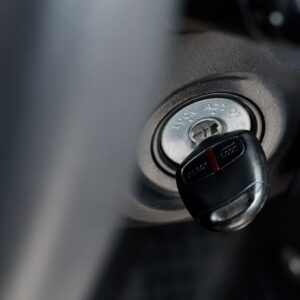
The ignition switch isn’t always part of the lock cylinder. It is frequently a separate part operated by the lock cylinder. On a vehicle with a key, the lock cylinder is basically the “gatekeeper” that operates the switch, so don’t call the lock cylinder the ignition switch unless you know for sure they are both part of the same assembly.
A separate switch and cylinder are common on many older domestic and import platforms, including older Ford, GM, and Chrysler trucks and cars. The mechanical lock cylinder sits where you insert the key, while the electrical switch is a separate plastic module mounted farther down the steering column and linked by a cast-metal actuator rod.
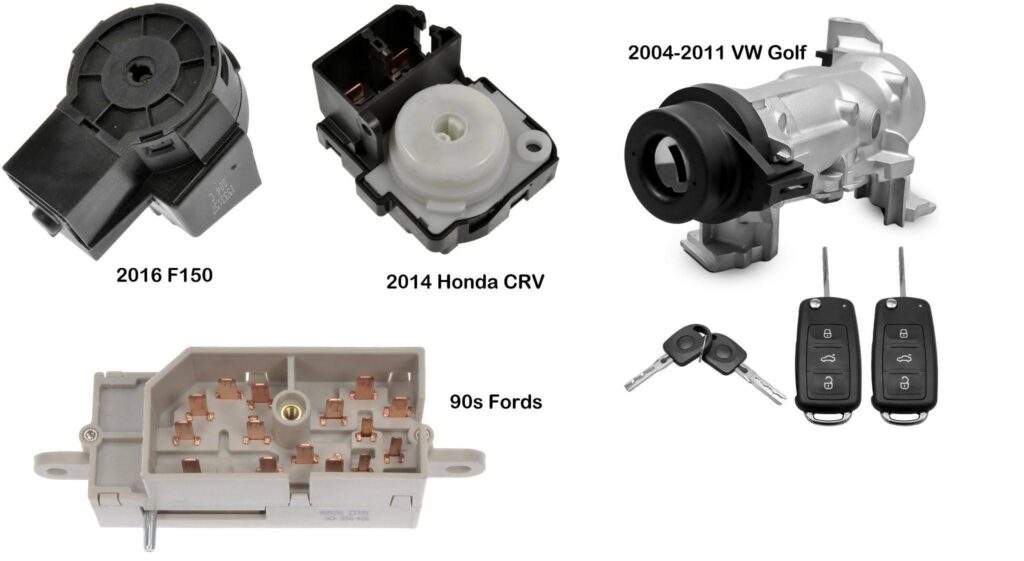
If only the electrical contacts are burned, you can buy just the electrical switch. You keep your original keys, meaning you don’t have to rekey the door locks or reprogram any anti-theft chips.
If you don’t diagnose carefully, you might replace the switch only to find out that the cast-metal actuator inside the column was the piece that actually snapped.
Many modern European and Asian vehicles, as well as late-model domestic cars, feature an electrical switch that snaps or bolts directly onto the tail end of the metal lock cylinder housing.
Manufacturers often sell this as a complete unit that includes the housing, cylinder, and switch. Buying the whole assembly eliminates some guesswork. If the internal mechanical linkage is broken, a new complete assembly can address the failure when that linkage is included.
Buying the whole unit is more expensive and can create the “two-key problem,” with one key for the ignition and another for the doors, unless you recode the new cylinder tumblers to match your original key.
On certain modern platforms, the mechanical and electrical components are built into a single, non-serviceable housing. If the electrical contacts burn out or the keyway gets damaged, the entire housing must be replaced as a single unit.
Also, if you’re replacing the lock cylinder with new keys, make sure you can program the keys when required or hire someone to do it. If the fob is built into the key, its remote functions may need to be paired separately with the remote keyless entry system.
The smarter starting point isn’t “What’s cheapest?” or “What looks close?” It’s a simpler question: What exactly needs to go in the cart for this job to finish in one shot?
Ignition switches sit in a confusing product category. Some listings sell the electrical switch only, others sell the lock cylinder with keys, and some bundle both. A few include the housing, tumblers, or anti-theft pickup. On top of that, the same vehicle line can have three or four different ignition switch variants depending on column type, transmission, and anti-theft hardware. That’s why this part category produces so many partial carts, returns, and reorders.
The Job in One Sentence
An ignition switch order should restore the full key-to-start function safely, with every electrical position working and the anti-theft system intact.
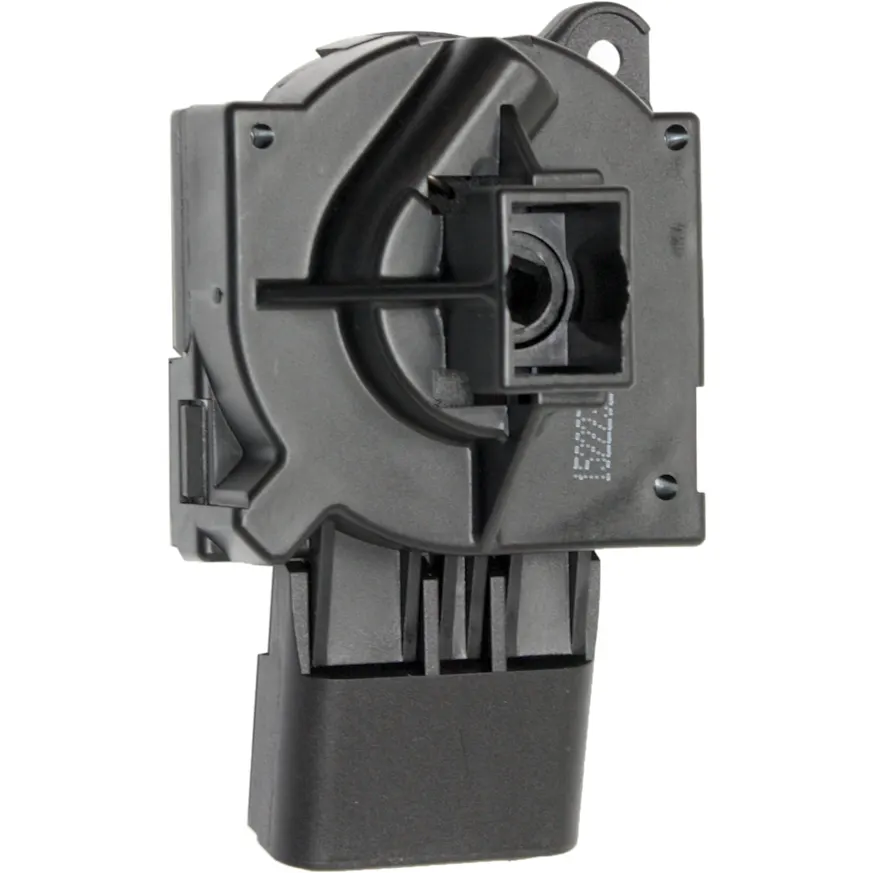
The ignition switch is the gatekeeper for the starting and accessory system. Depending on the vehicle, the overall ignition switch and lock assembly can control accessory power, ignition power, the starter motor circuit, the steering column lock, and the immobilizer input. Some failures are purely electrical, such as worn contacts that won’t carry current. Others are mechanical, such as a worn lock cylinder, a stuck key, or a sheared retainer. The ignition switch you see on a product page may be either of those pieces, or both bundled together, and the cart has to match the actual failure.
This means the order isn’t about the headline part name. It’s about which physical assembly your vehicle needs, what’s included in the listing, and what has to be programmed or relearned afterward.
Choose Your Cart Size
Pick the cart that matches the failure mode and ownership goal, not the cart with the most parts in it.
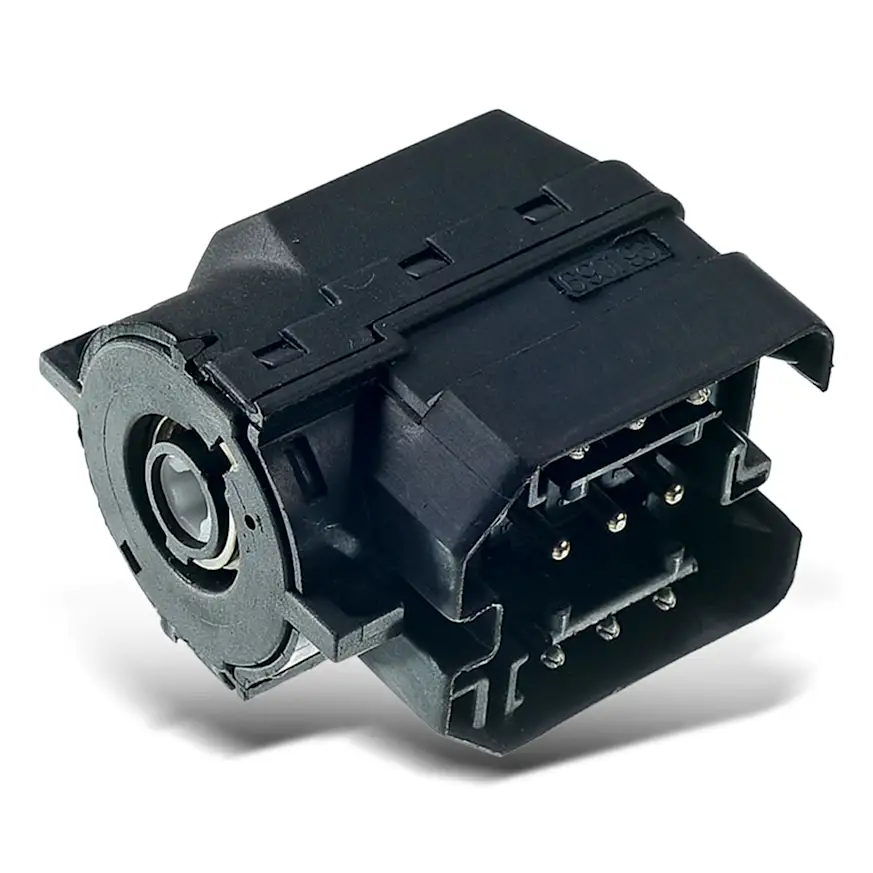
Minimum Viable Repair
The electrical switch is failing, but the lock cylinder and keys still work cleanly.
Choose it if:
- The key turns smoothly with no binding
- Accessory and start positions are intermittent or dead
- Your vehicle cranks with a bypass but not from the key
- No anti-theft fault is stored
Typical cart:
- Ignition switch (electrical) only
- Replacement column trim screws if the originals are stripped
- Dielectric grease for the new connector
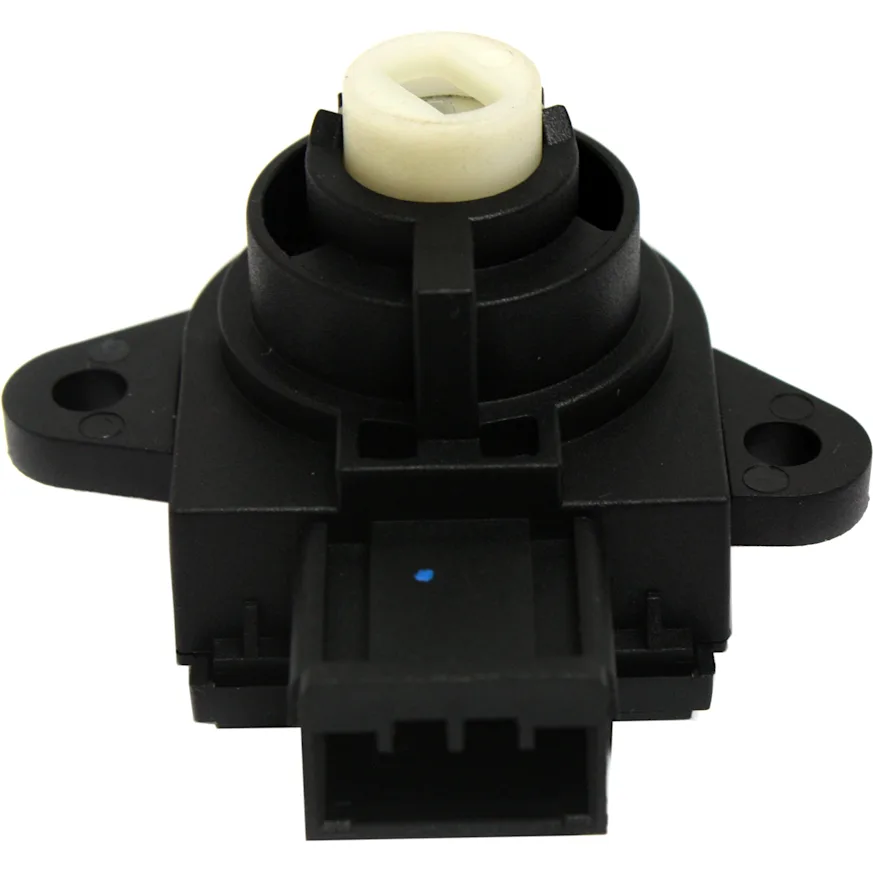
Smart Same-Access Refresh
Both the electrical switch and the lock cylinder show wear, and the column trim is already coming off.
Choose it if:
- The key sticks, drags, or has to be jiggled to turn
- Multiple positions feel notchy or unreliable
- Your vehicle has high mileage on the original lock cylinder
- A second key behaves the same as the worn one
Typical cart:
- Ignition switch assembly
- Lock cylinder with new keys
- Tilt lever or lock plate cover if cracked
- Replacement column trim fasteners
High-Mileage Do-It-Once Reset
Older vehicle, long ownership horizon, and the column has never been opened up.
Choose it if:
- The original switch and cylinder are still in your vehicle past 150,000 miles
- The shifter interlock cable or solenoid is suspect
- The key already needs a wiggle or the shifter needs a nudge to start
- You plan to keep your vehicle several more years
Typical cart:
- Ignition switch assembly
- Lock cylinder with matched keys
- Shift interlock solenoid or cable, if applicable
- Steering column harness pigtail if the connector’s brittle
- Transponder key blanks of the correct type
What’s Commonly Ordered Together on This Job
The ignition switch is one of those repairs that rarely needs just one box. Here are the item groups that show up most often in completed carts.
Lock Cylinder and Keys
If the key’s the problem, the electrical switch behind it usually isn’t, and vice versa. Plenty of shoppers buy the wrong half of the assembly. Confirm whether the listing includes the cylinder, the keys, both, or neither.
Hardware and Retainers
Column-mounted switches often use a shear-head bolt or a tamper-resistant fastener that gets destroyed on removal. A small bag of replacement screws or a tamper-bolt set is cheap insurance.
Connectors and Pigtails
In older vehicles, the ignition switch connector can get brittle from years of heat cycling. A replacement pigtail with fresh terminals is often smarter than reusing a connector that is already cracking.
Steering Column Components
The lock plate, tilt mechanism cover, and turn-signal cancel cam can be damaged during cylinder removal. If the column trim is coming off anyway, that’s the right moment to inspect them.
Transponder Keys and Programming
Anti-theft equipped vehicles need either dealer programming, a locksmith, or a compatible programmer to recognize new keys. Order the right key blank type, and confirm programming access before the old key is destroyed.
Battery and Air Bag Prep
Many ignition switch jobs require airbag-safe procedures, which can include disconnecting and isolating the battery and waiting the specified time before column work begins. Follow the factory service information for the vehicle, and use a clean battery-terminal tool as needed.
What People Forget Until the Vehicle’s Already Apart
- The replacement switch may not include keys, even if the product photo shows them.
- The lock cylinder and the electrical switch are often two separate parts in the same vehicle.
- Anti-theft equipped vehicles need a relearn or programming step after switch or cylinder replacement.
- The tamper-resistant or shear-head bolts holding the assembly to the column usually need to be drilled out and replaced.
- Column-mounted and dash-mounted switches use completely different mounting logic.
- Tilt-column vehicles may require an extra retainer or spring that doesn’t ship with budget kits.
- The shifter interlock cable, not the ignition switch, is the real culprit behind some “won’t turn from Park” complaints.
- Automatic and manual transmission variants can use different switch wiring for the starter interlock.
- Some pickups split the harness by tow package, which can change the connector on the switch.
When Replacing Only the Ignition Switch Is False Economy
Sometimes the minimum cart is right. If the contacts are arcing and the key still turns smoothly, swapping only the electrical switch is the honest fix. There’s no reason to disturb a cylinder that works.
The math changes the moment the column trim comes off a high-mileage vehicle. Lock cylinders wear from the inside out. The wafers compress, the spring tension softens, and the tumblers start to drag. Reinstalling a worn cylinder behind a new electrical switch usually means a second teardown within a year, this time with the steering wheel coming off because the cylinder finally seized with the key inside.
The same logic applies to the column harness connector in vehicles older than 15 years. Heat-cycled plastic cracks the moment you separate it. If it’s coming apart anyway, replacing the pigtail while the column’s open saves the next labor cycle.
That said, replacing only the switch is reasonable for a low-mileage vehicle with a clean-turning key, for a daily driver about to be sold, or when the failure is clearly electrical and the cylinder shows no wear. Honest mechanic logic means matching the cart to the vehicle’s age and the owner’s plan, not maximizing parts for every job.

The Fitment Splits That Break Ignition Switch Orders
This is where most wrong-part returns originate. Ignition switches look similar across vehicle lines, and the splits aren’t always obvious from a thumbnail.
Column-Mounted vs. Dash-Mounted
Older trucks, hot rods, marine applications, and off-road equipment often use a dash-mounted switch with a separate keyway. Most modern passenger vehicles use a column-mounted assembly tied to the steering lock. These aren’t interchangeable.
Electrical Switch vs. Lock Cylinder
The “ignition switch” in one listing may be the electrical block behind the dash, while another listing with the same name is the keyed cylinder. Confirm which physical piece you’re buying before you check out.
Number of Positions and Terminals
Switches come in 3-position (OFF, ON, START) and 4-position (ACC, OFF, ON, START) configurations, with varying terminal counts. A 4-terminal universal switch won’t replace a 7-terminal factory assembly.
Anti-Theft and Immobilizer Provisions
Vehicles with passive anti-theft systems require a switch and cylinder set that includes the transponder ring or signal pickup. A non-immobilizer switch will crank but won’t start.
Transmission Type
Automatic transmission vehicles route the starter request through the ignition system and the park or neutral safety logic. Manual transmission vehicles typically rely on a clutch-position interlock instead. The wiring and control strategy may differ. When applicable, match the replacement to the vehicle’s neutral safety switch or clutch interlock configuration.
Tilt vs. Non-Tilt Column
Tilt columns frequently use a different retainer, spring, and sometimes a different lock plate. Some replacement assemblies fit only one column style.
Production-Date or VIN Split
Midyear revisions are common in this category. A vehicle built in early production may use a different ignition switch than one built later in the same model year. Match by VIN when the listing allows it.
Key Type
Mechanical keys, transponder keys, laser-cut sidewinder keys, and proximity fobs aren’t interchangeable. A switch sold with two mechanical keys won’t operate a vehicle that expects a transponder signal.
Delivery-Day Inspection Checklist
A quick bench check before the column trim comes off saves a return and a rescheduled repair.
- Terminal count and pin layout match the original switch
- Connector body shape and locking tab match the vehicle harness
- Keys are included if the listing promised them
- Mounting holes or shear-bolt provisions line up with the column or dash bracket
- Lock cylinder turns cleanly through all positions with the supplied keys
- Transponder ring or antenna pickup is present if the vehicle has anti-theft
- Tilt-column retainer or spring is included when applicable
- Shaft length and orientation match the column on dash-mounted units
- Packaging shows no impact damage to the keyway or terminal block
- Any included programming card or anti-theft code is legible and intact
Your One-Job Order Sheet for an Ignition Switch
A pre-purchase checklist to keep the cart accurate.
- Confirm the vehicle: match year, make, model, trim, engine, transmission, and VIN range. Note whether the vehicle is anti-theft equipped.
- Confirm the repair scope: electrical failure, mechanical key failure, or both. Decide whether the job is switch-only, cylinder-only, or full assembly.
- Confirm what the listing includes: keys, lock cylinder, electrical switch, transponder ring, mounting hardware, or harness pigtail. Don’t assume that any of these are bundled.
- Add the consumables and adjacent items: replacement shear bolts or column screws, dielectric grease, a memory saver, and any small column-trim clips known to break on removal.
- Bench-check the old part logic: before ordering, verify whether the failure is the switch, the cylinder, the shifter interlock, or the wiring. Don’t pay to replace a part that isn’t broken.
- Plan the programming step: if your vehicle uses a transponder or proximity system, line up dealer programming, a locksmith, or a compatible programmer before destroying the old key.
- Choose the right ownership logic: match the cart to vehicle age, mileage, and how long the vehicle will stay in service.
The Smart Way To Shop Ignition Switches
The cheap-looking order is usually the one that comes back. A switch by itself won’t fix a worn cylinder. A cylinder with new keys won’t solve an arcing electrical switch. A full assembly without the required immobilizer compatibility won’t start an anti-theft-equipped vehicle.
The correct order is the one that matches the failure mode, your vehicle’s actual configuration, and the labor cycle you don’t want to repeat. That’s a shorter checklist than it sounds, and it gets easier once you stop shopping by thumbnail.
Build the cart around the job. Confirm the splits before checkout. Order once, finish once.
Keep Reading: Related Posts





Any information provided on this Website is for informational purposes only and is not intended to replace consultation with a professional mechanic. The accuracy and timeliness of the information may change from the time of publication.