Replace your dirt bike tires when the knobs lose their sharp leading edges, chunks start tearing out, or the bike stops gripping like it used to. Don’t just rely on tread depth. Many off-road riders swap tires with half the original knob height still existing, because traction comes from the knob edges, not from how much rubber remains. Deciding when to replace dirt bike tires comes down to three checks: how the knobs look, how the bike feels, and what terrain you’re about to ride.
Key Takeaways
- Sharp, square knob edges create grip. Once they round off, traction drops even with plenty of tread left.
- Rear tires wear much faster than fronts, so expect to buy more rears.
- Mud, sand, loose gravel, and steep climbs call for fresher rubber than hardpack or pavement.
- A rear that slides under braking or a front that pushes in turns means it’s time for a replacement.
- Torn, chunked, or cracked knobs justify a new tire, regardless of tread depth.
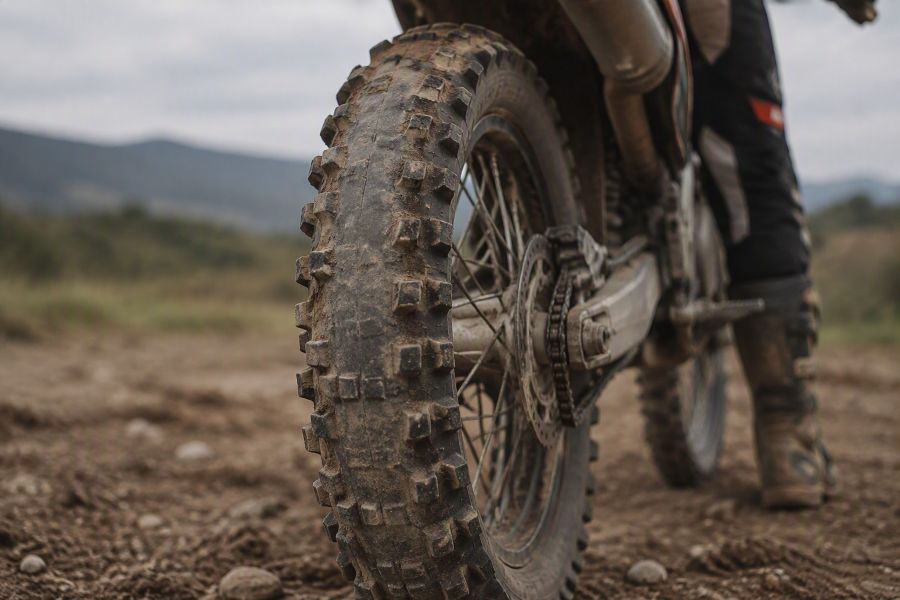
Why Knob Edges Matter More Than Tread Depth
Knob edges matter more because they do the actual digging. A new knob meets the ground with a crisp, near-vertical face that bites into the dirt. As the knob wears, this leading edge rounds over, and some riders describe the face sloping from roughly 90 degrees to closer to 60. A rounded knob slides across the surface instead of biting into it.
That’s why a tire can still have tall knobs and feel vague. Check the leading edges of the rear knobs first, since they take the most abuse from acceleration and braking.
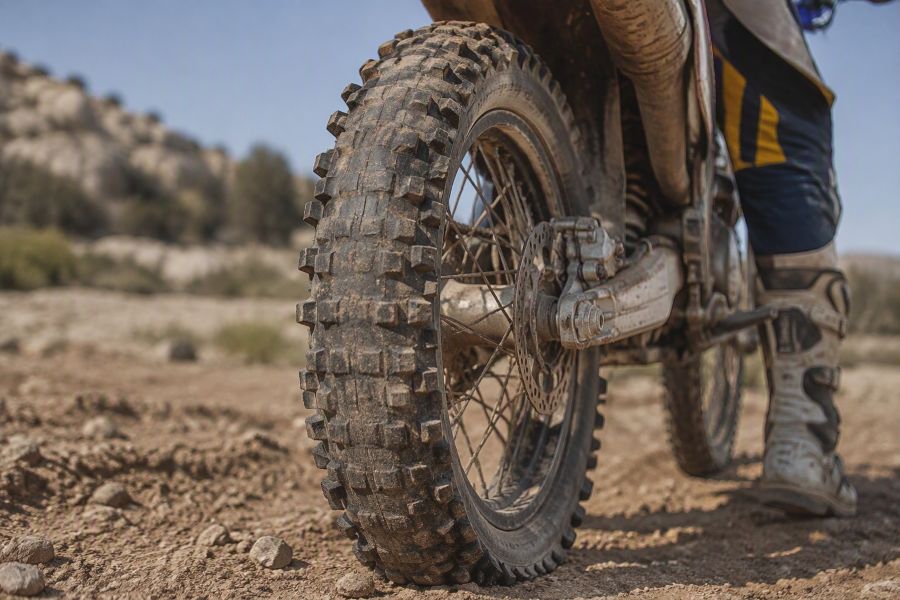
Visual Signs Your Dirt Bike Tires Are Worn Out
A quick walkaround in good light catches most worn tires before they cause trouble.
Rounded Knob Edges
Compare the drive side of a knob with the side facing the other way. If the drive edge looks smooth and rounded while the trailing edge still looks sharp, the tire has lost most of its bite.
Chunking and Torn Knobs
Missing chunks, torn knobs, and cracks at the knob base mean the tire is breaking down. Rocky terrain and hard throttle speed up chunking, and thin, worn knobs start to flex and fold under load.
Squared-Off or Flattened Center
Pavement and hardpack miles wear the center tread flat. A squared-off rear makes your bike feel like it’s moving around more and slows steering response, especially on paved roads.
Cracked or Hardened Rubber
Rubberhardens with age and sun exposure, so a tire that sat in the garage for several seasons can grip poorly even with deep tread. Check the sidewalls and knob bases for cracks.
How Worn Tires Feel on the Bike
Feel often tells you a tire is done before your eyes do. If the bike behaves differently on familiar terrain, look at the tires first.
Rear Tire Symptoms
A worn rear spins more on climbs, steps out under acceleration, and slides early when you use the rear brake. Many riders know it’s time for a new tire when a firm rear brake application turns into a slide on ground that used to hold.
Front Tire Symptoms
A worn front pushes or washes out in corners and won’t hold a line in ruts. Experienced riders often keep a fresher knobby on the front even while running the rear harder, because losing the front tire usually means going down. If the front tire feels unpredictable, inspect it before your next ride.

How Terrain and Riding Style Change Replacement Timing
The softer, looser, or steeper the ground, the sooner you’ll want new rubber. Your riding style and tolerance for risk matter too.
Mud, Sand and Loose Gravel
Soft terrain needs tall, sharp knobs to clear and dig. Some trail riders replace tires with 60% to 70% of the tread still left when they ride soft dirt or gravel. Racers often mount a new tire before a muddy race, no matter how the old one looks.
Hardpack and Rocky Trails
Hardpack rounds knob edges quickly, and sharp rocks chunk them. On rocky trails, check for torn knobs after every ride, not just tread height.
Dual-Sport and Pavement Miles
Dual-sport tires usually show wear as a flattened center. Some heavy dual-sport riders run tires far down because their bikes don’t make enough power to break traction easily. Start with fresh tires before a long trip, , since wet pavement at night exposes a worn tire fast.
Typical Replacement Intervals for Front and Rear Tires
There’s no fixed mileage, but the rear typically wears out about twice as fast as the front.
Off-road riders commonly report 500 to 1,000 miles from an aggressive rear knobby, with soft-compound tires on the shorter end. Riders who go out three or four times a month often replace the rear each season and the front every two seasons. Treat these figures as rough guides, not guarantees, and let tire condition make the final call.
Since dirt bike season usually runs spring through fall, make a tire check part of your preseason prep.
Flipping a Tire To Extend Its Life
Flipping a non-directional tire on the rim puts the sharper trailing edges forward and buys you extra grip. Some racers get a race or two per edge this way. If the sidewall shows a rotation arrow, the tire is directional, so mount it only in that direction.
Doing the Tire Swap Yourself
Most tire swaps are a garage job if you have the right tools. If you’re learning how to change a dirt bike tire, plan on tire irons, rim protectors, a bead breaker, tire lube, and a valve core tool.
Changing a tire on dirt bike wheels also gives you a chance to inspect the rim lock, spokes, and wheel bearings. Fit a new tube with a new tire, since a worn or pinched tube is a common cause of flats. Torque the axle to spec, set the air pressure, and confirm the brakes work before you ride.
FAQs
There’s no universal number. Many off-road riders replace tires with 50% to 75% of the tread remaining, but knob edge condition matters more than knob height.
Not necessarily. The rear wears faster, so most riders replace it more often and change the front when it shows its own signs of wear.
It depends on terrain, compound, bike weight, and riding style. Aggressive off-road riders may go through a rear in a few hundred miles, while dual-sport riders can go much longer.
It’s not a good idea off-road. A bald tire offers little grip in dirty, muddy, or wet conditions, which raises your risk of a crash.
Yes, if the rubber has hardened or cracked. Aged rubber grips poorly, so inspect older tires closely before you rely on them.
Fresh tires restore the grip and control you need where the pavement ends. Whether you’re prepping for track season or replacing a chunked rear after a rocky weekend, matching the tire to your terrain keeps every ride predictable. Find dirt bike tires, tubes, and tire-change tools for every machine in your garage at the JC Whitney Performance Hub.
Keep Reading: Related Posts


Any information provided on this Website is for informational purposes only and is not intended to replace consultation with a professional mechanic. The accuracy and timeliness of the information may change from the time of publication.