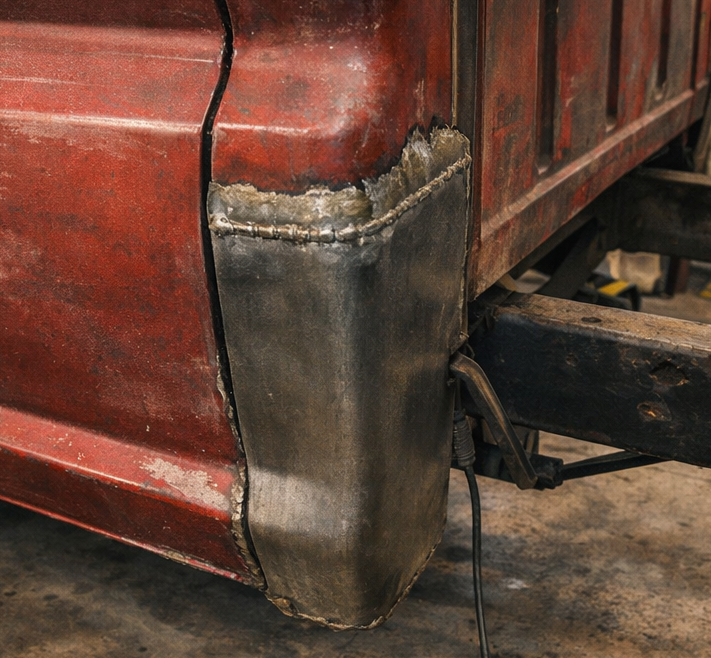
Cab corner rust is one of the most predictable problems on older pickups, especially those from rust-belt states. The lower rear corners of the cab trap moisture, road salt, and debris, and they rust from the inside out. By the time the damage is visible, the metal behind it is often worse. Knowing how much to fix cab corner rust before you commit to a repair path keeps you from spending more than the truck is worth.
What Cab Corner Rust Repair Actually Costs
The range is wide: from around $150 for a DIY patch to $5,000 or more for a full professional replacement on a late-model truck with paint matching.
Here is a breakdown by repair path:
DIY patch panel with welding:
- Cab corner repair panel: $30 to $150 per side
- Welding consumables, primer, and seam sealer: $50 to $150
- Total out of pocket: $150 to $400 for both sides (not counting tool ownership)
Professional shop repair (welded replacement):
- Parts: $100 to $500 per side depending on make and model
- Labor: $500 to $1,500 for both sides at typical body shop rates of $80 to $120 per hour
- Paint blending: $300 to $800 additional
- Total: $1,000 to $3,500 for both sides on most common trucks
Extensive rust with inner structure damage:
- When the inner cab corner, cab mount area, or adjacent rocker panel needs work alongside the outer panel, costs can climb to $3,500 to $5,000 or more at a reputable shop.
The single biggest variable is whether rust has reached the inner structure. Outer panels are sheet metal repairs. Inner structure repairs involve more hours and more skill.
If the truck is an older workhorse and your main goal is cosmetic improvement, molded plastic cab corner and rocker covers are available for some popular models, including older Chevrolet Silverado 1500 pickup, Ford F-150 pickup, and Ram 1500 truck applications.
These covers fit over the existing body panels and are typically secured with automotive-grade tape and fasteners. Prices vary by vehicle and kit. They can improve appearance, but they are not a structural rust repair. The corroded metal should be cleaned and treated before installation, and any structural rust still needs proper repair.
Before committing to any repair path, inspect the inner rocker panels, cab mounts, and frame for corrosion. If the underlying structure is solid, repairing the cab corners can be a reasonable way to extend the truck’s service life.
What Drives the Price Up (and Down)
Several factors push quotes in opposite directions.
Labor rate by region: Body shops in major metro areas charge $100 to $150 per hour. Rural shops often run $65 to $90. A job quoted at $2,200 in one city may cost $1,100 three hours away.
Cab style: Extended cab and crew cab trucks have larger, more complex corner panels. More metal means more fitting, more welding, and more time grinding seams before paint.
Bed removal: On most body-on-frame trucks, doing the job correctly requires pulling the bed back or removing it entirely to access the rear corner seam. Shops that skip this step often rely on adhesive, a few tack welds, and heavy filler, which is a repair that rarely lasts more than two winters.
Warning: If a shop quotes unusually low and says the bed does not need to move, ask how they plan to seam-weld the back edge. If they cannot give a straight answer, go elsewhere.
Inner panel condition: Surface rust on the outer panel only is a straightforward job. Rust that has migrated to the inner cab corner, the cab mount reinforcement, or the floor near the B-pillar adds hours and materials. Get a look at the inside before accepting any quote.
Paint matching: Trucks older than 10 to 15 years often have faded factory paint. A paint blend that matches well costs more than a flat respray of the panel in the original color code. On a daily driver, this may not matter. On a truck you plan to sell, it does.
Repair Panel vs. Full Corner Replacement
Two types of metal are available for this repair:
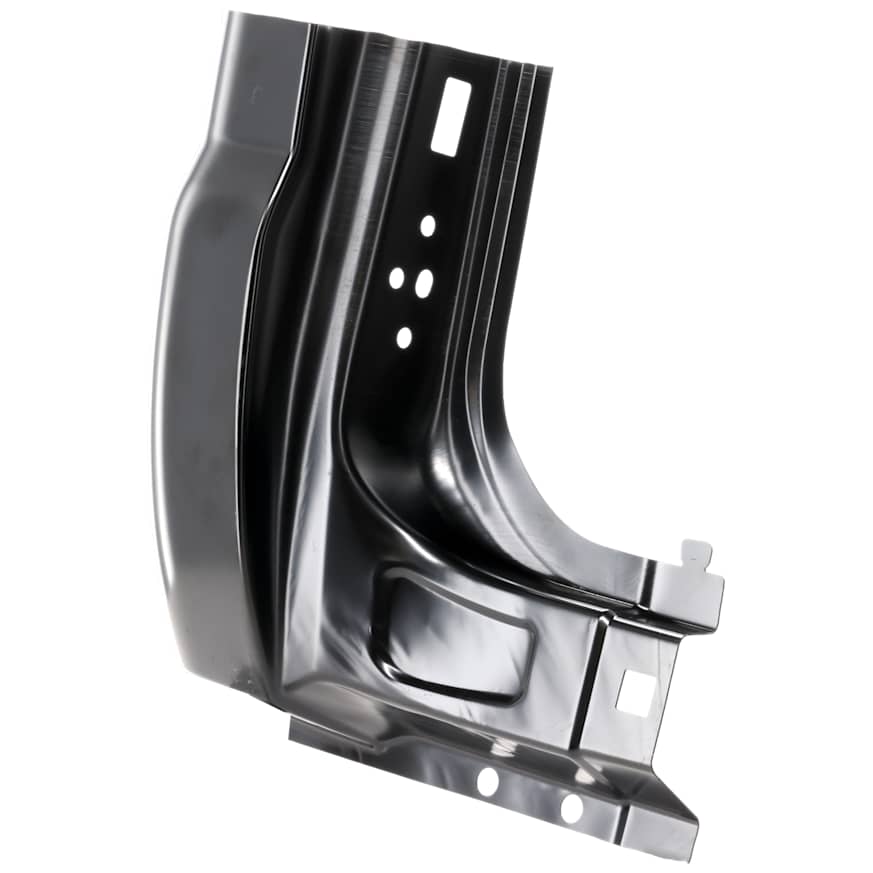
- Cab corner repair panels (patch panels): These cover the lower portion of the corner only. They are cheaper, easier to fit, and sufficient when rust is limited to the bottom few inches. CarParts.com carries cab corner repair panels starting around $36, covering popular trucks from Ford, Chevy, GMC, and Dodge.
- Full cab corner panels: These replace the entire corner from the door jamb edge down. They require more cutting, more welding, and more panel alignment work. Use them when rust extends above the body line or into the wheel arch area. Browse full cab corners for your specific make and model.
Note: Measure the rust area carefully before ordering. A repair panel ordered for a regular cab will not fit an extended cab, even on the same year and platform. Always confirm cab style and side (driver vs. passenger) before purchasing.
When a Shop Repair Is Worth the Cost
A professional weld-in repair makes financial sense when:
- The truck has meaningful resale value or sentimental value worth preserving
- The rust is contained to the outer panel only (no inner structure involvement)
- Both corners need work and the shop can do both in one mobilization
- The truck is in daily service and needs a finish that holds up
It becomes harder to justify when:
- Total repair cost exceeds 40 to 50 percent of the truck’s market value
- Inner structure rust is extensive and the shop cannot give a firm total before cutting
- The rocker panels, floor, and cab mounts also need replacement (at that point, a rust-free replacement cab or truck often makes more economic sense)
Tip: Get at least two quotes. Describe the job as a cab corner replacement with bed removal and welded seams, not just “rust repair.” Shops that hear vague descriptions sometimes quote low with the assumption that shortcuts are acceptable.
Doing It Yourself: What You Actually Need
A DIY cab corner replacement using a repair panel is a realistic weekend project for anyone comfortable with a MIG welder and an angle grinder. The cost is low, but the skill bar is real.
Tools required:
- MIG welder (minimum 140A output for 18-gauge automotive steel)
- Angle grinder with flap discs and cutting discs
- Spot weld drill bit or 5/16-inch bit for drilling out factory welds
- Body hammer and dolly
- Clamps (at least 4 to 6)
- Seam sealer
- Weld-through primer
- Etching primer and topcoat
Steps to follow:
- Remove or move the bed back to expose the rear seam of the cab corner.
- Set the door in place and confirm it gaps correctly before cutting anything.
- Map the rust with a body pick and mark cut lines with tape, keeping cuts above solid metal.
- Drill out spot welds along the seam with a spot weld bit.
- Cut out the rusted section with a cut-off wheel, following your tape lines.
- Check the inner panel for rust. Cut back and repair it if needed before installing the outer patch.
- Trim the rust repair panel to fit, rounding interior corners of the cut to reduce stress cracking at weld points.
- Tack-weld the panel in place and confirm door gap before running full welds.
- Weld in short, spaced passes to limit heat input and prevent warping.
- Grind welds flush, apply seam sealer to all joints on both sides, prime with etching primer, and topcoat.
Warning: Do not skip the inner panel inspection. Welding a fresh outer panel over rotted inner structure is how a repair fails in two years instead of lasting a decade.

Buying Cab Corner Repair Panels Online
Buying panels online instead of through a shop’s parts supplier can cut part cost by 30 to 60 percent on common truck makes. CarParts.com carries cab corner repair panels and full cab corners for Ford F-Series, Chevy/GMC C/K and Silverado/Sierra, Dodge Ram, and other popular platforms.
Before ordering, confirm:
- Year, make, and model (not just the body line, but exact year, since panel profiles changed)
- Cab style: regular cab, extended cab, or crew cab
- Side: driver (left) or passenger (right)
- Whether you need a repair panel (lower section only) or a full corner
- Panel gauge: 18-gauge steel is the standard for automotive patch work; thinner is a red flag
What to avoid when buying online:
- Skip panels listed as “universal fit” for structural repairs. They require custom fabrication to fit correctly and can cause alignment problems at the door.
- Avoid sellers who cannot confirm the gauge of steel used. Lightweight panels dent easily during shipping and warp during welding.
- Check return policies before ordering. Panels sometimes arrive with damage from shipping. CarParts.com offers free 30-day returns, which provides a recovery option if a panel arrives bent or wrong.
Note: Ordering both sides at once, even if only one side shows visible rust, is worth considering. If one side has rusted through, the other side is likely close behind. Tackling both at the same time reduces total labor time and ensures consistent panel material between sides.
What Happens If Cab Corner Rust Goes Untreated
Cab corner rust does not stay in one place. It spreads laterally into the rocker repair panel area, upward into the quarter panel, and inward toward the cab mount and floor. A repair that costs $400 in parts and labor today may cost $2,500 in a year if adjacent panels become involved. For a broader view of corrosion prevention, see the CarParts.com guide on how to stop rust on a car.
Rust also affects inspection outcomes. In states that require rust-through inspections, a cab corner with holes will fail. Continuing to defer the repair in a state with strict inspection rules adds risk of being taken off the road entirely.
Beyond appearance and inspections, cab corners tie into the lower B-pillar structure. Severe deterioration in this area weakens the cab’s resistance to side loads, which has real safety implications on a working truck. If rust has already spread to the frame, the rusted truck frame repair guide covers what those repairs involve and when replacement becomes the smarter option.
After completing a cab corner repair, protecting the investment matters. A consistent approach to rust proofing and undercoating the repaired area and surrounding panels significantly extends the life of the repair, especially on trucks that see winter road salt.
Keep Reading: Related Posts






Any information provided on this Website is for informational purposes only and is not intended to replace consultation with a professional mechanic. The accuracy and timeliness of the information may change from the time of publication.