Most UTVs need a quick routine check every 50 to 100 operating hours, a deeper service around 300 to 500 hours, and a full fluid refresh roughly every 6 months, 100 hours, or 1,000 miles, whichever comes first. Layer seasonal work on top of that, and you’ll cover the gaps an hour meter misses. Your owner’s manual sets the exact numbers for your model, so treat these figures as a reliable starting point and tighten them up if you ride hard or ride often.
Key Takeaways
- Run a routine inspection every 50 to 100 hours and a major service around 300 to 500 hours.
- Change engine oil and the oil filter about every 6 months, 100 hours, or 1,000 miles.
- Track coolant, transmission fluid, and front drive fluid on their own clocks, not just at oil changes.
- Match your service rhythm to the season, since spring prep and winter storage call for different work.
- Stop and inspect anytime you notice leaks, odd noises, or a dashboard warning.
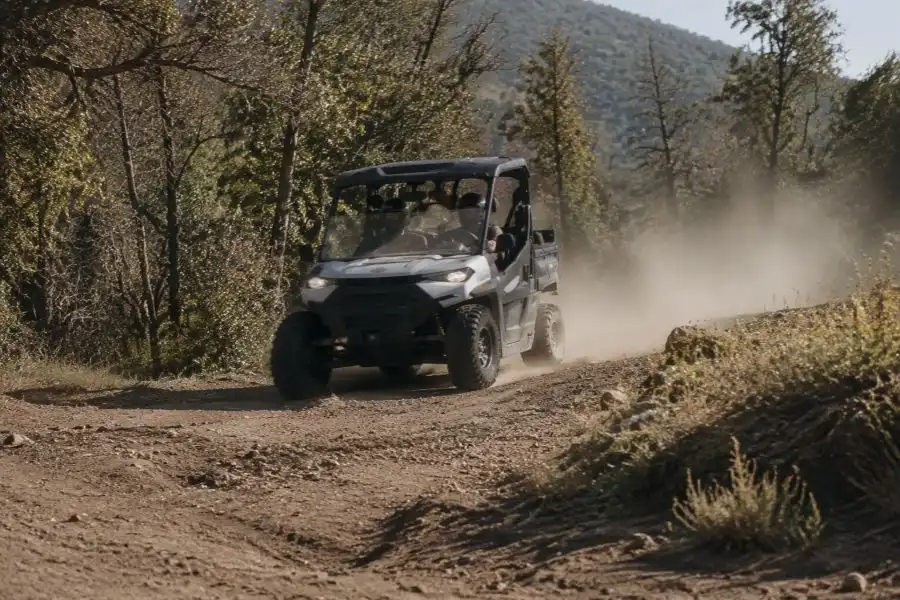
Service Intervals by Hours and Miles
Hours and miles drive the core of any UTV maintenance schedule, and most machines track both through an hour meter or odometer. Whichever number climbs faster for your riding style is the one to watch.
Every 50 to 100 Hours
This is your routine window. Inspect the fluids, filters, belts, and battery, top off anything low, and look for early wear. Beginners and light users can lean toward the 100-hour mark, while hard trail and dune riders should check closer to 50 hours. A CVT belt that’s glazed or cracked is cheap to catch now and expensive to ignore later.

Every 300 to 500 Hours
This is the deeper service. Plan for valve adjustments, a full brake inspection, and a close look at drivetrain components. These tasks take more time and tools, so many owners schedule them ahead of a big riding block rather than in the middle of the season.
Fluids and Filters That Set the Pace
Fluids do the quiet work of keeping your side-by-side alive, and each one runs on its own clock.
Engine Oil and Oil Filter
Change the oil about every 6 months, 100 hours, or 1,000 miles, whichever comes first, and swap the oil filter every time. UTV engines run hotter and harder than a car’s, so they use oil built for a wide viscosity range. Oil that comes out dark or gritty early is a sign to investigate, not just refill.
Transmission and Front Drive Fluid
Plan to change transmission fluid around every 100 hours, 1,000 miles, or once a year, whichever lands first. Machines with a front gearcase, sometimes called demand drive, usually follow the same interval. Cloudy or discolored fluid can point to contamination, so check both the level and the appearance during routine work.
Coolant
Check the coolant level before and after every ride, and top off with premixed antifreeze rather than straight water. A full coolant change runs on a long cycle, often around every five years. Overheating can strand you and damage the engine, so verify the level whenever you’re already under the hood, and only open the radiator cap once the engine is cool.
A Season-by-Season Rhythm
Hours tell part of the story, but weather fills in the rest. A solid side-by-side maintenance plan shifts with the calendar, especially since ATV and UTV riding peaks from spring through fall.
Spring Wake-Up
Change the oil and filter, inspect the air filter, and test the battery after winter downtime. Look at the brakes for pad thickness and fluid level, then check the tires for pressure and cracking before the first real ride.

Summer High Use
Dusty trails clog air filters fast, so check yours every ride or two. Heat shifts tire pressure, so verify it when the tires are cold. During heavy use, watch oil level and condition, coolant, and grease points on a monthly basis.
Fall Prep
Stay on top of fluids, inspect tires for a season’s wear, and test lights and electrical before the days get short. Flush or check the cooling system so no problem carries into storage.
Winter Storage
If you’re storing the machine, stabilize the fuel, change the oil and filter, air the tires to prevent flat spots, and put the battery on a tender. Owners running plows or working through the cold should treat winter as its own high-use season instead.
Warning Signs You Shouldn’t Wait On
Some problems don’t wait for the next interval. Pull your machine off the trail and inspect it if you notice fluid leaks, unusual noises, a burning smell, diminished power, or a warning light on the dash. Anything touching the brakes, steering, or fuel system deserves a careful look before you ride again, and a professional inspection if you’re unsure. Catching these early is the heart of smart utility vehicle maintenance, and it keeps small issues from turning into trailside repairs.
FAQ
Hours matter less than upkeep. A well-maintained UTV can run well past 1,000 hours, while a neglected one can struggle much sooner. A consistent service history counts for more than the raw number.
Yes. Oil changes, filter swaps, fluid checks, and inspections are well within reach for a DIY owner with basic tools. Valve adjustments and brake work are doable too, though some owners hand those off to save time.
Use whichever comes first. Trail and dune riders often hit hour limits before mileage, while owners covering long, flat distances may reach the mileage mark first.
Yes. Oil breaks down and seals dry out over time, so the six-month and yearly intervals still apply even on a machine that mostly sits.
The air filter and the CVT belt top the list. Both wear quietly, and both hit performance hard once they’re neglected.
Gear Up for the Season Ahead
A clear schedule turns maintenance from a chore into a habit that keeps your machine ready for wherever the pavement ends. Stock the oil, filters, belts, and fluids you’ll need before peak season so you’re never waiting on a part mid-ride. Explore the JC Whitney Performance Hub for trail-ready parts and gear built to keep your entire garage moving.
Keep Reading: Related Posts





Any information provided on this Website is for informational purposes only and is not intended to replace consultation with a professional mechanic. The accuracy and timeliness of the information may change from the time of publication.