On modern vehicles, there are hidden connection points, such as threaded holes, for tow eyes so the vehicle can be towed using a designated attachment point. Older vehicles were often towed by looping a chain or strap around a suitable part of the frame. Newer vehicles generally shouldn’t be towed that way. They typically have a reinforced area, either with a tow eye permanently attached or a place where a removable tow eye can be installed. For aesthetics, the tow eye connection point is often hidden behind a removable cover.
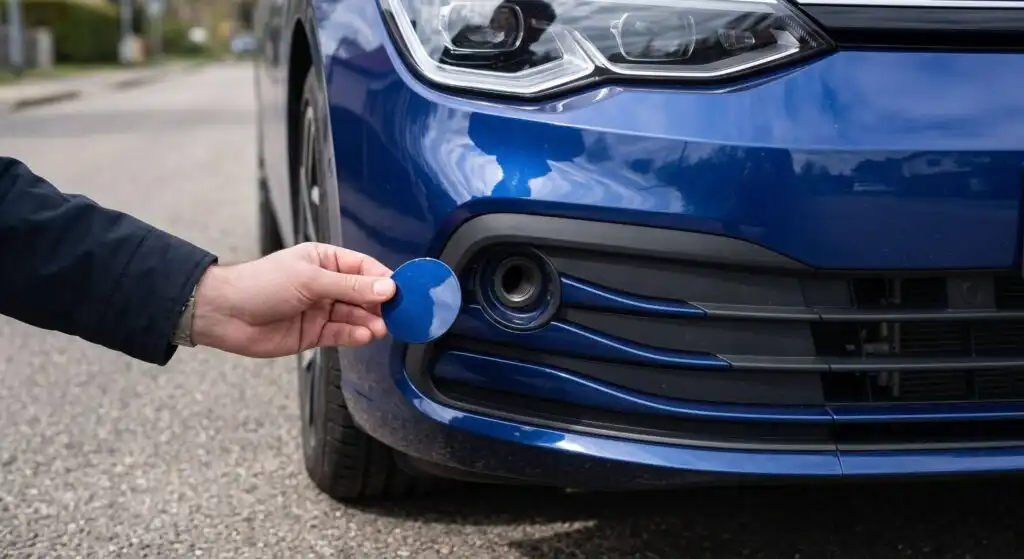
Most tow eye covers pop off by pressing inward at a marked release point on the bumper, then pivoting or pulling the panel free. No tools are required in most cases, though some vehicles have a screwdriver slot on the inner edge.
Key Takeaways
- The cover sits flush in a cutout on the front or rear bumper and is held by a press-fit or locking tab system.
- Most covers release by pressing the marked spot inward and pulling or pivoting the panel out.
- Always note your cover’s color code before ordering a replacement.
What a Tow Eye Cover Does
The bumper tow eye cover is the small, removable cap that conceals a threaded socket in your vehicle’s bumper.
This socket accepts a tow hook or towing eye, providing a designated attachment point for the towing or recovery procedures approved by the vehicle manufacturer. Do not assume a factory tow eye is rated for kinetic recovery or for pulling a stuck vehicle. Check your owner’s manual before attaching a recovery strap or applying a heavy recovery load.
The cover helps shield the opening from road debris and moisture while maintaining the bumper’s appearance.
Many modern vehicles have tow-eye access points at both the front and rear, though placement and whether both are provided vary by vehicle. Covers are typically color-matched to the bumper and held in place with a press-and-pivot locking system.
Tools You May Need
For most vehicles, you need nothing more than your thumbs. For a handful of applications, have these ready:
- A flat-blade screwdriver or trim tool
- A clean rag to protect painted surfaces if you use a tool
- A helper for tight access points
How To Remove a Tow Eye Cover: Standard Method
This approach covers most passenger cars and crossovers.
Locate the Cover
Look for a small rectangular or rounded panel on your vehicle’s front or rear bumper, usually centered or offset to one side. Many manufacturers mark the release point with a subtle triangle, indentation, or the number 1 in the owner’s manual diagram.
Press and Remove
Press the marked spot firmly inward toward the bumper. The cover will unlatch from its retaining clip. For some sedans, this means pressing the mark inward, after which the panel pulls free. Follow the same press-inward-and-remove sequence for the front bumper tow eye cover of some coupes.
Once it releases, pull the cover away from the bumper entirely and set it somewhere safe. Don’t force it sideways or twist aggressively. The tab system is plastic and will break under side-loading.
Vehicle-Specific Example: Tesla Model Y Front Tow Hook Cover
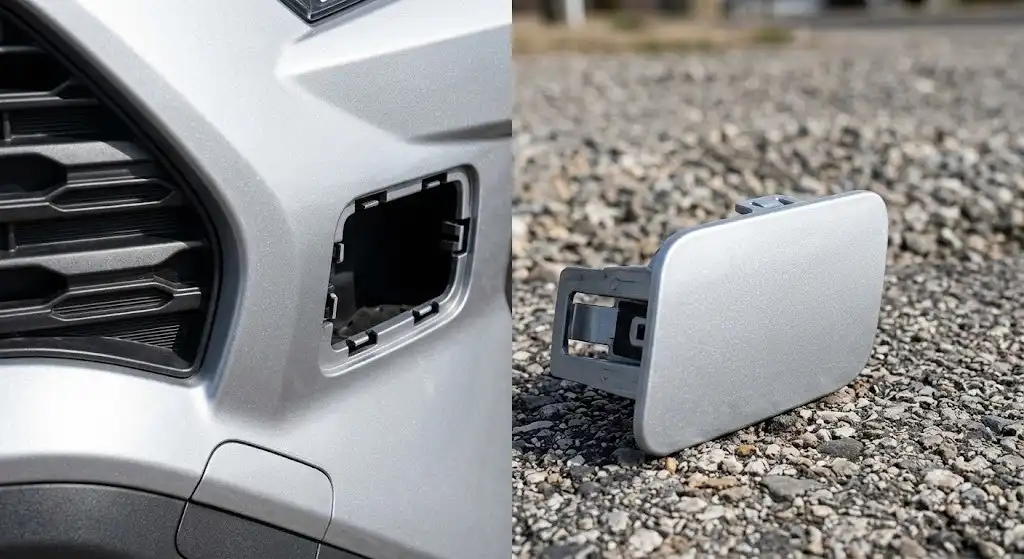
Some vehicles use a different cover design, so the exact pressure points and removal procedure can vary. For example, on certain Tesla Model Y front tow hook covers, place two thumbs at approximately the 1 o’clock and 2 o’clock positions on the cover, resting your knuckles on the bumper fascia for hand support. Apply force on the outer edge using both thumbs so the cover pivots inward, then gently pull the raised section toward you.
On these applications, 12V jumper wires are retained at the back of the front tow hook cover. Once the cover has pivoted free, gently squeeze the retaining tabs together to release the wires from the cover. Don’t yank on the wires directly. Fully remove the cover from the vehicle after the wires are released.
Reinstallation for This Tesla Example
Reconnect the 12V jumper wires to the cover first, ensuring the terminals are fully seated on the retaining tabs and the wires aren’t pinched or binding. Alignment points can vary by model year. On some Model Y versions, the location tab is positioned at about 1 o’clock and the lower portion of the cover is pressed near 7 o’clock to engage the locking tabs. Follow the service information for the specific model year. Note the color code on the cover before ordering a replacement.
Putting It Back On
For standard covers without wiring, re-engagement is straightforward: align the tab with the bumper slot, push the cover flat against the bumper, and press firmly until you feel or hear it click into place. Make sure all edges sit flush. A cover that isn’t fully seated will vibrate at highway speed and can separate at high airflow.For vehicles with a trailer hitch, your vehicle might not have a rear bracket for the towing eye at all. The tow bar attaches directly to the hitch instead. In this case, only the front cover needs removal for emergency towing.

FAQ
You generally can, but it isn’t ideal. Leaving the opening uncovered can expose the area to more road debris and moisture. Replace or reinstall the cover as soon as practical.
No. They’re vehicle-specific. Color, tab geometry, and cutout shape all vary by make, model, and year. Always confirm the part number and color code before ordering.
A snapped retaining tab means the cover won’t seat securely anymore. A replacement tow hook cover is typically inexpensive. Search by your vehicle’s year, make, and model, or check the color code stamped on the back of the old panel.
Many vehicles have a rear tow eye cover, but not all do. When a rear towing-eye attachment point is provided, the cover often follows the same basic press-and-pivot concept as the front, although the exact release method can differ. Some models with a factory trailer hitch omit the rear bracket entirely, so check your owner’s manual.
There is no universal tow hook socket thread size. Thread diameter, pitch, and design vary by vehicle. Use the towing eye supplied for your vehicle or confirm the correct specification in your owner’s manual before installing a replacement.
Knowing how to remove a tow eye cover is a simple skill that matters most when you’re already in a stressful situation. If you need a refresher on attaching recovery gear, our guide on how to use a tow strap walks through the basics, and our hitch installation tips cover towing setups in more detail. If you’re outfitting a vehicle for trail use, see our roundup of off-road recovery accessories. When it’s time to replace a worn or damaged cap, CarParts.com carries a wide selection of bumper covers and exterior trim parts to get your vehicle back on the road looking factory-fresh.
Keep Reading: Related Posts




Any information provided on this Website is for informational purposes only and is not intended to replace consultation with a professional mechanic. The accuracy and timeliness of the information may change from the time of publication.