Diagnostic trouble code (DTC) P0133 means the powertrain control module (PCM) is not receiving oxygen sensor signals from Bank 1 Sensor 2 fast or frequently enough for efficient engine operation. This condition affects how the engine computer monitors exhaust oxygen levels and adjusts fuel delivery.
Quick Answers
- Meaning/Definition: Oxygen Sensor Circuit Slow Response (Bank 1, Sensor 2)
- What it affects: Fuel control feedback and exhaust monitoring after the catalytic converter
- How serious it is: Usually moderate; can reduce efficiency and trigger warning lights
- Common causes: Faulty oxygen sensor, heater circuit problems, wiring issues, exhaust leaks, PCM issues
- What to do first: Scan for codes, inspect wiring and exhaust, test oxygen sensor operation
- Can you keep using it / is it safe: The vehicle may still run, but efficiency and emissions control may be affected
What the P0133 Code Means
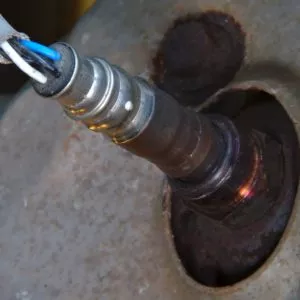
DTC P0133 is triggered when the downstream oxygen sensor (Bank 1, Sensor 2), located after the catalytic converter, takes too long to send voltage changes to the PCM. While downstream oxygen sensors do not switch signals as rapidly as upstream sensors, they are still expected to respond within a calibrated time range. Bank 1 will be on the same bank as cylinder 1.
If the PCM does not receive timely or consistent signals, it may not be able to accurately evaluate exhaust oxygen levels and fuel trim behavior.
On many vehicles, when the upstream oxygen sensor becomes unreliable, the PCM may rely more heavily on the downstream oxygen sensor to help manage fuel trim adjustments. This makes slow response from the downstream sensor more noticeable to the engine control system.

P0133 on Some Ford Vehicles
On certain Ford models, such as a 1999 Ford F-150 4.2L V6, P0133 may be associated with the following conditions:
- Contaminated HO2S sensor
- Exhaust leaks
- Shorted or open wiring
- Improper fueling
- MAF sensor issues
- Deteriorating HO2S sensor
- Inlet air leaks
Ford’s HEGO (Heated Exhaust Gas Oxygen) monitor checks oxygen sensor signal frequency and amplitude. If either falls below a calibrated limit, the system will fail the test and store the code.

Common Symptoms / What You’ll Notice
Most drivers will notice few immediate drivability problems. Common symptoms include:
- Illuminated check engine light
- Limited or no noticeable performance changes
- Occasional engine performance irregularities
In many cases, the only visible symptom is the check engine light, which requires an OBD scan tool to identify P0133 specifically.
Common Causes
Possible causes of the P0133 code include:
- Faulty oxygen sensor or air-fuel ratio sensor
- Malfunctioning oxygen sensor heater circuit
- Damaged wiring or poor electrical connections
- Exhaust system leaks
- PCM malfunction or outdated software
How Serious Is the P0133 Code?
P0133 typically does not cause immediate engine failure. However, prolonged operation with slow oxygen sensor response can lead to inefficient fuel control, increased emissions, and reduced fuel economy. Ignoring the issue may also cause additional diagnostic trouble codes to appear over time.
How to Diagnose the P0133 Code
Diagnosing P0133 requires technical knowledge and proper diagnostic equipment. If you are not experienced with automotive diagnostics, professional assistance is recommended.
For experienced DIYers, diagnosis generally follows this path:
- Scan for stored trouble codes
- Confirm P0133 is present.
- Check for related oxygen sensor or fuel system codes.
- Inspect wiring and connectors
- Look for damaged, loose, or corroded wiring at the oxygen sensor.
- Repair or replace faulty connections before proceeding.
- Check for exhaust leaks
- Inspect the exhaust system near the sensor and catalytic converter.
- Repair leaks that could affect sensor readings.
- Evaluate oxygen sensor operation
- Use scan tool data to observe sensor response behavior. If there are two downstream sensors, compare their patterns to each other.
How to Fix the P0133 Code
Repair methods depend on the root cause. Common solutions include:
- If the oxygen sensor is faulty: Replace the affected sensor.
- If the heater circuit is malfunctioning: Repair wiring or replace the sensor with an integrated heater.
- If wiring is damaged: Repair or replace affected harness sections.
- If exhaust leaks are present: Seal or replace leaking exhaust components.
- If PCM issues are suspected: A software update or PCM repair may be required.
Because repair steps can vary by vehicle make and model, consult factory service manuals or professional repair databases for model-specific procedures.
Getting a Replacement Oxygen Sensor
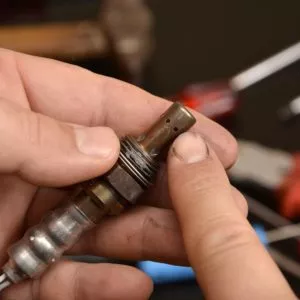
Oxygen sensors play a critical role in engine performance and fuel efficiency. When replacing a sensor, it is important to ensure compatibility with your specific vehicle make and model.
Replacement sensors are available through automotive parts suppliers. Matching the correct sensor specifications helps ensure proper operation and prevents repeat fault codes.
FAQs
Bank 1 refers to the side of the engine containing cylinder number one. Sensor 2 indicates the downstream oxygen sensor located after the catalytic converter.
P0133 may be associated with mild performance issues, but it usually does not cause major drivability problems. Most cases mainly affect efficiency and emissions monitoring.
The code may clear temporarily if the sensor responds normally again, but underlying issues often cause the code to return if not repaired.
The vehicle may remain drivable, but fuel efficiency and emissions control can be reduced. Repairing the issue helps prevent long-term problems.
Not necessarily. The code points to slow oxygen sensor response. However, exhaust issues near the catalytic converter can affect sensor readings.
Yes. A malfunctioning heater circuit can prevent the oxygen sensor from reaching operating temperature quickly, causing delayed signal response.
Replacement time varies by vehicle, but many oxygen sensor replacements can be completed in under an hour.
Basic diagnostic tools such as an OBD scan tool are helpful. Some repairs may require specialty oxygen sensor sockets.
When to Get Professional Help
Seek professional assistance if:
- You lack diagnostic tools or automotive experience
- Wiring or PCM issues are suspected
- The code returns after replacing the oxygen sensor
- Multiple trouble codes appear at the same time
A certified technician can perform advanced testing to accurately identify the root cause and prevent unnecessary part replacement.
Keep Reading: Related Posts




Any information provided on this Website is for informational purposes only and is not intended to replace consultation with a professional mechanic. The accuracy and timeliness of the information may change from the time of publication.