Code P0404 means your powertrain control module found erratic performance from your EGR valve. The valve isn’t moving through its expected range, whether that means opening too far, closing too little, or responding slower than it should. The PCM stores P0404 and turns on the check engine light when this happens.
What Does the P0404 Code Mean?
Diagnostic Trouble Code (DTC) P0404 stands for Exhaust Gas Recirculation Circuit Range/Performance Problem. It is a generic OBD trouble code that activates if the powertrain control module (PCM) detects erratic Exhaust Gas Recirculation (EGR) valve performance.

What You Need to Know About P0404
- Meaning: the PCM detected that the EGR valve isn’t performing within its expected range.
- What it affects: exhaust gas recirculation, engine idle quality, and NOx emissions.
- How serious it is: can cause rough idling, poor fuel economy, and a failed emissions test.
- Most common causes: carbon buildup, a worn EGR valve, wiring or circuit problems, or a bad EGR sensor.
- What to do first: command the EGR valve with a scan tool to see if it moves through its full range.
- Can you keep driving: usually yes short term, but don’t put off the fix if idle or fuel economy suffers.

What Is the EGR Valve?
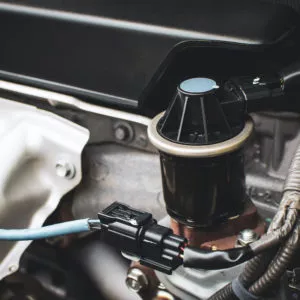
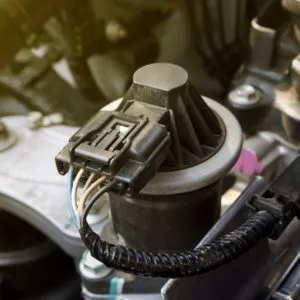
The EGR valve controls how much exhaust gas flows back into the engine’s intake. Redirecting some exhaust gas lowers the combustion temperature inside the cylinders and cuts nitrogen oxide emissions. The PCM commands the valve open, closed, or somewhere in between, and it expects the valve to reach that position within a certain range and timeframe.
P0404 shows up when the valve doesn’t do that reliably, whether it’s slow to move, stuck partway open, or stuck open when it should be nearly closed. For a deeper look at how the whole system works together, the P0401 code guide covers the EGR system in more detail.
P0404 on Some Chrysler Vehicles
Code P0404 may appear on some Chrysler vehicles. On a 2005 Chrysler Town & Country 3.3L V6, for example, this DTC is set when “the EGR flow or valve movement is not what is expected.”
The code may appear in a 2005 Chrysler Town & Country 3.3L V6 because of the following conditions:
- Good trip equal to zero
- High resistance in 5 volt supply
- EGR solenoid control ckt
- Intermittent condition
- EGR sensor signal circuit open
- EGR sensor signal circuit shorted to ground
- Sensor ground circuit open
- EGR assembly (ground)
- Issue with PCM
For this specific vehicle, it is recommended to diagnose all other EGR DTC(s) first before continuing with any test related to P0404 code.
What Are the Common Symptoms of the P0404 Code?
P0404 sometimes produces no symptom besides an illuminated check engine light. Since a stuck EGR valve is often caused by carbon buildup, though, you may notice performance issues once the valve gets bad enough. Rough idling, poor fuel economy, and increased NOx emissions are the most common signs.
Increased NOx emissions can lead to a failed emissions test, and a valve stuck open can raise combustion temperatures enough to make the engine run hot. These symptoms can also point to other underlying issues, so it’s worth ruling out multiple causes before you settle on a fix.

What Causes the P0404 Code?
P0404 usually points to carbon buildup somewhere in the EGR lines or a worn out EGR valve. Carbon buildup happens naturally over time and isn’t fully preventable, but if the code shows up earlier than expected, a handful of other causes are worth checking.
A short in the 5 volt reference circuit, an open ground circuit, or a PCM controlled voltage circuit short can each set the code prematurely. A faulty PCM, a malfunctioning EGR sensor, or a faulty EGR valve itself round out the list.
Vehicle-Specific Note: On some Chrysler models, like a 2005 Town & Country with the 3.3-liter V6, the PCM sets P0404 when the EGR flow or valve movement doesn’t match what it expects. Conditions on that vehicle include high resistance in the 5-volt supply, an open EGR sensor signal circuit, and a sensor signal shorted to ground, among other circuit-specific faults. On a vehicle like this, it’s worth ruling out other EGR-related codes before testing specifically for P0404.
How Serious Is Code P0404?
P0404 sits in a middle ground for urgency. A minor range issue might not affect drivability at all, but a stuck open valve can cause rough idling, poor fuel economy, and higher combustion temperatures that stress the engine. Increased NOx emissions from a stuck valve can also cause a failed emissions test, so it’s worth diagnosing before your next inspection.

CarParts.com Research Team User
There’s more than one way to look at an issue. “Community Perspectives” highlight authentic personal viewpoints and real-life experiences by the CarParts.com community, including our readers, experts, and product specialists, among others. This can help you make better informed decisions about your car.
CarParts.com Community Perspectives
Unfortunately, there isn’t a one-size-fits-all fix for code P0404 or any other code, for a P0404 code in a Ford Range PJ 2.5L Diesel. The root cause of the code could be anything from a faulty EGR valve to a circuit problem. You (or your mechanic) will need to do some troubleshooting to determine the necessary repairs.
To give you an idea about the P0404 code and how to diagnose it, check out these videos:
How Do You Diagnose the P0404 Code?
Diagnosis steps vary somewhat by make and model, but this general order works for most vehicles.
- Scan for related codes. Check for other EGR-related codes first, since some vehicles need those ruled out before testing specifically for P0404.
- Command the valve. Use a scan tool to command the EGR valve open and closed, and watch whether it reaches the position requested.
- Inspect for carbon buildup. Remove the valve and look for deposits blocking its movement, since buildup is the most common root cause.
- Check the wiring and connectors. Look for shorted, corroded, or damaged wiring in the EGR circuit, including the ground and 5-volt reference wires.
- Test the EGR sensor. Check the position sensor’s signal for accuracy, since a bad sensor can mimic a valve problem.
- Rule out the PCM. If the valve, wiring, and sensor all check out, have a shop evaluate the PCM, since this is a rare cause.
How Do You Fix the P0404 Code?
Once you’ve found the cause, the repair usually follows one of two paths.
Fix or Replace the EGR Valve
In most cases, a stuck or carbon clogged valve is behind P0404. After locating the valve, use a scan tool to cycle it open and closed and confirm the movement problem. Cleaning the valve clears light carbon buildup, but a valve that won’t move freely after cleaning needs a new EGR valve.
Replace Damaged Circuit Components
If the valve itself checks out fine, the problem likely sits elsewhere in the circuit. Inspect the ground circuit for shorted wiring or broken connectors, since these often cause range and performance codes. If the wiring looks fine, replacing the EGR sensor or updating the PCM software resolves many of the remaining cases.
Repairs that clear P0404 on one vehicle won’t necessarily fix it on another. A Chrysler and a Honda can each set the code for different underlying reasons, so match the fix to what your diagnosis actually found. A related P0403 code points to the EGR control circuit itself rather than range and performance, and it sometimes shows up alongside P0404, so it’s worth checking for both.
Frequently Asked Questions About the P0404 Code
P0404 means the PCM detected that the EGR valve isn’t moving through its expected range or responding within the expected timeframe. It doesn’t necessarily mean the valve itself is bad, since wiring and sensor problems can trigger it too.
Yes, in many cases, you can keep driving with P0404 active. If the valve is stuck open, though, you may notice rough idling or poor fuel economy, so it’s worth getting diagnosed soon rather than waiting for it to worsen.
An illuminated check engine light will typically cause a failed emissions test on its own. Increased NOx emissions from a malfunctioning EGR valve can compound the issue if the shop measures tailpipe emissions directly.
P0401 points to insufficient EGR flow, meaning not enough exhaust gas is getting recirculated. P0404 points to a range or performance problem, meaning the valve isn’t behaving the way the PCM expects, whether or not overall flow is low.
Carbon buildup happens naturally as exhaust residue collects on the valve and surrounding passages over time. It’s a normal part of EGR system operation. Poor maintenance and worn engine components can speed up how quickly it accumulates.
Cleaning often resolves P0404, especially when carbon buildup is the root cause. If the valve won’t move freely after a thorough cleaning, replacement is the next step.
Cost depends on the cause, since cleaning a valve costs less than replacing one outright. A wiring repair typically falls on the cheaper end too, while a new EGR valve or sensor costs more depending on the vehicle.
No, P0404 is a generic code that applies across many makes and models, but the specific cause and diagnostic steps vary. Some vehicles, like certain Chrysler models, require ruling out other EGR codes first.
Many DIYers can replace an EGR valve with basic tools, especially on vehicles with easy access. Diagnosing exactly why P0404 set in the first place is trickier, since wiring, sensor, and PCM issues can all mimic a bad valve.
A scan tool that can command the EGR valve is the most useful tool for this diagnosis. A multimeter helps check wiring and sensor circuits, and a visual inspection often reveals carbon buildup without any special equipment.
When Should You Consult a Mechanic?
EGR diagnosis can get complicated once you’ve ruled out the obvious causes, especially on vehicles that require a specific test sequence. If cleaning or replacing the valve doesn’t clear the code, a trusted mechanic can run vehicle-specific tests to find the real cause, similar to how emission control systems as a whole often need a shop’s diagnostic equipment to sort out fully.
Where to Get a New EGR Valve for Your Vehicle
Once you know whether your EGR valve, wiring, or sensor needs attention, sourcing the right part is easy. CarParts.com carries EGR valves and sensors built to fit your exact vehicle, matched through our online vehicle selector. Order what you need and get back on the road in no time!.
Products Mentioned in this Guide
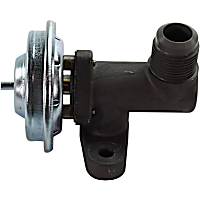 EGR Valve
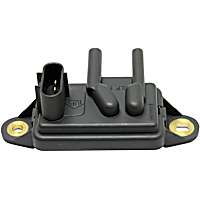 EGR Pressure Feedback Sensor
Keep Reading: Related Posts




Any information provided on this Website is for informational purposes only and is not intended to replace consultation with a professional mechanic. The accuracy and timeliness of the information may change from the time of publication.