There’s nothing quite like spending a weekend outdoors, listening to the wind move through the trees and waking up somewhere far from your usual routine.
But not every camping trip has to involve hauling a heavy backpack for miles. If you want the outdoors without giving up every bit of comfort, car camping is one of the easiest ways to get started.
With your vehicle as your base camp, you can bring more gear, travel farther, and adjust your plans more easily. Just don’t treat the car as a substitute for preparation. Before you load up, run through a pre-road-trip checklist and make sure your vehicle, route, and campsite are ready.
Why Go Car Camping?
Car camping gives you more room to pack, more flexibility once you arrive, and a more comfortable backup shelter if the weather changes. Here are some of the biggest reasons drivers choose it.
It Reduces the Hauling
One of the best parts of car camping is that your vehicle does most of the heavy lifting. You don’t have to fit everything into a single backpack or carry all your gear down a long trail.
You can bring what fits safely in your cabin, cargo area, truck bed, or exterior storage setup. If you need more space, a cargo carrier or roof rack can help, as long as you stay within your vehicle’s weight limits and secure everything properly. This roof rack guide is a useful primer if you’re planning to carry gear up top.
You Can Bring More Comfort
Car camping gives you room for comfort items that would be impractical on a backpacking trip. Depending on your campsite and vehicle, you can bring a thicker sleeping pad, camp chairs, a folding table, extra blankets, shade, games, and better cooking gear.
Pickup owners can also make use of a truck bed rack or similar storage setup to organize bulky equipment. For more outdoor-focused setup ideas, check out these truck accessories.
Your Vehicle Can Be a Backup Shelter
A vehicle can provide better protection from wind, rain, and cold than a basic tent, but it doesn’t make a campsite automatically safe. Bad weather, falling branches, flood-prone ground, wildlife, carbon monoxide risk, and local rules can still create problems.
Use your vehicle as a backup shelter, not as an excuse to skip planning. Check the weather, choose an established campsite when possible, and be ready to leave or move to safer shelter if conditions become unsafe.
Your Ultimate Car Camping Checklist
A good car camping checklist should cover both camping gear and vehicle-specific gear. Here’s what to pack before your next trip.
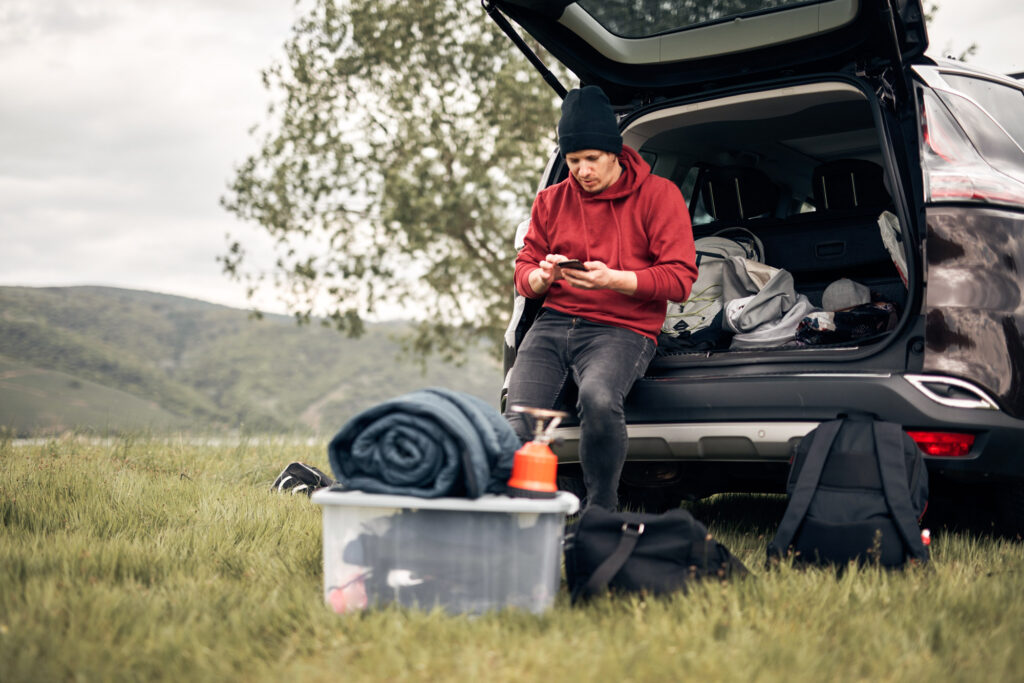
Sleeping Pad or Mattress
Sleeping upright in a car seat is uncomfortable and can leave you sore the next morning. If you’ll be sleeping in the vehicle, fold the rear seats flat if possible and use a sleeping pad, inflatable mattress, or mattress topper that fits your cabin or cargo area.
Also pack a sleeping bag or blanket appropriate for the weather, a pillow, and window shades or curtains for privacy.
Tent or Vehicle Shelter
A ground tent is still the simplest sleeping option for many campers. It gives you more room to stretch out and keeps your vehicle free for storage.
If you prefer a vehicle-based setup, a rooftop tent or truck bed tent can work well for some SUVs and pickups. Before buying one, confirm that the tent is compatible with your vehicle and that your roof rack, truck bed, or mounting system can support the load.
Water Storage
Bring enough water for drinking, cooking, cleaning, and emergencies. Don’t assume every campsite has potable water. Even if there’s a nearby stream, lake, or pump, you might still need to filter, treat, or boil water before using it.
Pack a large water container for camp and smaller bottles for hikes or short walks away from the site.
Clothes and Footwear
Pack clothes for the actual forecast, not just the season. Bring breathable layers for warm days, insulating layers for cold nights, and rain gear if the weather can change quickly.
You’ll also want extra socks, a dry change of clothes, and footwear that can handle mud, rocks, or wet ground. If you expect dirt, sand, or wet gear, sturdy floor mats can help protect your vehicle’s interior after the trip.
Toiletries and Hygiene Supplies
Not every campsite has clean restrooms or showers, so pack basic hygiene supplies. Good items to bring include hand sanitizer, biodegradable soap, a small towel, toothbrush and toothpaste, toilet paper, wipes, deodorant, dry shampoo, and trash bags.
Don’t leave wipes, hygiene products, or food packaging behind. Even “biodegradable” items should usually be packed out unless the campsite specifically says otherwise.
First Aid Kit
A first aid kit is essential for any outdoor trip. Pack bandages, antiseptic wipes, gauze, blister care, tweezers, pain relievers, allergy medicine, sunscreen, insect repellent, and any prescription medications you need. Check the kit before leaving. Replace expired items, and keep medications in their original packaging when possible.
Lighting
A headlamp is one of the most useful camping items because it keeps your hands free. Bring a headlamp, a flashlight, a lantern, and spare batteries or charging cables.
Don’t rely on your phone flashlight as your main light source. You’ll want your phone battery available for navigation, weather updates, and emergencies. Before driving to a remote campsite, make sure your headlights, brake lights, turn signals, and hazard lights are working properly.
Cooking Gear and Portable Stove
Freshly cooked meals can make car camping more enjoyable, but cooking gear needs to be used safely. Bring a portable stove, fuel, cookware, utensils, a lighter or matches, dish soap, and a basin for washing.
Use camp stoves only outdoors and away from tents, vehicles, and dry brush. Follow local fire restrictions, especially during dry or windy conditions.
Cooler and Food Storage
A cooler helps keep food and drinks cold, but it shouldn’t be treated as animal-proof unless it’s specifically rated for that use. In bear country or other wildlife areas, follow the campsite’s food storage rules. Use bear lockers, approved containers, or other required storage methods.
A sturdy cooler can sometimes double as a prep surface, but don’t rely on it as a chair unless it’s designed to support that weight.
Tools and Repair Items
Bring the tools you need for both camping and vehicle issues. For camp, pack a mallet, extra stakes, a multi-tool, duct tape, zip ties, cordage, spare batteries, and a tent repair kit.
For your vehicle, bring a tire pressure gauge, jumper cables or a jump starter, work gloves, and a basic tool kit. It’s also smart to check that your jack, lug wrench, and spare tire tool kit are complete and accessible before you leave.
Camping Tips for Sleeping in Your Car
Even if you bring a tent, there might be nights when sleeping in your vehicle feels more practical. These tips can help you do it more safely and comfortably.
Confirm It’s Legal
Before anything else, make sure you’re allowed to sleep in your vehicle where you plan to park. Rules vary by campground, park, city, private property, and public land agency.
Some places allow vehicle sleeping only in designated campsites. Others require permits, reservations, or specific parking areas. Don’t assume that a quiet parking lot, roadside pullout, or trailhead is fair game.
Choose the Right Spot
Park on level ground so you’re not sliding around while you sleep. Avoid low areas where water can pool, unstable ground, dead trees, and spots too close to traffic.
Keep your keys, phone, flashlight, and shoes within reach in case you need to leave quickly.
Ventilate the Cabin Safely
Crack a window enough to reduce condensation and let in fresh air, but not so wide that it creates a security issue. Mesh window screens can help keep insects out.
Never run the engine while sleeping. Don’t use a camp stove, charcoal grill, heater, or generator inside the vehicle. If you’re camping in snow, mud, or heavy debris, make sure the exhaust area is clear before starting the vehicle.
Manage Power Carefully
Don’t drain your vehicle battery by charging devices all night or running accessories too long while the engine is off. Bring a power bank or portable power station for phones, cameras, and small electronics.
A battery charger can help when you have access to a safe power source, but it’s not the same thing as an off-grid power station. This article on battery chargers explains how they work and how they differ from jump starters.
Store Food and Trash Properly
Food, scented toiletries, wrappers, and trash can attract animals. Follow campsite rules for food storage, especially in bear country. If lockers or approved containers are required, use them.
Don’t leave food in an open truck bed, strapped outside the vehicle, or scattered around camp.
Leave the Site Clean
Car camping makes it easier to bring more gear, but that also means more chances to leave clutter behind. Pack out trash, food scraps, wipes, broken gear, and anything else you brought in.
Before leaving, walk around the campsite and check under the vehicle, around the fire ring, and near your cooking area.
Final Thoughts
Car camping is one of the easiest ways to enjoy the outdoors without giving up every comfort. Your vehicle can carry the gear, provide extra shelter, and make the trip more flexible. But a good trip still depends on preparation. Check your vehicle, follow campsite rules, pack the right gear, store food safely, and keep your camp clean. Do that, and your car becomes what it should be: a reliable base camp for a better weekend outside.
Keep Reading: Related Posts





Any information provided on this Website is for informational purposes only and is not intended to replace consultation with a professional mechanic. The accuracy and timeliness of the information may change from the time of publication.