You’ve done the research, towed it home, and now it’s sitting in the driveway. Before you hit the throttle on your new personal watercraft, there’s a window that matters more than any other. What you do in the first 10 hours shapes how that engine performs for years. This guide covers everything to check, do, and avoid so you can learn how to break in a new jet ski the right way.
Why the Break-In Period Actually Matters
Most new PWC owners know they need to break in the engine, but fewer understand why. A brand-new engine has tight tolerances between the piston rings and cylinder walls. Those surfaces need time to wear against each other under controlled load so they seat correctly. Without that process, you end up with uneven compression and performance that never reaches its potential.
Some manufacturers go further than others with break-in restrictions. Sea-Doo, for example, intentionally limits ECU output during the first hours of operation and progressively unlocks power over time. Even if your model doesn’t have that restriction, the physical seating process still needs the right conditions. Pushing the engine hard before it’s ready is a slow way to create an expensive problem.
Before You Launch: The Pre-Water Checklist
A few checks before the ski touches water will save you real frustration at the ramp. Start with the drain plugs, which are easy to forget and expensive to overlook once you’re in the water. Next, verify your fuel grade. Most naturally aspirated four-stroke engines run fine on 87 or 89 octane, but supercharged models typically require 91 or 93 premium.
Your owner’s manual specifies the minimum octane rating, and you should follow it exactly. Running lower-grade fuel in a supercharged engine causes the knock sensors to compensate, which reduces efficiency without saving you anything. Check the oil level on a cold engine before the first start and confirm it reads full on the dipstick. Inspect the hull for shipping damage, unhook the trailer straps, and clip the safety lanyard to your wrist before you launch.
How to Charge a New Jet Ski Battery
Many new personal watercraft ship with batteries that are partially discharged or have never been charged. Before the first ride, fully charge the battery using a smart charger rated for your battery type. Standard automotive chargers can push too many amps and damage sealed AGM or lithium cells. Check your owner’s manual to confirm which battery chemistry your model uses.
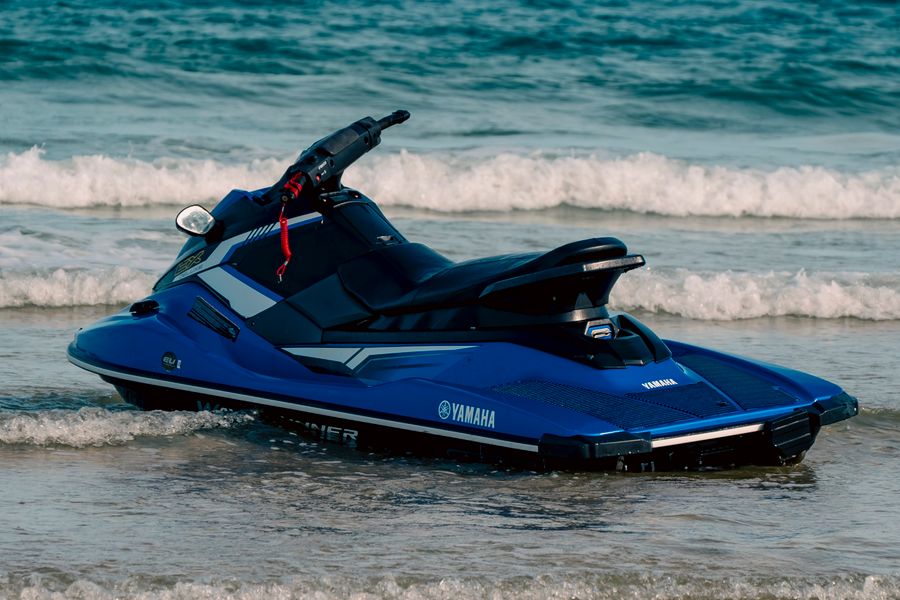
To properly charge a new jet ski battery, connect the charger directly to the terminals or use the ski’s onboard port if equipped. Most AGM batteries take four to eight hours to reach a full charge from a depleted state. Lithium batteries charge faster but require a charger with a lithium-compatible mode. Don’t assume a battery that cranks the engine is fully charged; a weak battery can still leave you stranded after a hot ride.
After the initial charge, a smart maintainer is worth keeping connected between rides during the first season. Battery-related no-starts are among the most common early issues with new PWCs, and they’re entirely preventable with this one habit.
How to Break In a New Jet Ski: The Hour-by-Hour Approach
Most manufacturers recommend a break-in period of five to ten hours, with the first three being the most critical. The core principle across all brands is simple: vary your throttle constantly, and never hold a single speed for long.
Hours 1 to 2
Keep the throttle at or below half opening for the first two hours. Ride in wide, looping patterns that naturally require speed changes through turns and acceleration. Avoid extended idling as well; the engine needs load to seat the rings, not just warmth. Varying throttle actively encourages even wear across the full cylinder wall.
Hours 3 to 5
From hours three through five, you can move up to about three-quarters throttle. Continue varying your speed frequently by accelerating moderately, backing off, and accelerating again. The components are adjusting to progressively higher loads during this phase. Prolonged wide-open-throttle runs still do more harm than good here.
Hours 6 to 10
Brief full-throttle bursts are acceptable in this range, but keep them short and follow each one with a return to moderate speed. This phase is where you start testing the engine’s upper range without overextending it. By hour ten, the engine should be fully seated and ready for normal use. Yamaha recommends staying below 5,000 RPM for the first five hours; Sea-Doo and Kawasaki have similar tiered guidance in their owner’s manuals.
Jet Ski Maintenance Schedule for the First Season
The break-in period doesn’t end on the water. Most manufacturers recommend an oil and filter change after the first ten hours of operation, earlier than the standard service interval. This removes metallic particles and debris released as internal components settle during break-in. Some owners do a second change at twenty hours as an added precaution.
Beyond oil, check the jet pump impeller area after the early rides. New machines occasionally pick up debris, and an impeller nicked by a small rock shows up as vibration or a noticeable loss of thrust. It’s worth pulling the intake grate and inspecting the pump housing after the first few outings. The wear ring, which sits between the impeller and pump housing, is also worth checking since a damaged ring quietly reduces efficiency.
Check the hull for stress cracks around the mounting points and inspect the sponsons after the initial rides. These issues are unlikely on a new machine, but catching them early is easier than managing a developing problem mid-season. A quick post-ride visual inspection takes less than three minutes and builds habits that pay off all season long.

What Happens If You Skip the Break-In
Skipping the break-in process doesn’t always produce immediate symptoms, which is part of why some riders dismiss it. Problems tend to appear gradually: reduced compression, inconsistent power at high RPM, or an engine that runs rough after hard use. By the time the symptoms are obvious enough to diagnose, the damage is already done.
There’s also a warranty consideration worth knowing. Most manufacturers log ECU data, and technicians can often determine from the hour meter and usage patterns whether break-in was done correctly. A warranty claim tied to an engine failure caused by improper break-in puts you in a difficult position. Following the procedure costs a few hours of patience during rides you’d be taking anyway.
Tips for PWC Storage and Flushing After Rides
Building the right post-ride habits early makes the rest of ownership easier. After every ride, flush the engine with fresh water using the flushing port specified in your owner’s manual, since procedures vary by model. Most four-stroke PWC engines are flushed with the engine running at idle for 90 seconds to two minutes. This clears salt, sediment, and sand from the cooling passages and exhaust system before corrosion can take hold.
When the ski goes back on the trailer, position the bow higher than the stern so residual water drains out the back. Pull the drain plugs between rides to let the hull dry. If the ski will sit for more than a few weeks, add a fuel stabilizer to prevent the fuel from breaking down and clogging the injectors.
For long-term storage, a proper winterization routine protects the engine, fuel system, and cooling passages; if you’re not comfortable doing it yourself, a dealer’s service department can handle it for a reasonable fee.
Your Ride Deserves the Right Parts
Once those first ten hours are behind you, your PWC is ready for whatever the water has in store. Whether you’re upgrading the impeller for better top-end performance, replacing wear items mid-season, or sourcing parts for the truck and trailer that got you there, the JC Whitney Performance Hub on CarParts.com has you covered.
With more than 100 years of history selling performance parts, JC Whitney has always been where serious enthusiasts shop. Through CarParts.com, that catalog now spans everything in your driveway: the tow vehicle, the trailer, and the PWC itself. Fitment data built on automotive-grade vehicle selector tools means you get the right part the first time, without the guesswork.
Keep Reading: Related Posts






Any information provided on this Website is for informational purposes only and is not intended to replace consultation with a professional mechanic. The accuracy and timeliness of the information may change from the time of publication.