Some riders treat their bike’s service schedule like a loose suggestion. Others panic over every mile and tear into the bike far more than it needs. Neither approach gets great results. A solid motorcycle maintenance schedule blends mileage intervals with time-based checks, and that combination is what actually keeps a bike reliable season after season.
Most guides online focus on a single spring checklist and call it a day. That leaves out a lot. Riders also need to know how often to service a motorcycle based on the type of bike they own, which parts wear out on a calendar instead of an odometer, and what it actually costs to stay ahead of problems. This guide covers all of that in one place.
Why Mileage and Time Both Drive Your Schedule
Motorcycle components don’t all wear out the same way. Engine oil and chains break down through heat, friction, and mechanical stress, so mileage is the right measure for those. Brake fluid works differently. It absorbs moisture from the air whether you ride or not, and that moisture lowers its boiling point over time.
Tires split the difference. Tread wears down with miles, but the rubber compound also hardens and cracks with age and UV exposure, regardless of how far you’ve ridden. Mixing up these categories is a common mistake. Riders who only track mileage often let their brake fluid and tires age well past their safe limits, even on a bike that barely leaves the garage.
Knowing which items follow which clock helps you avoid two problems. You stop over-servicing parts that don’t need it, and you stop ignoring parts that quietly degrade with time. Both mistakes cost money, and one of them can cost a lot more than that.
Break-In Period and Your First Rides
If you just bought a new motorcycle, the first 300 to 600 miles matter more than any other stretch of ownership. Avoid full throttle runs and long steady highway stints during this window. Vary your engine speed instead, since that helps piston rings and other moving parts seat properly.
At the end of the break-in period, schedule a first service. This typically includes an oil and filter change, a chain tension check, and an inspection of all fasteners and brake feel. Skipping this step is one of the most common mistakes new riders make, and it can shorten engine life that would otherwise run well for years.
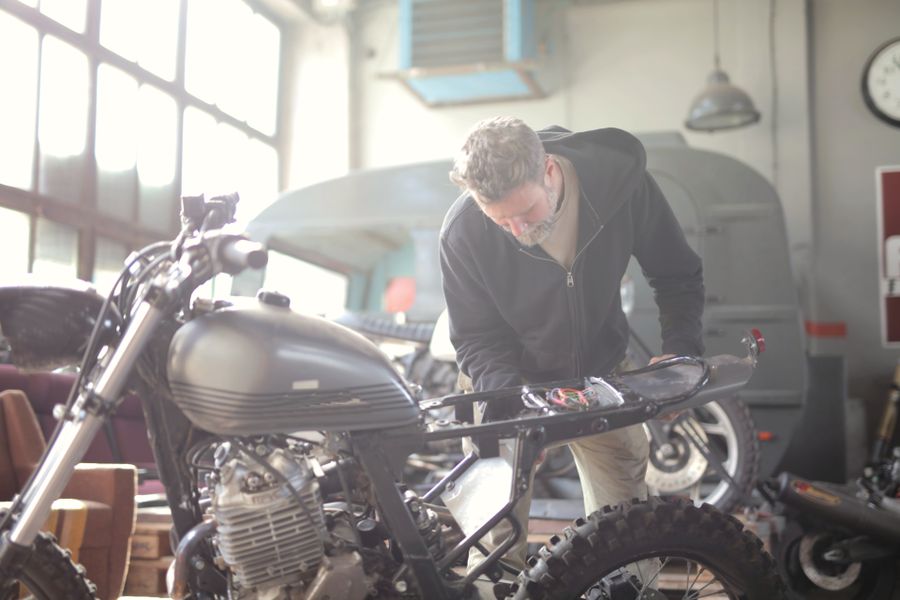
The Core Motorcycle Maintenance Checklist by Mileage
Once your bike is past break-in, a few tasks repeat on a predictable rhythm. Chain lubrication comes first on this list for chain drive bikes. Lube the chain every 300 to 500 miles, and always after riding in the rain, since water washes off the existing lubricant.
Chain tension needs a check roughly every 1,000 miles, with most manufacturers calling for 25 to 35mm of slack at the tightest point. A basic chain lube typically runs $10 to $20 a bottle, and prices shift depending on formula and bottle size. When you do replace a chain, match the exact pitch and link count for your model instead of eyeballing a close fit, since a mismatched chain wears out fast and stresses the sprockets.
Brake pads deserve a visual inspection every 3,000 miles, though actual wear varies widely by riding style. Sport bike pads often wear out around 10,000 miles, while touring and cruiser pads can last 12,000 to 20,000 miles. A set of semi-metallic brake pads generally costs $20 to $45, and confirming your bike’s exact year, make, and model before ordering helps you avoid a pad that looks similar but doesn’t seat correctly in your caliper.
Air filters typically need attention at every other oil change, or more often if you ride in dusty conditions. Valve clearance is the item riders defer longest, since symptoms build slowly and include louder engine noise and harder cold starts. Intervals vary a lot by platform, ranging from around 6,000 miles on some supersport engines to over 25,000 miles on certain standard bikes, so check your owner’s manual for your specific model.
Motorcycle Oil Change Interval by Bike Type
A single oil change number doesn’t work across every motorcycle, and this is where a lot of generic advice falls short. High-revving supersport engines run hotter and typically need fresh oil every 3,000 miles. Standard and naked bikes usually stretch to 4,000 to 6,000 miles between changes.
Touring and adventure bikes often go 6,000 to 8,000 miles, since sustained highway cruising is gentler on oil than aggressive acceleration and braking. Cruisers with V-twin engines generally land around 5,000 miles, though their heat profile means it pays to follow the manufacturer’s specific guidance. Always swap the oil filter at the same time you change the oil, since old filter media holds contaminants that immediately compromise fresh oil.
An oil filter typically costs $8 to $15, and prices can vary by engine size and filter type. Use your bike’s exact model to cross-reference the correct filter before you buy, since two engines from the same brand can take different filter sizes. When you install a new filter, hand-tighten it snug and then give it a small additional turn rather than cranking it down with a wrench, since overtightening can crush the seal and cause a leak. If you’re tackling this at home, a few DIY oil change tips make the job cleaner and faster.
Time matters here too. If you only put a few thousand miles on your bike each year, change the oil at least once every 12 months, even if you haven’t hit the mileage mark. Motor oil can expire during storage, and moisture and oxidation build up in the process, reducing its ability to protect your engine.

Time-Based Items You Can’t Skip
Brake fluid is the clearest example of a time-triggered part. It absorbs moisture continuously while sitting in the system, so plan on flushing it every two years regardless of how many miles you’ve ridden. If you bought a used bike with an unknown service history, a brake fluid flush should be one of your first jobs.
Coolant follows a similar pattern. Traditional coolant needs replacement every two years, though many newer motorcycles ship with long-life coolant that stretches that interval to four or five years. Check your owner’s manual to confirm which type your bike uses, and inspect the radiator hoses at their connection points while you’re in there, since that’s usually where age-related wear shows up first.
Tires deserve special attention once they pass the five-year mark. Even with plenty of tread left, rubber hardens and loses grip as it ages, and most manufacturers treat ten years as an absolute maximum lifespan. Every tire has a four-digit date code on the sidewall showing the week and year it was made, so check that number both on new tires and on any used bike you’re considering. When you shop for a replacement tire, match the exact size and load rating listed in your owner’s manual rather than what’s already mounted, since a previous owner may have installed the wrong size.
Seasonal Storage and Pre-Ride Habits
If your bike sits for the winter, a little prep work now saves headaches later. Fill the tank and add a fuel stabilizer to prevent condensation and stale gas. Disconnect the battery or keep it on a maintainer, since batteries lose charge steadily even when the bike isn’t running.
Before your first ride back, run through a quick five-minute check. Confirm tire pressure while the tires are cold, check the oil level with the bike upright, and test your lights, horn, and brake feel. This habit catches small issues, like a bulb out or a spongy brake lever, before they turn into bigger problems on the road.
DIY vs Professional Service: What to Expect
A DIY oil change, chain cleaning and lubrication, air filter swaps, and brake fluid flushes are all common jobs for a rider with basic tools and some patience. Expect to spend somewhere between $150 and $350 per year on parts and consumables if you’re doing this work yourself, though actual costs shift based on your bike’s size and how often you ride.
Some jobs are better left to a technician. Valve adjustments require specialized tools and often partial disassembly, and dealership labor for that work typically runs $300 to $1,000 or more, depending on engine complexity. Wheel bearing replacement and fork oil changes also fall into this category for most riders, since the specialty tools needed rarely pay for themselves on an occasional job.
Signs Your Motorcycle Needs Attention Now
A maintenance schedule is a good baseline, but your bike will sometimes tell you it needs help ahead of any interval. A pulsing sensation through the brake lever or pedal usually points to a warped rotor. Grinding or hook-shaped wear on sprocket teeth means the chain and sprockets need replacement together, since fitting a new chain to worn sprockets accelerates wear on both.
Cotton candy-looking material shooting from the exhaust tip signals worn muffler packing, and this shows up faster on dirt bikes than street bikes. Louder engine noise, harder cold starts, or a noticeable drop in power can all point toward valve clearance drifting out of spec. Any of these symptoms are worth addressing right away instead of waiting for your next scheduled interval.
Keep Your Motorcycle Ready to Ride
Staying on top of a schedule like this is a lot easier when the right part is easy to find. That’s what the JC Whitney Performance Hub on CarParts.com is built for: a dedicated home for street motorcycle parts and accessories instead of a generic listing that half fits your bike. Whether your next task is chain lube, a set of brake pads, or fresh tires, it’s set up to get you back on the road without the guesswork.
JC Whitney brings more than a century of experience selling performance parts and accessories, including motorcycle parts, so this isn’t new territory. Automotive-grade fitment data and a proven vehicle selector take the guesswork out of ordering, which means fewer returns and less second-guessing at checkout. Next time your maintenance schedule flags an oil filter, a chain, or a set of brake pads, the JC Whitney Performance Hub on CarParts.com is worth a look.
Keep Reading: Related Posts




Any information provided on this Website is for informational purposes only and is not intended to replace consultation with a professional mechanic. The accuracy and timeliness of the information may change from the time of publication.