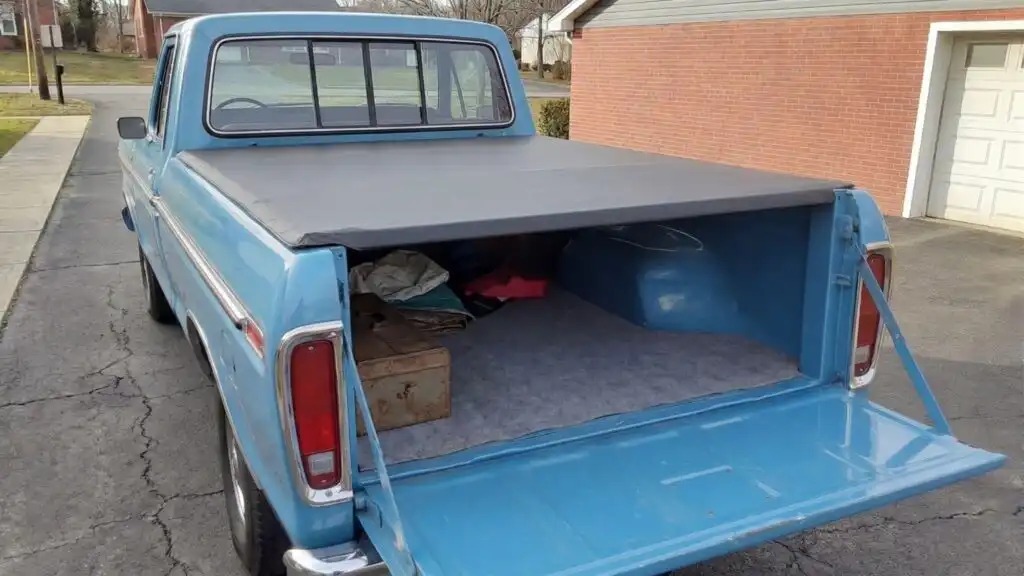
A tailgate cable supports the weight of your truck’s tailgate when it’s lowered, holding the panel level so it doesn’t drop past horizontal or strain the hinges. Most trucks use two of them, one on each side, working as a matched pair to share the load every time you open the bed.
Key Takeaways
- A tailgate cable holds the open tailgate at its proper horizontal angle.
- Pickups typically use two cables, one on each side of the gate.
- Rust, fraying, and stretching are the most common failure modes.
- A drooping or uneven tailgate usually means one cable has failed.
- Replacement is straightforward, and most kits ship with the hardware needed.
How a Tailgate Cable Works
When you drop the tailgate, gravity pulls it down. The hinges at the bottom act as the pivot, but they aren’t designed to carry the full weight at a flat angle. That’s where the cable does its job. Each one hooks to a bracket on the bedside and connects to the side of the gate. As the panel swings open, the cables pull taut and stop the motion at horizontal, suspending the gate so it sits parallel to the bed floor.
Two cables share the load, which is why trucks come with one on each side. If a single cable fails, the surviving side bears the entire weight of the gate plus any cargo, groceries, or person sitting on it, and the panel sags toward the broken side.
Cables, Struts, and Torsion Bars
These three parts often get confused, but they do different jobs. Cables carry the static weight of the open tailgate. Struts or dampers control how fast the gate drops, so the swing is smooth instead of slamming down. Torsion bars assist when you lift the gate back up, taking some of the effort off your hands. A truck can have any combination of these parts, and a worn strut won’t show up as a sagging gate. That’s a cable problem.
Signs Your Tailgate Cable Is Failing
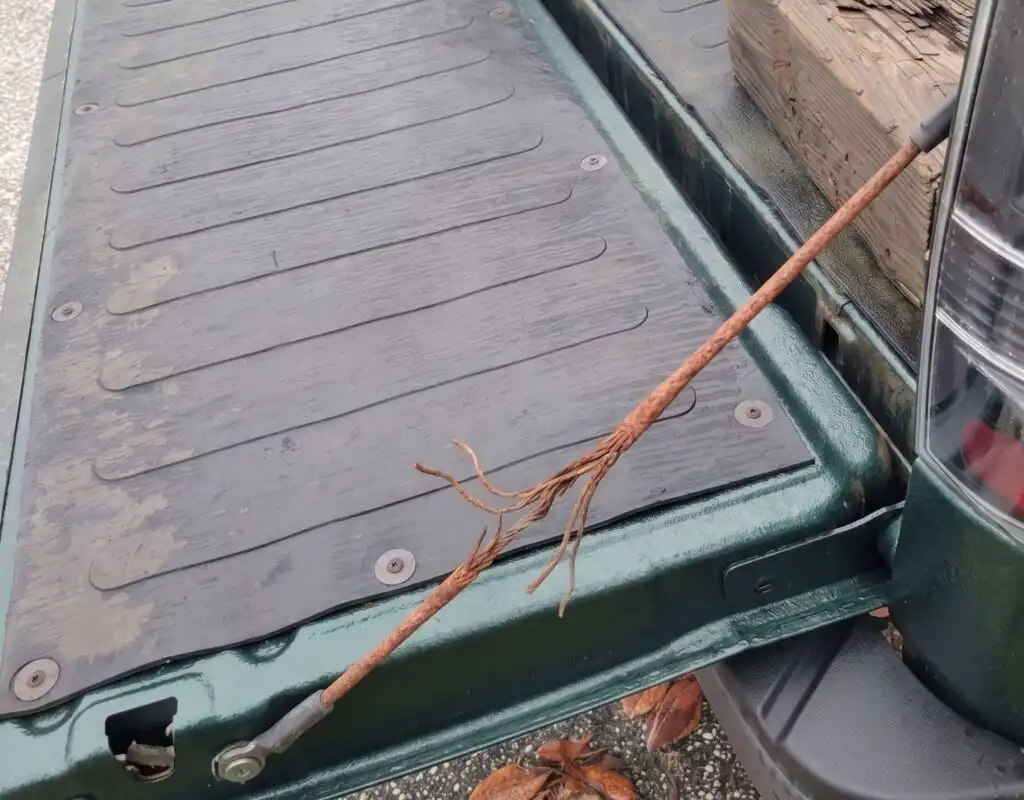
The cable is exposed to the weather every day, and most failures are easy to spot once you know what to look for.
A sagging or uneven gate is the clearest signal. If one corner of the tailgate hangs lower than the other when open, the cable on the low side has stretched or snapped. Fraying is the next thing to watch for. Run your fingers along the cable and check for broken strands, rust spots, or kinks. Any of these mean the cable has lost strength and could fail completely under load.
A loud bang or sudden drop when you open the gate is a giveaway that a cable has parted. So is a cable that’s come unhooked from its bracket, which sometimes happens if the mounting hardware corrodes through. A bent or warped tailgate panel can also point back to a cable that’s been failing for a while, letting the gate stress the hinges in ways they weren’t designed for.
What Causes a Tailgate Cable To Fail
Corrosion is the top cause. Road salt, rain, and mud all attack the cable and its end fittings, and once rust gets inside the strands, the cable loses tensile strength fast. Trucks driven in winter climates or on coastal roads tend to chew through cables faster than ones kept in dry regions.
Overloading does the rest of the damage. Sitting on the open gate, piling heavy loads against it, or letting cargo bounce on it during transport puts more weight on the cables than they’re rated for. Using them as tie-down points, which some owners do, also accelerates wear. Age and basic metal fatigue also play a role, especially for trucks past the ten-year mark.
If a cable has failed and you suspect the hinges or latch took stress as well, have the rear panel inspected before you load up the bed again. A weakened gate can drop unexpectedly, which is a pinch hazard for hands and feet.
Replacing a Tailgate Cable
Replacement is one of the simpler truck repairs. Each cable usually pops off the gate and the bedside with a small clip, hook, or bolt, and the new one drops in the same way. Plan on 15 to 30 minutes for the pair if everything cooperates, longer if rust has seized the hardware.
Replace both sides at the same time, even if only one looks bad. The other cable is the same age and has seen the same weather, and matching new parts keep the gate level. Confirm that the replacement matches your truck’s year, make, and model. Lengths vary between platforms, and a cable that’s even an inch off can leave the gate hanging too low or too tight.
What To Look For in a Replacement
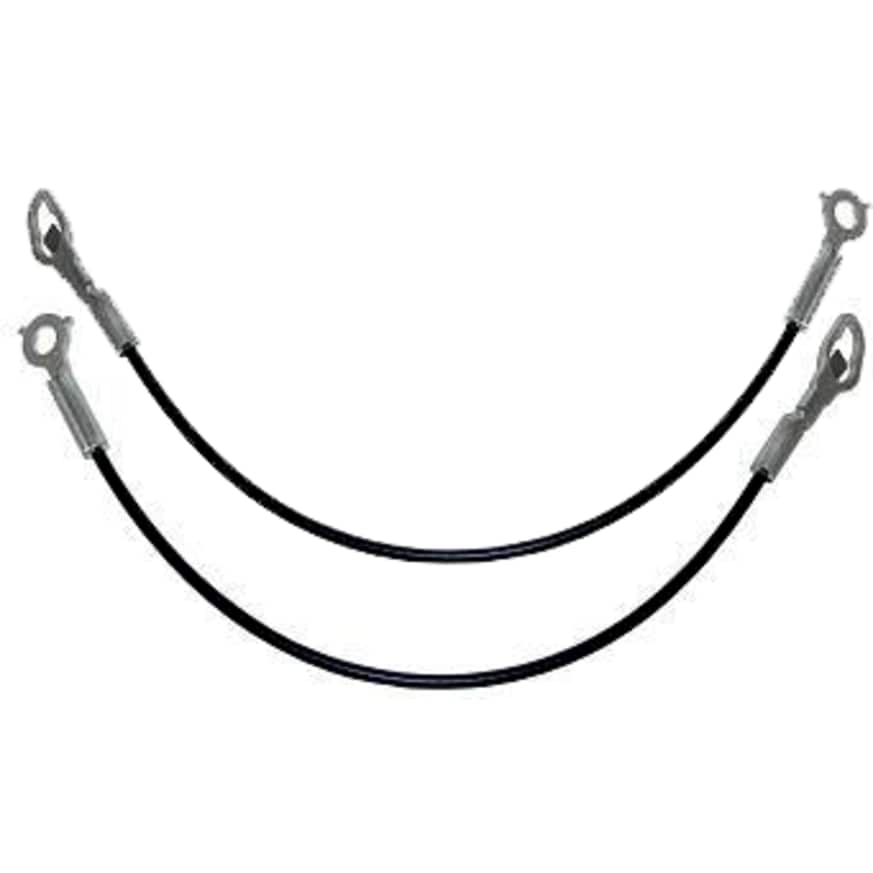
Stick with metal cables that include the original-style end fittings. Plastic-coated versions resist rust better in salty climates. Verify whether the kit includes the mounting hardware. Most direct-replacement parts ship with the clips or screws needed, but a few don’t, and a missing fastener will stop the job cold.
If the gate has been hanging crooked for a while, inspect the hinges and the latch as well. A failed cable can stress these parts, and replacing only the cable without checking the rest can mask a bigger alignment problem.
FAQ
You can, but keep the tailgate closed. Driving with one broken cable and the gate down lets the panel swing on the remaining cable and stress the hinges. With both cables broken, the gate can drop and bend or fall off entirely.
A single cable typically runs between 15 and 30 dollars for a quality direct-replacement part. OEM cables and kits with hardware can run higher, especially for newer or premium trucks.
Yes. Both age together and carry the same loads, so when one fails the other is usually close behind. Doing them as a pair also keeps the open gate sitting level.
No. Length, fitting style, and mounting points vary by truck. Always match the cable to your vehicle’s year, make, and model.
No. A strap is a tie-down used to secure cargo. The cable is a structural part that holds the gate up when open.
A failing cable is a small part with an outsized effect on how your truck loads and hauls. Catching it early means swapping an inexpensive part instead of repairing a bent gate or stripped hinges. Find the right tailgate support cable for your vehicle on CarParts.com and enjoy fast shipping.
Keep Reading: Related Posts






Any information provided on this Website is for informational purposes only and is not intended to replace consultation with a professional mechanic. The accuracy and timeliness of the information may change from the time of publication.