You just loaded the bike off the trailer, and every instinct says pin it. That urge is also why so many new bikes end up burning oil. The way you treat your machine in the first 10 hours matters. Learning how to break in a dirt bike is about letting the engine finish what the factory started.
What the Manufacturer Already Did (and What They Didn’t)
Modern dirt bikes leave the factory in better shape than ever. But “better” isn’t the same as “finished.” Most engines are briefly run on a dyno before shipping to confirm they fire and circulate oil. What that dyno run doesn’t do is seat rings or establish proper bearing wear patterns.
At the microscopic level, the surfaces within a new engine remain rough. Controlled heat and load gradually smooth those surfaces and build a tight compression seal. Rush that process before the rings seat, and you lock in an imperfect seal permanently. The engine will still run, but it’ll burn more oil and make less power.
What’s the First Thing You Do After Purchasing a Dirt Bike?
Before you even think about starting the engine, do a pre-ride inspection. Check chain tension, coolant level on liquid-cooled bikes, and engine oil level. Go over every visible bolt with a quick visual check. New bikes can arrive with hardware that vibrated loose during shipping.
Pull out the owner’s manual and read the break-in section, because limits vary by platform. Some manufacturers specify half throttle for the first hour, then three-quarter throttle for the second. Others set the window by mileage instead of riding time. The engineers who built your engine validated those parameters on a dyno.
The First Ride: Heat Cycles and Throttle Discipline
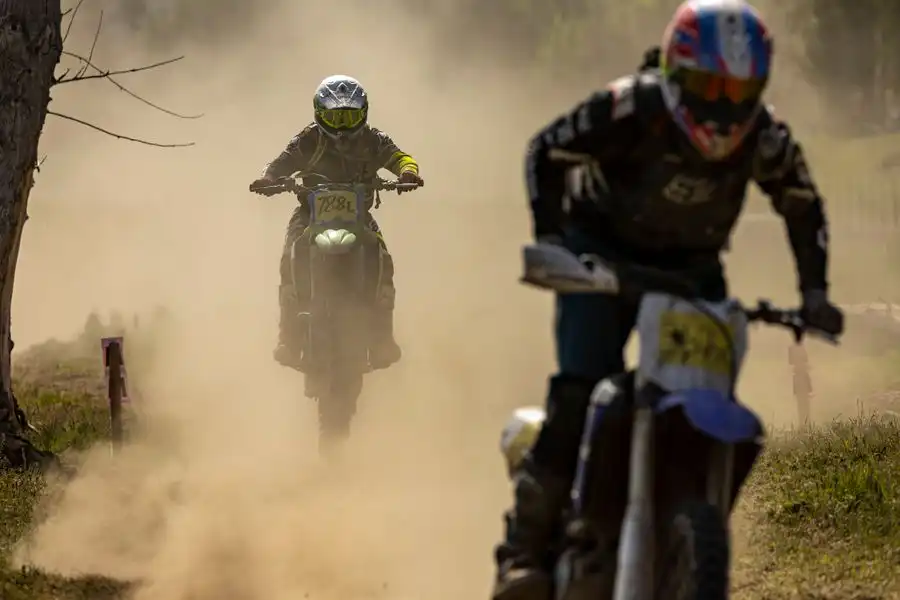
Start the engine cold and let it idle for five to ten minutes. This gets oil circulating before any real load hits the engine. Once you’re riding, avoid locking into any sustained throttle position. Steady RPM creates uneven cylinder wall wear, so vary your inputs deliberately.
Avoid lugging the engine too. Running at low RPM under heavy load is just as damaging as over-revving. Downshift when the engine strains and keep it in a smooth, responsive range. For your first ride, stop after 20 to 30 minutes and let the bike cool fully before riding again.
Stick to relatively flat terrain for the first couple of hours. Deep sand, rocky hillclimbs, and technical singletrack create hard-to-control drivetrain loads. Experienced riders recommend an off-road park or open trail for break-in. An MX track forces you to push the machine to maintain flow.
Hour-by-Hour Maintenance Checkpoints
The break-in period generates metal particles inside the engine as surfaces wear in. This is normal, but your oil captures debris at a higher rate than usual. Your first oil and filter change should happen much earlier than the standard interval. Most manufacturers recommend changing the oil after the first ride, within the first two hours.
At the five-hour mark, pull the air filter and inspect it. If it’s dirty, clean or replace it and re-check the oil level. Also, verify chain tension and spoke tension on spoked-wheel setups. At the ten-hour mark, do a full service: fresh oil and filter, chain lube, and a brake pad check.
New dirt bike maintenance is more compressed than most riders expect. The bike is still changing mechanically in those early hours. Treat the first ten hours as its own service interval. Keep it separate from the service intervals that follow.
Two-Stroke vs. Four-Stroke Break-In Differences
Two-stroke engines have a simpler break-in process but are less forgiving when you get it wrong. Two-strokes rely on fuel-mixed oil for lubrication, so the oil-to-fuel ratio is critical during break-in. Some riders run a slightly higher ratio for the first tank while surfaces are mating. After break-in, dial the ratio back to your standard mix.
For a new two-stroke, an early top-end inspection after break-in is a smart move. It confirms ring seal and piston condition before you start riding hard.
Four-stroke break-in puts more weight on the oil change schedule. The oiling system carries all the metal particles that break-in generates. Choosing the right oil viscosity for your engine and climate matters here. The first drain from a new four-stroke often looks noticeably darker and grittier than later changes.
Change the oil early and change the filter with it. Don’t skip that step.

What to Avoid During Break-In
The biggest mistake is wide-open throttle runs before the rings seat. The opposite error is just as real: never loading the engine at all. Rings seat through compression pressure during acceleration and deceleration. Putt around at quarter throttle indefinitely, and you’ll actually slow the seating process down.
Brief, moderate acceleration runs across multiple gears are fine and beneficial. They’re part of how rings seat correctly.
Avoid hard braking and aggressive clutch launches during the first several hours. Brake pads and rotors have their own bedding-in process. The clutch pack is establishing contact patterns under the same principle. Abrupt inputs now create uneven wear that shows up later as fade or chatter.
Extended idling without riding is also counterproductive. Letting the bike idle for 30 minutes does nothing for ring seating. Rings seat under compression load during riding, not at idle. Keep warm-up times to five to ten minutes, then get moving.
After Break-In: What Changes
Once you cross the ten-hour mark and complete the corresponding service, you’ll notice a difference. A properly broken-in engine runs smoother and responds more crisply to throttle input. That’s the payoff for doing it right. Some riders do a compression check around the 15 to 20 hour mark to confirm ring seating.
From here, your maintenance schedule shifts to the normal intervals your manual prescribes. Dirt bike intervals are shorter than most car owners expect because the environment is far harsher. Air filters, chains, and oil all need more frequent attention under off-road conditions. If you ever want to ride on public roads, look into what it takes to make it street legal before heading out.
Keep Your Bike Ready for Every Ride
Protecting your investment doesn’t stop after break-in. High-wear items like chains, sprockets, tires, and filters need consistent attention. The JC Whitney Performance Hub at CarParts.com stocks dirt bike parts with automotive-grade fitment accuracy. Whether you’re doing your first post-break-in service or upgrading suspension and exhaust, JC Whitney’s 100-plus years of performance parts heritage has you covered.
Your thirst for adventure doesn’t have an off-season, and neither does the support for the machine that feeds it.

Any information provided on this Website is for informational purposes only and is not intended to replace consultation with a professional mechanic. The accuracy and timeliness of the information may change from the time of publication.