High-quality tail lights do a lot more than finish the look of your vehicle’s rear end. They affect how clearly other drivers see your brake, turn, and running light signals. They also determine how well the assembly holds up to weather and heat.
Not all tail lights deliver the same real-world results, even when the product photos look nearly identical. A better-built assembly gives you more consistent light output, cleaner optics, stronger sealing, and a housing that stays put once it is installed. That matters because tail lights are part of your vehicle’s safety system.
Cheap units can look fine on day one, but still fall short where it counts. Weak lens materials haze or crack sooner than they should. Inconsistent optics reduce signal clarity. Thin housings and flimsy mounting tabs create installation headaches, vibration issues, and early failure. When that happens, the low purchase price stops feeling like a deal.
Why Does Tail Light Quality Matter on the Road?
Tail light quality matters most during the moments that catch you off guard: braking in the rain, signaling through heavy traffic, or driving at night with road spray kicking up behind you. A good design produces a controlled beam pattern, consistent brightness, and clear separation between lighting functions. That makes your intentions easier for other drivers to read, which gives them more time to react.
With high-quality LED tail lights, the conversation is not just about brightness. It is about optical control, even illumination across the lens, and signal clarity that holds up in tough conditions. Those factors support faster reaction times from the drivers behind you and reduce the kind of ambiguity that causes close calls.

What Makes a Tail Light Actually Durable?
A tail light assembly belongs in a rough environment. It deals with vibration, UV exposure, water, wash chemicals, road grime, and repeated temperature swings. That’s why material quality matters just as much as appearance.
Look for assemblies built with virgin plastic in critical components, especially when lens clarity and housing stability matter. Reinforced mounting points help the part stay secure without cracking around studs or tabs. Advanced sealing systems reduce the risk of moisture intrusion, which can fog the lens, corrode connections, or shorten bulb and board life.
UV-resistant lens surfaces also matter. A lens that yellows, dulls, or turns brittle affects how the lamp performs and how the vehicle looks. Over time, resistance to warping, cracking, and environmental breakdown becomes one of the biggest differences between a durable assembly and a disposable one.
What Are the Signs That a Tail Light Is Failing?
Even before a part fails, poor quality usually leaves clues. Watch for these warning signs when comparing or inspecting an assembly:
- Condensation or recurring fog inside the lens
- Uneven light distribution or dim hot spots
- Loose bulb fitment or intermittent electrical output
- Brittle tabs, cracked mounting points, or housing flex
- Lens haze, yellowing, or surface crazing
- Gaps in the body line after installation
- Warped seals or water tracks are visible inside the housing
- Poor reflector alignment or a sloppy internal finish
Any one of those issues can affect safety, service life, or your confidence in the installation.

Upfront Costs vs. Long-Term Value
The hidden cost of a low-end assembly is repeat work. If a tail light takes on moisture, fades quickly, or develops loose mounting points, you pay again in parts, time, and frustration. For DIY owners, that usually means pulling trim twice, rechecking connectors, and dealing with avoidable fitment problems.
Cheap parts also come with tradeoffs like poor road visibility, lower resistance to moisture and heat cycling, reduced lens durability, and a much higher chance of replacing the same assembly sooner. That’s why experienced shoppers compare long-term value instead of focusing only on the lowest upfront price. The best aftermarket tail lights earn their keep by helping you avoid those repeat costs.
Why Does DOT and SAE Compliance Matter?
When you evaluate replacement tail lights, compliance markings are one of the quickest quality checks available. Applicable products are designed to meet DOT and SAE standards where relevant, and those markings are typically molded directly into the lens. That detail signals that the lamp was engineered to meet required performance criteria, not just styled to look the part in photos.
Compliance matters for road safety, optical performance, and legal confidence. It does not guarantee that every lamp on the market performs equally well, but it helps separate properly engineered assemblies from parts that only look correct on a screen.
Compliance standards and validation processes apply to applicable products based on part type and regulatory requirements.
CarParts.com’s 9-Step Validation Process
A stronger validation process guarantees the lamp was tested beyond basic appearance. For applicable products, a 9-step process helps verify that the assembly performs under realistic operating and environmental conditions.
This process includes the following steps:
- Lighting function test to verify all illumination features
- Air-tightness test to check sealing integrity under pressure
- Waterproof test using 360-degree high-pressure spray under active lighting
- Real-world driving vibration test at simulated vehicle mounting points
- Endurance burn test with extended operation and internal inspection
- Underwater test to confirm zero leakage for air or water
- Photometric validation using a goniophotometer for regulatory reference
- Electronic signal verification to confirm stable signal communication
- Vehicle fitment confirmation by engineers for proper fit and on-road function
This kind of validation addresses the exact failure points that frustrate owners later, including leaks, weak optics, unstable electronics, and poor fit.
Fitment Confidence Makes the Job Easier
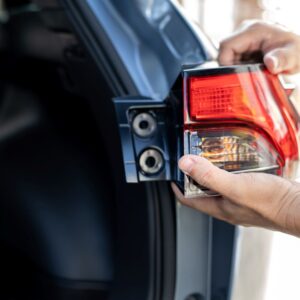
Factory-aligned design, accurate connector placement, and secure mounting make tail light installation a breeze. These reduce the chance of stress on the housing, rattling, or panel misalignment.
Fitment confidence also protects the electrical side of the job. A secure, accurate assembly is less likely to place tension on wiring, sit unevenly against seals, or require workarounds to get the lens to line up with the quarter panel or liftgate.
Choosing the Best Tail Light Brands on CarParts.com
When you compare options on CarParts.com, the real question is which brand best matches your priorities for daily use, durability, validation, and long-term value.
Replacement is a great fit for drivers who want dependable everyday performance and fitment that stays close to factory expectations. If your goal is restoring proper lighting function with confidence, it is a solid choice for most daily-driver repairs.
JC Whitney suits shoppers who place a higher priority on engineering confidence, weather resistance, and long-term ownership peace of mind. The technical differences can vary by application, so it is always worth verifying lens markings, construction details, and fitment specifics before making your final call.
Either way, the right tail light is one that’s built reliably, keeps other drivers informed, and holds up over time. Start with compliance markings, check the seal and materials, and make sure the fitment is accurate for your vehicle. Get those things right, and you won’t have to think about repairs again for a long time.
Keep Reading: Related Posts





Any information provided on this Website is for informational purposes only and is not intended to replace consultation with a professional mechanic. The accuracy and timeliness of the information may change from the time of publication.