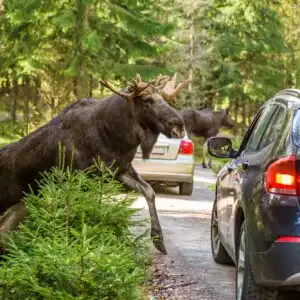
An estimated 1.6 million-plus animal-collision insurance claims occurred across the United States between July 1, 2025, and June 30, 2026. Deer remained the most frequently struck animal. But how likely is it to happen to you? It depends on where you live, as well as the time of year.
Updated estimates put the national odds of an animal collision at 1 in 145, compared with 1 in 139 the previous year. These figures cover animals generally, not just deer. While the odds have improved, these collisions remain a risk motorists face on the road.
West Virginia has the highest animal-collision risk at 1 in 46, followed by Montana at 1 in 54, Wisconsin at 1 in 62, Pennsylvania at 1 in 64, and Michigan at 1 in 68.

The risk of getting into a collision with deer and other wildlife increases during the fall. October through December is the peak period for animal collisions, with November the highest-risk month. During this time, it gets dark much earlier, especially after daylight saving time ends, and this can contribute to a rise in deer accidents.
It’s important to be vigilant on the road during deer season. As a motorist, you need to make sure that your vehicle is in top shape and is equipped with fully functional parts (make sure to replace any broken or dim lights) to help reduce the likelihood of accidents and potential collisions with deer and other wildlife.
What should you do to avoid getting into a deer-car accident and what kind of vehicle damage can you expect should you get into one? Read on to find out.
Can Hitting a Deer Total Your Car?
The short answer is yes, your car can get totaled in a deer vs. car collision. Getting into a road accident with deer or other animals of similar (or larger) size can cause more damage than you would expect.
An insurer may declare a vehicle a total loss based on repair costs relative to its value, its ability to be safely repaired, and applicable state rules. A vehicle that still runs can nevertheless be a total loss.
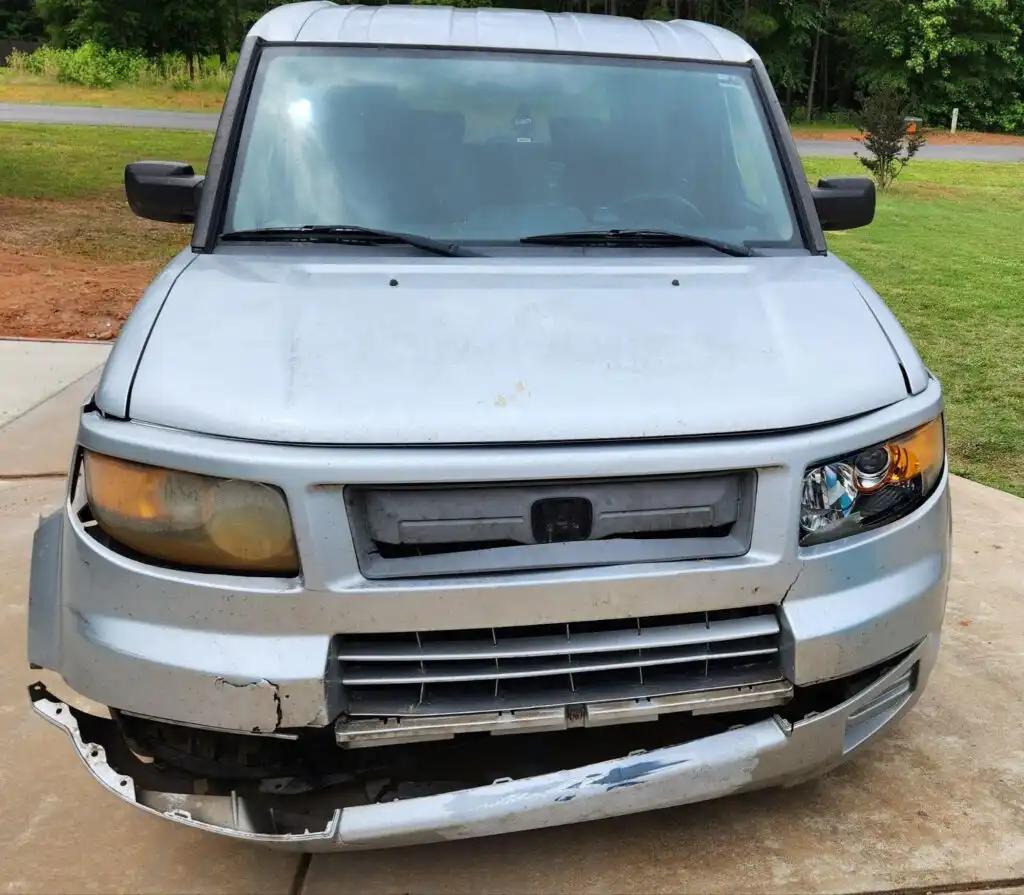
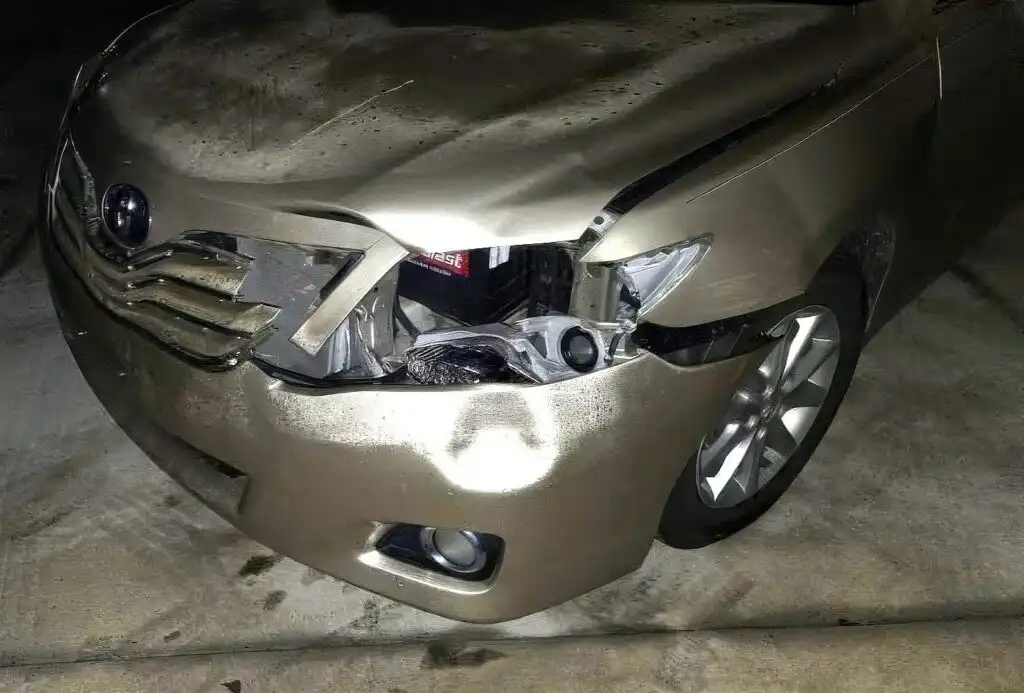
Of course, factors such as speed and point of impact can play a significant role. The size of your vehicle and its durability can also affect the outcome. For example, hitting an average-sized doe can completely wreck your vehicle if you’re driving a compact vehicle or a sedan. On the other hand, while they fare better in deer-related accidents, larger SUVs and trucks aren’t exempt from incurring damage, such as broken headlights, crumpled bumpers, and even cracked windshields.
Deer collisions may also result in animal and human injuries and fatalities, including when a deer comes through the windshield. Antlers can cause additional injuries. If you do get into an incident involving wildlife, do not approach the animal, even if it appears dead. Wounded deer may use their strong legs or sharp hooves to injure people, especially if they’re confused or in a state of panic.
Driving carefully is advised, but it may not always work as planned. Swerving to avoid an animal can cause a loss of control or a collision with another vehicle, a tree, or another roadside obstacle. Brake firmly and stay in your lane when possible.
Deer Car Accidents: What Kind of Damage Can You Expect?
Unfortunately, even when you take all the proper precautions, sometimes road accidents involving wildlife are simply unavoidable. Animals, especially deer, can move very quickly and can dart in front of your car before you get a chance to react.
In the event that you do get into a wildlife-related accident, you can expect quite a bit of damage. Hitting deer or other similar-sized animals at 50 to 60 miles per hour can severely damage the front end of a vehicle. The impact may puncture the radiator and cause an engine coolant leak, although the exact damage depends on the collision. Aside from these, you can also expect a variety of damaged components.
Listed below are some of the most common parts affected by a deer vs. car collision:
Shattered Headlights, Fog Lights, and Auxiliary lights
A vehicle’s headlightsilluminate the road ahead at night. Meanwhile, a fog light is used to provide the driver with a clear view of the road in low-visibility driving conditions. Because these lights are located at the front of the vehicle, they’re highly susceptible to damage, especially after a significant front-end collision.
Depending on the extent of the damage and the type of headlights and/or fog lights you have installed, you may also need to replace the housing and covers, in addition to replacing the bulbs.
Meanwhile, light-emitting diode (LED) light bars are used to provide auxiliary lighting in low-visibility driving conditions. Many truck owners install LED light bars up on the roof, so in that setup, they’re not likely to get damaged in a collision. Sometimes, however, they’re installed on the bumper, in which case they are likely to get damaged in a deer vs. car accident.
Do keep in mind that some states have laws regulating the use of auxiliary lighting in vehicles. You can check your local Department of Motor Vehicles (DMV) website for more information.
Cracked or Broken Bumpers and Front-End Accessories
On many vehicles, the plastic outer panel is the bumper cover, while a bumper reinforcement bar sits behind it. Other vehicles, particularly trucks, may have exposed metal bumpers. The bumper system helps absorb energy and reduce vehicle damage in low-speed collisions.
Both the bumper cover and the bumper itself will likely sustain damage in a deer collision, but it depends on the severity of the incident.
Bumper covers are typically installed using clips or other fasteners. After a collision, have a qualified collision-repair technician inspect the underlying reinforcement, mounting points, and any affected sensors before replacing only the cover. Follow the vehicle manufacturer’s repair and calibration requirements.
If you own a truck that is equipped with front-end accessories such as bull bars and brush guards, which are protective accessories mounted at the front of the vehicle, these are likely to sustain damage as well.
These accessories may offer limited protection, but they should not be relied on to prevent damage or injury in a deer collision. Brush guards can also provide additional mounting space for auxiliary lights.
While bull bar or brush guard replacement is a straightforward process, you should still consult a certified mechanic if you plan on re-installing this part.
Cracked or Shattered Windshields
Your vehicle’s windshield is another potential point of impact in case you get into a deer vs. car accident. In case you encounter or hit deer on the road, the animal may bounce off the front of the vehicle and crack your windshield.
If your windshield gets damaged, have it assessed promptly for repair or replacement. Extensive damage or damage that obstructs your view can make driving unsafe. Also, a windshield acts as a safety device in that it serves as a barrier between you and objects outside your vehicle.
Windshield installation typically requires precision tools and expert hands, so make sure to go to your trusted auto shop for repairs, just in case.
Bent or Dented Hood and/or Fenders
Vehicle hoods are typically made of durable materials such as steel, aluminum, carbon fiber, fiberglass, and acrylic. Not only do hoods complete a vehicle’s aesthetics, but they also protect the engine bay and other underhood components from the elements.
Should you get into an unfortunate accident involving deer or other animals, your hood may bend or become dented. Whatever the case, a compromised hood is a problem that must be addressed right away.
A significantly bent hood or damaged hood latch can make the vehicle unsafe to drive. Have a collision-repair technician determine whether the hood and its latch, hinges, or mounting points need repair or replacement. Do not drive with a hood that cannot be securely latched.
Another component that can get damaged as a result of deer collisions is your vehicle’s fender/s. The fender is a vehicle panel that houses the wheel well and prevents road debris from being thrown in the air by a spinning tire. Side-sweep accidents can damage fenders.
Before replacing this component, make sure to assess the damage first to see if there are other repair alternatives you can try.
Underhood Damage
Underhood damage can be expensive to fix and can make your vehicle unsafe to drive.
The impact may damage your vehicle’s radiator or other cooling-system components. Continuing to drive with a significant coolant leak can lead to overheating and engine damage.
After a collision, move to a safe location if possible and turn on your hazard lights. Call emergency services if anyone is injured or there is an immediate traffic hazard. Only inspect your vehicle if it is safe to do so. If you see leaks, loose parts, tire damage, or other safety hazards, call a towing company instead of continuing to drive.
Damage to Brakes
Hard braking alone should not damage a properly functioning brake system. However, a collision can damage brake components or lines. If braking performance changes or you suspect brake damage after the accident, do not drive the vehicle.
The best course of action is to wait for the first responders or to call a towing company so you can bring your vehicle to an auto shop.
Shock and Strut Assembly
Your vehicle’s shock absorbers and strut assembly may also sustain significant damage after a deer collision. Shock absorbers dampen and dissipate energy to keep your vehicle stable while on the road. Meanwhile, the strut assembly provides structural support to your vehicle by carrying the weight of the vehicle while also keeping wheel alignment and steering system in check.
These components may be damaged by the collision or by striking a curb, ditch, or other obstacle during an evasive maneuver. Swerving alone does not normally damage properly functioning shocks or struts. Have the suspension inspected before deciding which parts need replacement.
Shock absorber and strut assembly replacement may be intimidating to some, so definitely consult a mechanic for repairs if you’re not confident in your skills.
How Can You Avoid Deer Collisions?

While some deer-related road accidents are impossible to avoid, there are things you can do to minimize the risk.
First, it’s important to take note of how deer behave. The likelihood of deer running into the path of oncoming vehicles is significantly higher during deer season, which lasts from October to December, as previously mentioned.
Deer are also known to be on the move from sunset to midnight, and in the hours shortly before and after sunrise. Be especially alert from dusk to dawn rather than relying on a fixed time such as 6 p.m., since sunset varies by season and location.
In addition, deer rarely travel alone. If you spot a single animal on the road, you should expect to see a few more after.
Second, drive slowly and carefully in areas where deer are known to move freely. Take note of important road warnings, such as “deer crossing,” as these signs mark areas where deer may cross. West Virginia, Montana, Wisconsin, Pennsylvania, and Michigan have the highest estimated animal-collision odds in the 2025–2026 analysis.
Third, make sure your vehicle is in good condition. In particular, make sure your high-beam headlights are working. Use high beams when appropriate on dark roads, and dim them for approaching traffic or when following another vehicle. They can help you spot deer sooner, but they do not guarantee enough time to stop.
If a deer enters your path, brake firmly and stay in your lane when possible. Do not swerve or attempt a last-second lane change to avoid it. If your vehicle has antilock brakes, maintain firm, steady pressure on the brake pedal rather than pumping it.
You can check out this deer-vehicle collision infographicfor information on what you should do in case you get in an accident involving deer and other wildlife.
Getting into a deer collision is an unfortunate event for both the animal and the people involved. That’s why it’s important to take all the necessary precautions to avoid injury and vehicle damage.
A well-prepared motorist and a well-equipped vehicle may spell the difference between safety and danger on the road.
How to Get a Compatible Replacement Part
It’s a good idea to stop driving your vehicle until you’ve replaced the parts damaged by a deer collision. Whether it’s the bumpers, headlights, windshield, or another component, immediately fixing the affected parts will help you avoid more severe problems. Fortunately, CarParts.com makes it a breeze to find fitting replacement parts for your vehicle.
Shopping for replacement bumpers, headlights, and windshields at CarParts.com is simple and easy. Just plug your vehicle’s year, make, model, and engine in our website’s vehicle selector, which will search our sizable catalog for products that fit your car or truck. Ordering a part is also a breeze–you only need several clicks. All our on-hand products are ready to ship from the nearest distribution centers. You can expect the new parts to arrive at your doorstep in a few business days if you live in the continental US and place your order before 12 p.m. ET.
Get the best deals on high-grade replacement parts at CarParts.com today. Don’t miss out on bumpers, headlights, and windshields that fit your application!
Products Mentioned in this Guide
 Headlight
 Fog Light
 LED Light Bar
 Bumper
 Windshield
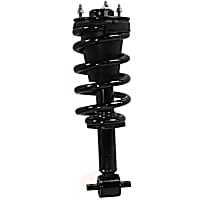 Shock Absorber and Strut Assembly
Keep Reading: Related Posts





Any information provided on this Website is for informational purposes only and is not intended to replace consultation with a professional mechanic. The accuracy and timeliness of the information may change from the time of publication.