Headlights (Low Beam): Many low-beam headlights use a controlled beam pattern with an upper cutoff or reduced upward light to limit glare while illuminating the road ahead and, depending on the lamp design, more of the passenger-side roadside.
Headlights (High Beam): High beams cast a higher, longer-range beam than low beams to illuminate more of the road and surroundings ahead.
Driving Lights: Produce a narrow, highly focused, and intensely bright beam of light similar to a spotlight. Instead of spreading light wide, they throw a concentrated beam farther down the road to help you see long-distance obstacles at higher speeds.
The term “driving lights” is often used loosely for other types of auxiliary lighting on modern vehicles, especially fog lights and Daytime Running Lights (DRLs).
Extra lamps in the lower bumper that can operate while the low beams are active are often fog lights, but not always. DRLs, cornering lamps, and other auxiliary lamps can occupy similar locations. True auxiliary driving lamps are designed for long-range illumination and should not be used around oncoming traffic.
In the U.S., there is no standalone federal performance standard specifically governing aftermarket auxiliary driving lamps. However, supplemental lighting must not impair federally required lighting when installed by regulated commercial entities, and state or local laws can restrict how auxiliary lamps are mounted, switched, and used on public roads.
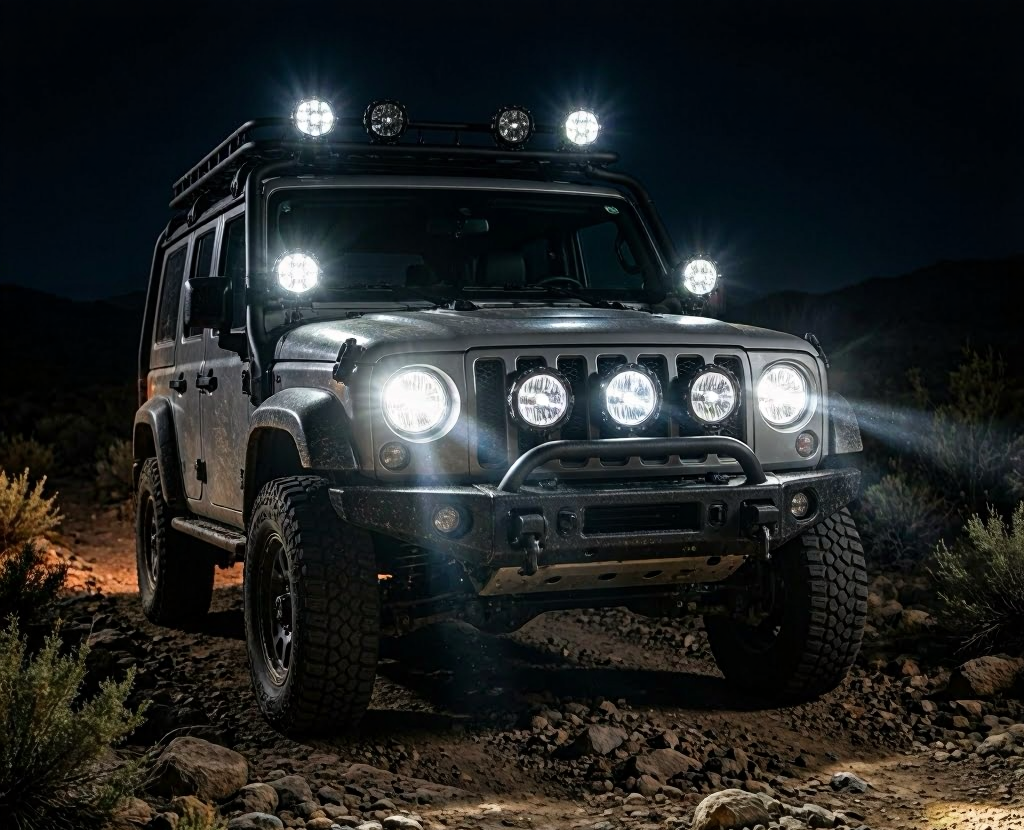
Some original equipment manufacturers (OEMs) provide auxiliary driving lamps, especially on specialized performance, off-road, or rally-inspired trims, but they are less common on standard passenger vehicles. Some factory fog lamps are fixed or non-adjustable, while others can be aimed. Adjustable driving lights need to be aimed properly, using a procedure similar in principle to aiming headlights, although the target specifications can differ.
For a common visual-aim starting point, park your vehicle 25 feet from a flat vertical wall on level ground, measure the height from the ground to the center of each light, then run a horizontal tape line across the wall 1.5 inches lower than that measurement. Follow the lamp manufacturer’s aiming instructions if they specify a different procedure or target. Loosen the mounting and hinge bolts, point each light straight forward, and adjust until the center of the beam’s hot spot lands on the tape line. Keep both lights equidistant from the vehicle’s centerline, tighten everything down, and you’re done. The whole job takes about 20 minutes and makes the difference between lights that reach far down the road and lights that blind oncoming drivers.
Key Takeaways
- Park 25 feet from a vertical wall on flat, level ground before touching any adjustment bolts.
- Mark a reference line on the wall 2 inches lower than the measured height of your light centers.
- Aim each light so the center of its hot spot sits on the line, with both beams equidistant from the vehicle’s centerline.
- Fog lights when you can aim them, since some factory units are not adjustable, follow a different common spec: the top of the beam should sit 4 inches under the lamp center at 25 feet.
- Re-aim any time ride height changes, such as after a lift kit, new tires, or a heavy cargo setup.
Why Proper Aiming Matters
Aiming is the most important part of any auxiliary light installation. A light that points too high throws its beam pattern into oncoming traffic and can briefly blind other drivers. A light that points too low dumps its output onto the pavement a few car lengths ahead and wastes the distance performance you paid for.
Auxiliary upper-beam or driving lamps are addressed by SAE J581, while SAE J583 applies to front fog lamps. The wall method described here reflects a common visual-aim procedure for adjustable auxiliary driving lamps. Always follow the specific lamp manufacturer’s instructions when they differ.
What You’ll Need
- Flat, level ground: A driveway or garage floor works well.
- A vertical wall: It needs to be wide enough to project both beams. A garage door is ideal.
- Measuring tape: For light height and the 25-foot distance.
- Masking tape: To mark the reference line on the wall.
- Hand tools: Whatever fits your light’s mounting and hinge bolts, usually a hex key or small socket.
Load your vehicle the way you normally drive it. On a motorcycle, this means having the rider seated and the bike held upright while you measure and adjust, since suspension sag changes where the beams land.
How To Aim Your Lights Step-by-Step
Position the Vehicle
Park 25 feet from the wall with your vehicle pointed squarely at it. Measure the distance from the face of the lights, not the front bumper. Confirm the ground is level, because any slope between the vehicle and the wall skews the result.
Measure the Light Height
Measure from the ground to the center of each light pod or light bar. Call this measurement H. If your lights sit at slightly different heights, record each one separately.
Create the Reference Line
For the common visual-aim method used here, run a horizontal strip of masking tape across the wall at H minus 1.5 inches. This slight drop over 25 feet points the beam modestly downward. If your lamp manufacturer specifies another target, use that specification instead.
Adjust Each Light
Loosen the mounting and hinge bolts just enough to move the housing. Aim each light so the center of its hot spot, the brightest part of the beam, sits on the tape line. Keep the beams pointed straight forward and equidistant left and right of your vehicle’s centerline rather than crossed or angled outward. Tighten the bolts, then recheck, since housings often shift a few degrees as you torque them down.
Finish by checking the aim on a dark, low-traffic road where it is legal and safe to do so. If the beam reaches too high or causes glare for other road users, repeat the aiming procedure.
Aiming Specs by Light Type
Driving Lights vs. Fog Lights
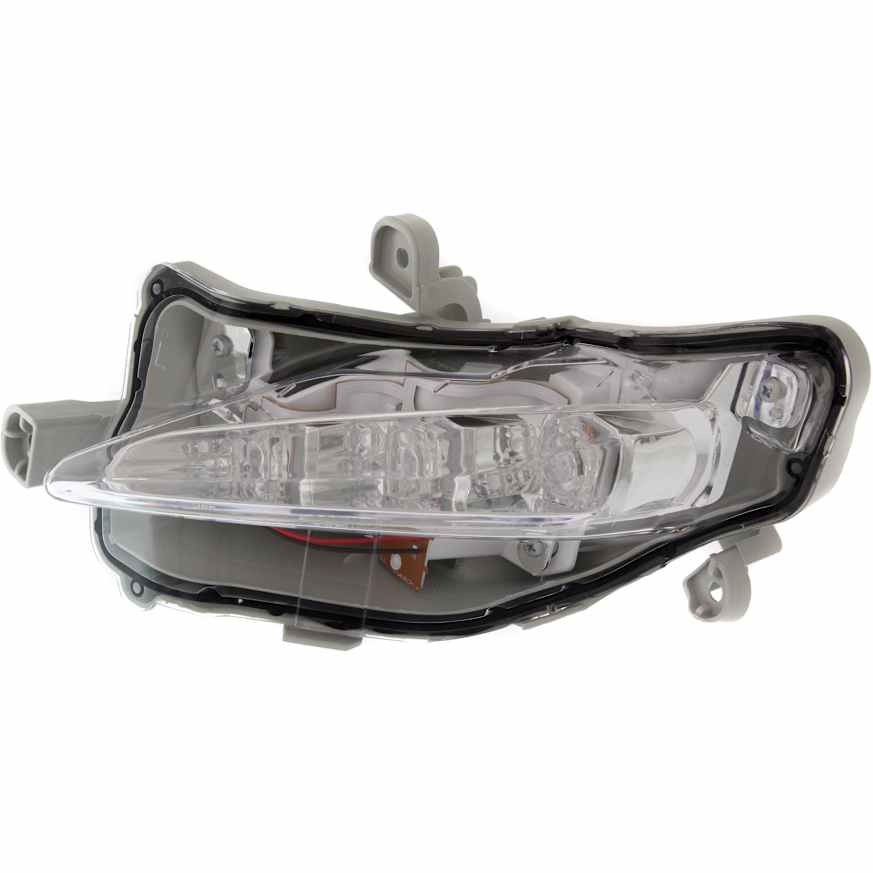
Driving lights typically mount above the front bumper, roughly 14 to 30 inches off the ground, and supplement your high beams with long-distance illumination. A common visual-aim specification is to place the center of the beam hot spot 1.5 inches under the lamp center at 25 feet with the lamp facing straight forward. Treat this as a starting point only when the lamp manufacturer does not provide a different aiming specification.
Fog lights mount under the bumper, usually 10 to 24 inches off the ground, and spread a wide, low beam. Aim them so the top edge of the beam sits 4 inches under the lamp center at 25 feet when the lamp and vehicle manufacturer permit manual adjustment. The goal with fog lights is putting maximum light on the road while minimizing glare back into your own eyes and into oncoming traffic.
Light Bars and Spot Beams
Adjustable driving- or spot-pattern LED light bars can often be aimed using the same basic wall method, but beam patterns and manufacturer specifications vary. If no dedicated aiming procedure is supplied, use the brightest concentration of a driving or spot pattern as the hot spot and make conservative adjustments to prevent glare. Tightly focused spot beams reward careful aiming most of all, since a couple of degrees of error moves the hot spot dramatically at distance.
Tips for an Accurate Aim
- Short on space: If you cannot get 25 feet of run, a proportional approximation for the 1.5-inch target is about 3/8 inch below lamp-center height at 6 feet. A full 25-foot setup is preferable whenever possible.
- Match real-world load: Aim with passengers, gear, or trailer tongue weight in place if that’s how your vehicle usually runs.
- Recheck seasonally: Vibration loosens mounts over time, and a quick wall check twice a year keeps the beams honest.
One safety note: for auxiliary driving lamps used on public roads, follow the lamp maker’s wiring instructions and applicable local law. Many driving-light systems are designed to operate with the high beams and to switch off when the high beams are dimmed. Never use them toward oncoming traffic. Lights designated for off-road use should not be operated on public roads unless local law specifically permits it. If a light won’t hold its aim after tightening, inspect the driving light bracket and hardware before your next night drive.
FAQ
Use low beams whenever other vehicles are nearby. Use high beams, plus street-legal auxiliary driving lights where permitted, only when the road ahead is dark and clear of vehicles that could be affected by glare. Fog lights can supplement low beams in appropriate low-visibility conditions, subject to local law. Dim high beams and auxiliary driving lights when approaching traffic or following another vehicle closely.
It depends on where and how they are used. In the U.S., federal motor vehicle rules do not establish a standalone performance standard for aftermarket supplemental driving lamps, but auxiliary lighting installed by certain commercial entities must not impair required lighting. State and local laws govern in-use requirements and can regulate the number of lamps, mounting height, brightness, covers, switching, and when the lamps may be used. Check the vehicle code where you drive before using auxiliary lights on public roads.
Twenty-five feet is a common distance for visual aiming of auxiliary driving lamps. If the lamp manufacturer specifies a different distance, follow its instructions. If space is tight, about 3/8 inch of drop at 6 feet is a proportional approximation of a 1.5-inch drop at 25 feet.
Yes. Anything that changes ride height changes where the beams land, so repeat the wall procedure after a suspension lift, a tire size change, or adding a steel bumper or winch.
Most housings use a mounting bolt for vertical tilt and a hinge or pivot bolt for side-to-side movement. Loosen both slightly, set the aim, then snug them in turn so the housing doesn’t rotate as you tighten.
Upgrade Your Night Driving
Well-aimed lights only perform as well as the hardware behind them. CarParts.com carries driving lights, fog lights, light bars, and the wiring harnesses and brackets to mount them correctly, all matched to your vehicle’s year, make, and model. Order today and see the road the way you’re supposed to.
Keep Reading: Related Posts




Any information provided on this Website is for informational purposes only and is not intended to replace consultation with a professional mechanic. The accuracy and timeliness of the information may change from the time of publication.