You might already know that you need a door lock cylinder, because your vehicle’s key sticks, turns without moving anything, or won’t go into the lock the way it used to. What’s less obvious is which listing to pick once you start scrolling.
Some listings sell a single cylinder for one door, while others sell a set of two or three. Some specify a door position, while others don’t. You can also choose between chrome, black, and other finishes, if they’re available. But all of these listings can carry the same three-word part name.
There’s also a detail that catches a lot of shoppers by surprise: most aftermarket cylinders come with their own new keys that aren’t cut to the key you already carry. This changes how many cylinders you should be ordering in the first place.
This article walks through the checks that separate the right listing from one that’s close but ultimately wrong.
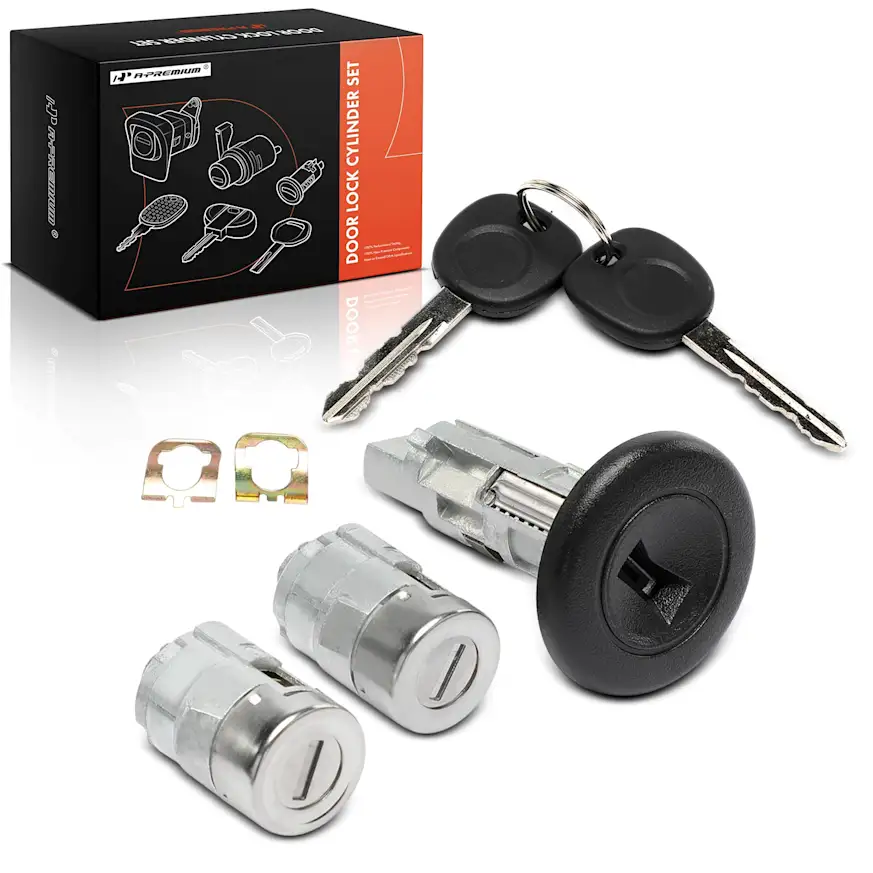
How Do You Choose the Right Door Lock Cylinder?
Start by confirming your vehicle’s year, make, model, and body style, then confirm which door you’re replacing and whether the cylinder mounts to the door panel or sits inside the outside door handle. Next, decide how many you need, because these are commonly sold individually, as a set of two for both front doors, or as a set of three that covers the front doors plus a rear or tailgate lock, all keyed to the same key. Check the finish to ensure the new cylinder matches the door, and confirm whether keys are included. Once fitment, quantity, and finish are settled, compare available brands and read the product notes before adding it to cart.
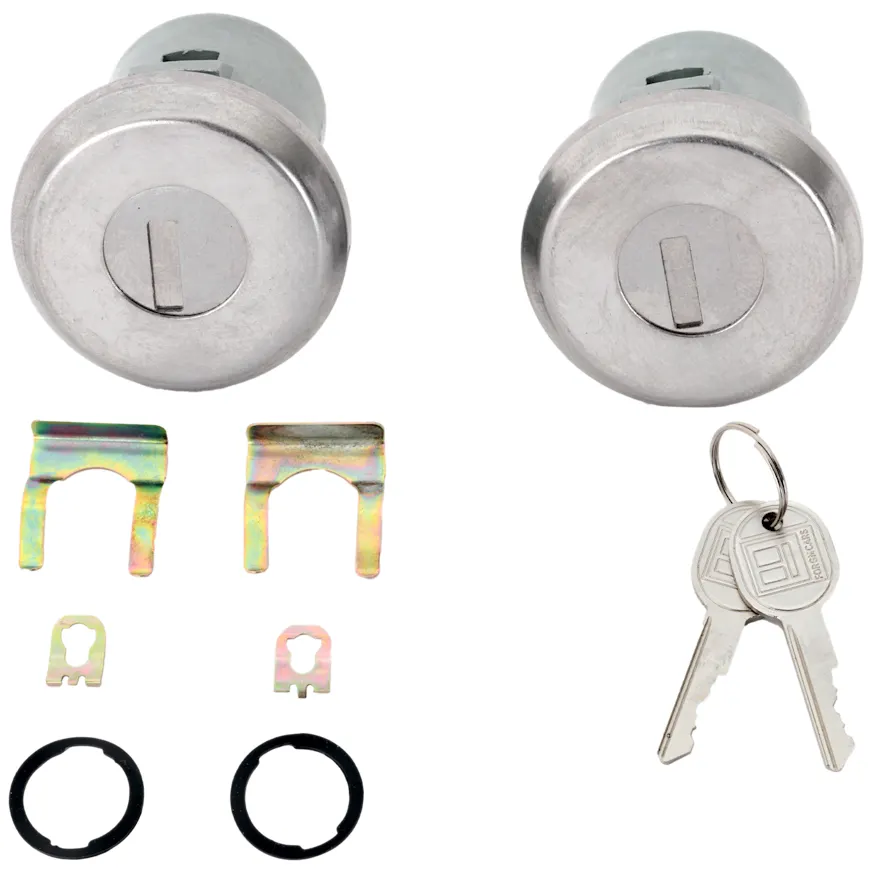
Start With the Vehicle, Not the Product Photo
Door lock cylinders are small, similar-looking, and photographed against a plain background, so the thumbnail tells you almost nothing about fitment. Start by narrowing the results to your vehicle.
Here are the details that matter most for this part:
- Year, make, and model: lock hardware often changes mid-generation even when the door sheet metal doesn’t.
- Body style: two-door and four-door versions of the same model can use different cylinders, and the door count also changes how many locks the vehicle has.
- Door position: front driver side and front passenger side cylinders can differ in the direction the tailpiece rotates and in the shape of the retainer.
- Trim or option level: vehicles equipped with power locks or factory keyless entry sometimes use a different cylinder or a different mounting arrangement than base models.
- Lock location: some vehicles also have a rear door, tailgate, liftgate, trunk, or glove box cylinder that shares the same key, and these are often separate listings.
Use the vehicle selector before you compare anything else. A listing marked as a direct fit is only a direct fit for the applications it’s actually cataloged under, so confirm the vehicle first.
Identify the Version Your Repair Actually Needs
Two-door lock cylinders can share the same name and still solve completely different ordering problems. The version differences that matter here are mostly about quantity, position, and how the cylinder attaches.
- Single cylinder: one lock, usually specified by position, such as a front driver side unit. This is the choice when only one door lock has failed and you’re willing to carry a separate key for this door.
- Set of two: covers both front doors with two cylinders keyed to the same key. This is the most common configuration for a full front-door replacement.
- Set of three: covers both front doors plus a third lock, typically a tailgate, rear hatch, or trunk cylinder, with all three matched to one key. Pickups and SUVs are the usual candidates.
- Door panel mounted vs. handle mounted: some cylinders bolt or clip into the door panel behind a bezel. Others sit inside the outside door handle assembly. If your vehicle uses the handle-mounted style and the cylinder itself isn’t serviced separately, you’re shopping for a door handle, not a lock cylinder. Listing notes that say the part mounts on the door panel are telling you which style you’re looking at.
- Finish: aftermarket cylinders are offered in several appearance options, including chrome, black, silver, silver and bronze, natural, and unpainted. The mechanical fit doesn’t change, but a chrome cylinder in a blacked-out door panel is going to be obvious every time you walk up to your car.
- Keyed set vs. individual: a set is keyed alike within the set itself. Two separately purchased single cylinders aren’t keyed to each other, which means two different keys for two doors.
This last point is the most common source of regret for this part. If you want one key to open everything, buy one set that covers every lock you’re replacing, in a single order.
Compare the Details That Decide Whether It Fits
Use the product image as a starting point, not as the whole match. Pull the old cylinder if you can, or at least look closely at the one still in the door, and compare these points against the listing photos and notes:
- Overall barrel diameter and length: the cylinder body has to seat in the existing hole without shimming or forcing.
- Face and bezel shape: round, oval, or flanged, and whether the face is flush with the door skin or sits proud of it.
- Tailpiece or pawl shape: the arm on the back of the cylinder that moves the linkage. Shape, length, and rotation direction all vary by position and application.
- Retainer style: a horseshoe clip, a spring clip, or a threaded retainer, and whether this retainer is shown as part of the product.
- Linkage attachment point: the hole or hook where the lock rod connects, and whether it faces up, down, or to the side.
- Cap or dust shutter: some cylinders include a spring-loaded cover over the keyway, while others don’t.
- Finish and trim ring: compare against the door hardware you’re keeping so the new lock doesn’t stand out.
If the old cylinder is seized in the door and you can’t inspect it, rely on the vehicle selector and on the listing notes rather than on the photo.

Check What Comes in the Box
A listing can be correct for your vehicle and still be incomplete for what you’re trying to accomplish. Door lock cylinder listings vary a lot in what they include.
- Keys: most cylinders ship with their own keys, commonly two per set. Listings often state this directly in the title or notes.
- Quantity sold: sold individually, as a set of two, or as a set of three. This is usually spelled out in the product specifications, so read it rather than counting the items in the photo.
- Retaining clips: sometimes included, but sometimes reused from the old cylinder.
- Gasket or weather seal: not always supplied, and the old one may be brittle.
- Lock rods and clips: generally not included. These stay with the door.
The practical takeaway: a new cylinder set means new keys for these doors. Your original key will still start your vehicle, but it won’t turn the new door locks unless you have the cylinders re-pinned to match. If carrying a second key is a dealbreaker, factor re-keying into the decision before you order, not after.
Compare Brands After You Confirm Fitment
Brand matters, but it shouldn’t be the first filter. A Replacement or A-Premium door lock cylinder still has to match the vehicle, door position, mounting style, quantity, and the finish before it belongs in the cart.
Where brands do differ on this part is in how the listings are packaged. Replacement listings tend to be organized around specific configurations, including single position-specific cylinders and two-piece keyed sets, with the finish specified in the product notes. A-Premium listings for this category are built around multipiece front door sets, including two-piece and three-piece configurations sold with keys.
Warranty terms are stated per listing rather than per category, so read the specifications for the exact item you’re considering instead of assuming coverage from the brand name.
The better question isn’t which door lock cylinder brand is best. It’s which brand offers the cylinder count, position, and finish your vehicle actually needs.
Choose the Right Ownership Lane
- Replace only the failed lock: you have one bad cylinder, the other doors work fine, and you’re comfortable using a separate key for this door. A single position-specific cylinder is the least expensive path. Match the finish, confirm the position, and don’t pay for a multi-piece set you won’t open.
- Match both front doors: the more common choice. A two-piece keyed set gets both front doors working with the same key, which is worth the small price difference over two singles that would give you two different keys. Confirm the set is cataloged for your vehicle and that the finish matches your door hardware.
- Refresh every lock on the vehicle: for older trucks and SUVs where the tailgate or hatch lock is just as worn as the doors, a three-piece set keeps everything on one key and avoids a second order later. This only makes sense if your vehicle actually has a third serviceable cylinder. For a sedan with a fob-released trunk, the third piece is money you don’t need to spend.
The right door lock cylinder isn’t the most expensive one. It’s the one that covers exactly the locks you intend to replace, on one key.
Your Best Starting Point
Set the vehicle first, then work down through position, quantity, and finish. This order keeps you from comparing a set of three against a single cylinder as if they were the same purchase.
From there, confirm whether the cylinder mounts to the door panel or lives inside the handle, and check the listing for how many keys come with it. Compare the barrel, face, tailpiece, and retainer against the old part where you can see it. Use brand as a confidence filter once the configuration is settled, and read the product notes before checking out.
The best door lock cylinder order is the one that matches your vehicle, the doors you’re actually replacing, and the number of keys you want to carry when the job is finished.
Keep Reading: Related Posts



Any information provided on this Website is for informational purposes only and is not intended to replace consultation with a professional mechanic. The accuracy and timeliness of the information may change from the time of publication.