You might already know that you need a cylinder head bolt. The harder part is choosing the listing that actually matches your vehicle’s engine, your repair, and what you expect to find in the box when it arrives.
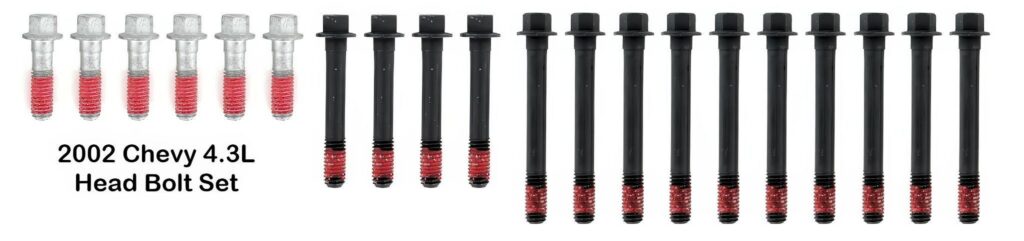
Cylinder head bolts look almost interchangeable in a thumbnail. They’re long, threaded, and dark. But two listings with nearly identical photos can be built for different engines, sold in different quantities, or bundled with a head gasket you may or may not need. A single bolt and a complete set aren’t the same order, and a bolt cut for a SOHC engine won’t serve a DOHC engine even if the picture looks right.
This is a pre-order confidence check, not a repair walkthrough. The goal is simple: make sure the listing you click “Add to Cart” on is the one your engine actually takes.
How Do You Choose the Right Cylinder Head Bolt?
Start by confirming your vehicle’s year, make, model, and engine, and pay close attention to the engine configuration, since many cylinder head bolts are split between SOHC and DOHC applications. Then decide whether you need a single bolt, a full set, or a kit that pairs bolts with a head gasket. Many modern engines use torque-to-yield head bolts, and technicians typically replace them after removal unless the factory service information specifically allows reuse. Confirm that the quantity matches every bolt you’re removing. After fitment and quantity are settled, compare available brands and read the listing to see exactly what’s included before adding it to cart.
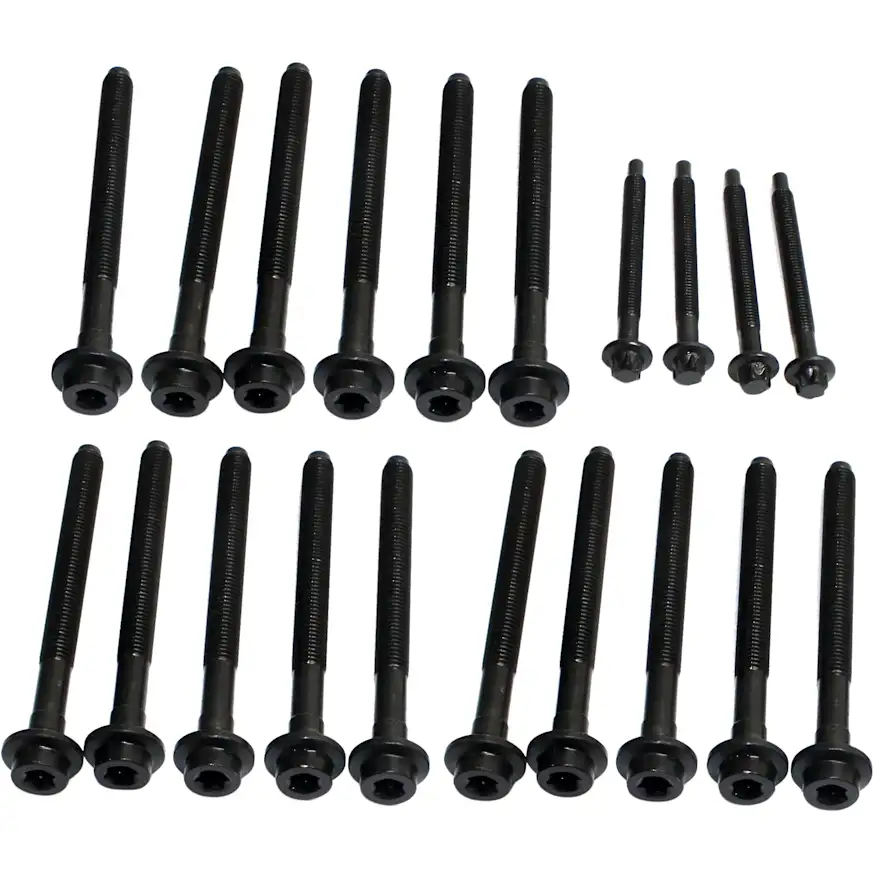
Start With the Vehicle, Not the Thumbnail
Fitment comes first, and with head bolts the engine detail matters as much as the make and model. The photo tells you almost nothing about whether a bolt fits your engine.
Confirm these before anything else:
- Year, make, and model
- Engine size and configuration (the SOHC vs. DOHC split is common for this part)
- Engine code or VIN where the listing asks for it
- Trim or submodel, if your vehicle offered more than one engine that year
The SOHC/DOHC distinction is the one that trips people up. Listings for this category routinely note that a product fits a SOHC engine and won’t fit a DOHC engine, or the reverse. If you order off the make and model alone and skip the engine configuration, the bolts can arrive wrong even though the page seemed to match your car. Use the vehicle selector to filter the listings to your engine instead of eyeballing the image.
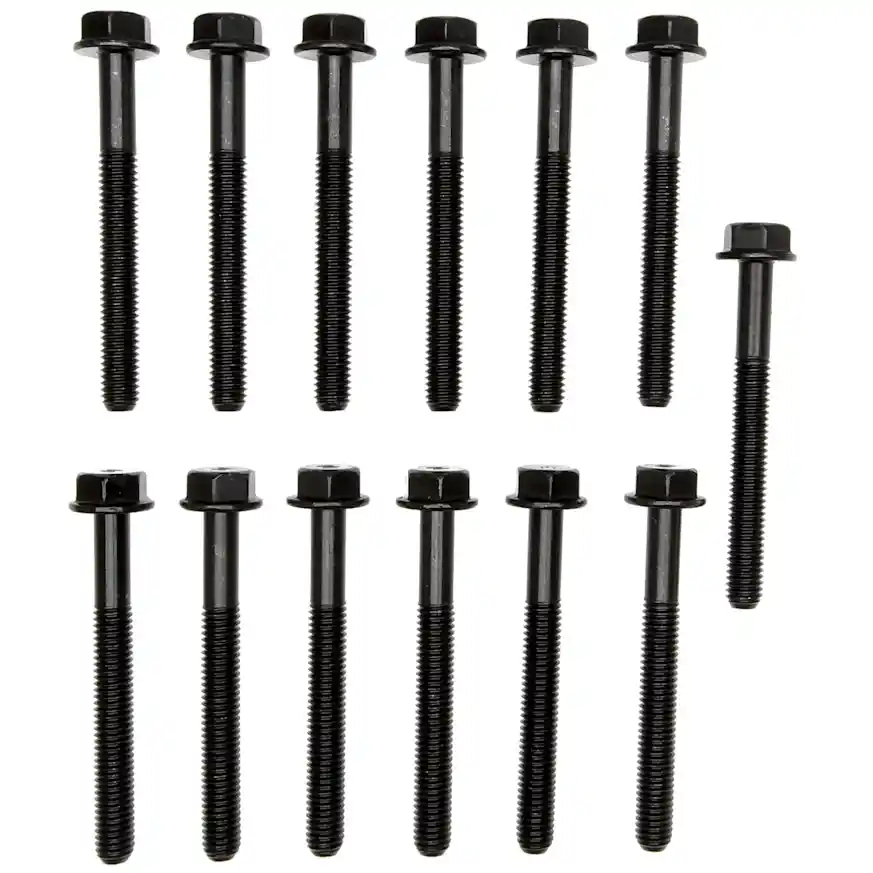
Identify the Version Your Repair Actually Needs
Two cylinder head bolt listings can share the same name and still solve different ordering problems. The main fork here is quantity and bundling, not physical design.
Here are the versions you’ll typically see:
- Single bolt, sold individually: for replacing one damaged bolt only when the applicable service procedure allows individual replacement, not as a substitute for a complete set when the head is being removed.
- Set: multiple bolts packaged together, often labeled with a count such as a set of ten, sized to redo a full head.
- Kit: bolts paired with a cylinder head gasket, sometimes labeled by engine size and cylinder count, so you can order the gasket and fasteners together.
Which one you need depends on the job. If you’re pulling a head for a gasket replacement, a single bolt won’t cover you. Many modern engines use torque-to-yield bolts, which are generally replaced after removal unless the manufacturer’s service procedure allows reuse. That’s why sets and kits exist. If one bolt is damaged and the factory procedure permits individual replacement, a single-bolt listing may be appropriate. If the bolt-hole threads are stripped, the threads must be repaired; replacing the bolt alone will not fix the damaged hole.
Compare the Details That Make the Bolt Fit
Use the product image as a starting point, not as the whole match. The listing text and your engine specs carry the real information.
Check these against your engine and the bolts you’re removing:
- Engine configuration called out in the listing (SOHC vs DOHC)
- Quantity in the listing versus the number of bolts your head actually uses
- Bolt length and thread, where the listing or manufacturer number specifies it
- Whether the listing is a direct-fit replacement for your application
- Manufacturer part number, which you can match against the original where available
Counting your own bolts before ordering is useful, but the application and bolt positions matter as much as the total count because some heads use more than one bolt length or size. If your vehicle’s cylinder head uses ten bolts and a set lists ten, the quantity is aligned, but you still need to confirm the application and bolt specifications. If a listing is a single bolt and you need a full head’s worth, the quantity mismatch is the thing to catch before checkout, not after.

Check What Comes in the Box
A listing can be correct for your engine and still be incomplete for your repair. Fitment and contents are separate questions.
For this category, the contents vary widely:
- A single bolt listing includes one fastener only.
- A set includes multiple bolts but typically no gasket.
- A kit may bundle bolts with a cylinder head gasket, and the listing usually spells out the components, such as one head gasket plus the head bolts.
Read the components line. If you’re doing a head gasket job and choose a bolts-only set, you’ll still need to source the gasket separately. If you choose a kit, confirm that it includes the gasket count and engine size your job requires. The reverse also happens: buying a full kit when you only need a single replacement bolt means paying for parts you won’t use.
Compare Brands After You Confirm Fitment
Brand matters, but it shouldn’t be the first filter. A Replacement or AC Delco cylinder head bolt still has to match your vehicle’s engine configuration, quantity, and version before it belongs in the cart.
In this category you’ll commonly see Replacement-brand bolts, sets, and kits alongside AC Delco fasteners sold individually. Different brands package this part differently. One may offer engine-specific sets, another may offer single OE-replacement-series bolts, and kits may bundle a gasket that a bare-bolt listing won’t.
The better question isn’t “Which cylinder head bolt brand is best?” It’s “Which brand offers the correct configuration, quantity, and engine fit for my repair?” Settle the engine and the set count first, then let brand be the tiebreaker among listings that already fit.
Choose the Right Ownership Lane
The right cylinder head bolt order isn’t the most expensive one. It’s the one that matches the scope of your repair.
Single-Bolt Replacement
For one damaged bolt only when the factory service procedure allows individual replacement and the remaining fasteners can stay in service. If the bolt-hole threads are stripped, the hole itself needs repair. Don’t choose a single bolt simply because it is the lowest-cost path when the engine calls for a full set.
Full-Set Replacement
For a head removal where you’re re-torquing every bolt. Because torque-to-yield bolts are generally replaced after removal unless the service information specifically permits reuse, a set sized to your engine’s bolt count is usually the sensible choice. Confirm the count matches your vehicle’s cylinder head before adding it.
Bolt-and-Gasket Kit
For a head gasket job where you want the bolts and head gasket in one order, matched to your engine size and cylinder count. Don’t underbuy a bolts-only set if you still need the gasket, and don’t overbuy a kit if your gasket is already handled.
Make the Final Add-to-Cart Check
Before you add the cylinder head bolt to cart, run through this:
- Vehicle year, make, and model confirmed
- Engine configuration confirmed (SOHC vs DOHC)
- Single bolt, set, or kit chosen to match the job
- Quantity matches the number of bolts your head uses
- Kit contents checked if a gasket is supposed to be included
- Manufacturer number compared to the original where possible
- Brand selected after fitment and quantity are settled
- Gasket sourced separately if your listing is bolts-only
- Product notes and fitment warnings read in full
Your Best Starting Point
Start with fitment and let your vehicle’s engine configuration drive the filter, not the product photo. The SOHC versus DOHC split is one common way a head bolt order goes wrong.
From there, decide on scope. A single bolt, a full set, and a bolt-and-gasket kit are three different orders for three different jobs. Count the bolts your vehicle’s cylinder head uses, confirm whether your repair also needs a gasket, and pick the listing whose contents match. Catching a cracked cylinder head or other underlying damage early can also change what your order needs to include.
Use the vehicle selector or filters to narrow to your engine, compare the brands that remain, and confirm what’s in the box. The best cylinder head bolt order isn’t the one that looks close enough or carries a familiar name. It’s the one that matches the engine, the bolt count, and everything the repair actually needs to hold.
Keep Reading: Related Posts




Any information provided on this Website is for informational purposes only and is not intended to replace consultation with a professional mechanic. The accuracy and timeliness of the information may change from the time of publication.