You might already know that you need mud flaps. The harder part is choosing the set that actually matches your vehicle, your mounting situation, and the look you’re after.
Mud flap listings can look nearly identical in a thumbnail and still be built for different trucks, different mounting points, and different installation styles. One set bolts to factory holes. Another is a universal flap you trim to fit. A third is molded to hug a specific fender contour. They all show up under the same search, and that’s where wrong-fit orders start.
This isn’t about whether you need flaps or what they protect. You’re past that. This is a pre-order confidence check so the set you add to cart is the one that bolts clean and looks right behind your wheels.

How Do You Choose The Right Mud Flaps?
Start by confirming your vehicle’s year, make, model, and body or bed configuration, since flap shape and mounting differ across trims and cab styles. Then decide whether you want a custom-fit set molded to your vehicle, a no-drill set that uses factory mounting points, or a universal set you size and mount yourself. Check which positions the listing covers, front, rear, or all four, and confirm that the mounting hardware and brackets are included before you order. Brand comes after you’ve settled fit type and coverage, not before.

Start With The Vehicle, Not The Thumbnail
Fitment is the first gate, and a product photo won’t tell you whether a set was shaped for your truck.
Custom-molded flaps are cut to a specific fender and wheel-well contour, so the same flap that fits one model can sit wrong on another even when they look alike online. Universal flaps are more forgiving but still need to match your vehicle’s tire coverage and clearance.
Before anything else, confirm the following:
- Year, make, and model
- Body style and cab configuration (regular, extended, crew cab)
- Bed length, if you drive a pickup
- Trim level, since wheel flares and fender shapes can change by trim
- Whether your vehicle has factory fender flares or wheel-opening moldings
- Front, rear, or all-four coverage
A set built for a fender-flare trim often won’t line up on the same model without flares, so this detail matters more than it looks.
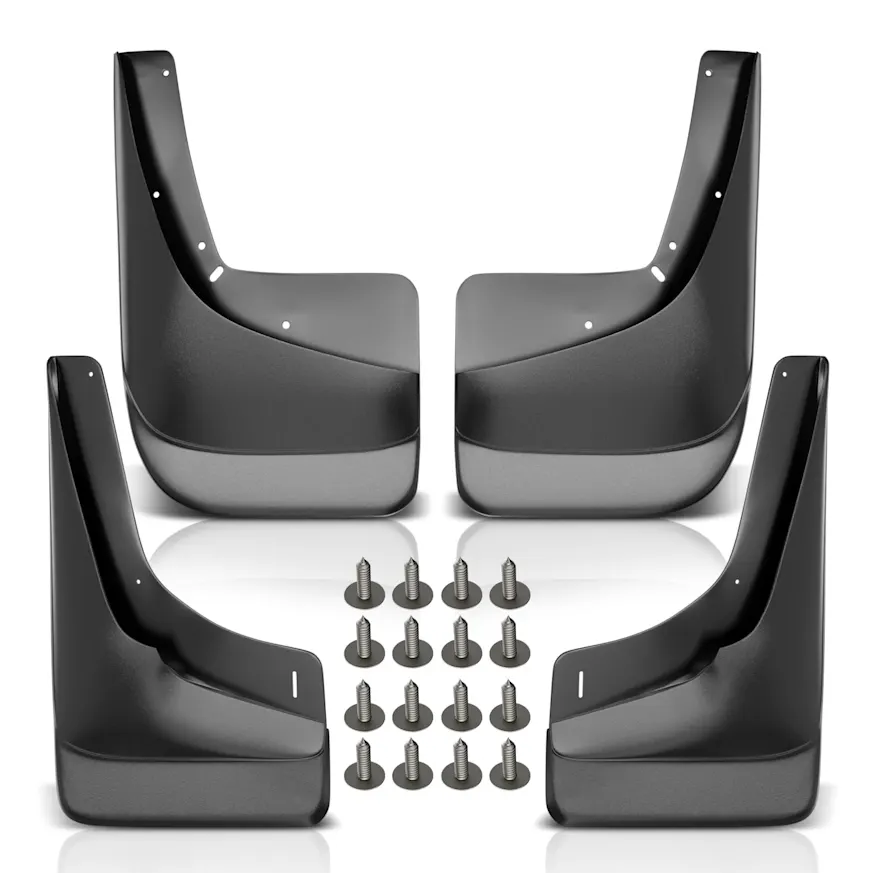
Identify The Version Your Setup Actually Needs
Two mud flap sets can share the same name and still solve different ordering problems. The biggest split is how they mount and how they’re shaped.
Custom-fit (vehicle-specific) flaps are molded to your exact application and usually mount to existing factory holes or fender liners. These give the cleanest look and the most predictable fit, but they’re tied to specific year ranges and configurations.
No-drill flaps are designed to attach using factory mounting points or existing hardware, so you avoid putting new holes in the body. Fit is application-specific, and the listing should confirm it’s a no-drill design for your vehicle.
Universal flaps are flat or contoured rubber sheets you position and bolt on yourself. They fit a wide range of vehicles but require more judgment on placement, trimming, and clearance.
You’ll also see splits for the following:
- Front-only, rear-only, or full four-piece sets
- Flat rubber versus contoured molded designs
- Plain flaps versus sets with logos, weights, or stainless trim
- Heavy-duty flaps for towing and off-road use versus standard street sets
Pick the version that matches how much mounting work you want to do and how custom you need the fit to be.
Compare The Details That Make The Set Fit
Use the product image as a starting point, not as the whole match.
The photo tells you the general style, but the details that decide whether a set bolts up cleanly aren’t always obvious from a picture. Compare the listing against your vehicle and, where possible, its existing flaps or mounting area.
Check the following before you order:
- Mounting style: factory holes, fender-liner clips, or universal drill-and-bolt
- Whether brackets are included or sold separately
- Flap dimensions versus your vehicle’s tire width and the gap behind the wheel
- Contour shape, for molded sets meant to follow a specific fender line
- Side-specific shaping, since front and rear flaps often differ left to right
- Clearance for lifted, leveled, or larger-tire setups
If you’ve run flaps before, your old mounting points are the best reference for what a new set needs to line up with.
Check What Comes In The Box
A set can fit your vehicle and still be incomplete for the installation you have in mind. Fitment and completeness are separate questions.
Listings vary for what’s bundled, so confirm before you check out:
- Number of flaps (a set can mean two or four)
- Mounting hardware: bolts, nuts, washers
- Brackets or mounting plates, where the design needs them
- Clips or retainers for fender-liner mounting
- Templates or instructions for universal trim-to-fit sets
If a listing is front-only or rear-only and you want full coverage, you’ll need a second set. And if a universal kit doesn’t include hardware, plan to add it so you’re not stuck mid-installation.

Compare Brands After You Confirm Fit
Brand matters, but it shouldn’t be the first filter. A familiar name doesn’t make a universal flap fit like a molded one, or turn a front-only set into full coverage.
You’ll see several mud flap brands available, including names like Dee Zee, Husky Liners, Aries, and Rugged Ridge, depending on your vehicle. Different brands lean toward different things. Some specialize in custom-molded no-drill sets, others in heavy-duty or universal flaps, and kit contents vary between them.
The better question isn’t “Which mud flap brand is best?” It’s “Which brand offers the right fit type, coverage, and mounting style for my vehicle?” Settle fitment and version first, then use brand as a confidence filter among the listings that already match.
Choose The Right Coverage Lane
The right set isn’t the most expensive one. It’s the one that matches how you use your vehicle and how much installation work you want.
Basic universal replacement: For daily drivers and shoppers who want simple splash protection at the lowest cost. Flat rubber universal flaps work here. Don’t overpay for a molded custom set if a trimmed universal flap covers your need, but don’t expect a perfect contoured look either.
Custom-fit no-drill set: For owners who want a clean factory appearance and a predictable installation without drilling. Vehicle-specific molded sets fit this lane. This is the sweet spot for most truck and SUV owners who want their mud flaps to look right.
Heavy-duty or off-road set: For towing, work trucks, lifted rigs, and gravel-road use. Look for thicker, reinforced flaps, larger coverage, and hardware built for abuse. Don’t underbuy here if your tires throw real debris.
Make The Final Add-To-Cart Check
Before you add the mud flaps to cart, make sure the listing matches your vehicle, the coverage you want, and the mounting style you can actually install.
- Year, make, and model confirmed
- Cab, bed, or body configuration confirmed
- Trim and fender-flare situation accounted for
- Fit type confirmed: custom, no-drill, or universal
- Coverage confirmed: front, rear, or all four
- Mounting hardware and brackets checked
- Number of flaps in the set confirmed
- Clearance checked for lift or larger tires, if applicable
- Brand chosen after fit and coverage were settled
- Product notes and fitment details read
Your Best Starting Point
Start with fitment. Use the vehicle selector or filters to narrow to sets that match your vehicle’s year, make, model, and configuration.
From there, narrow by fit type, custom-molded, no-drill, or universal, based on how much installation work you want and how clean a fit you need. Confirm the coverage and count, then check the included hardware so that nothing’s missing when the box arrives. If your vehicle has a damaged liner behind the flap area, it may be worth knowing how to replace a fender liner while you’re back there, and matching it to one of the best fender liner brands for a clean, lasting fit.
Compare your vehicle’s old flaps and mounting points where you can, and only then let brand preference break the tie among listings that already fit. If you’re building out a rig for trail use, mud flaps are just one piece — it’s worth reviewing other accessories for off-road trips that protect your vehicle the same way.
The best mud flap order isn’t the one that looks close enough or carries a familiar name. It’s the one that matches your vehicle, coverage needs, mounting style, and the way you actually drive. Shop the full selection of replacement mud flaps and matching protection parts at CarParts.com.
Keep Reading: Related Posts


Any information provided on this Website is for informational purposes only and is not intended to replace consultation with a professional mechanic. The accuracy and timeliness of the information may change from the time of publication.