You already know you need a heater core because you have a sweet-smelling mist fogging the windshield or coolant dripping on the passenger-side floorboard or out the evaporator drain. The harder part is picking the listing that actually matches your vehicle, repair, and expectations.
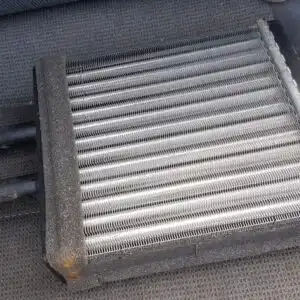
Heater cores look similar in product thumbnails. They’re roughly rectangular, they’re almost always aluminum on newer vehicles, and most listings don’t signal their differences in the title. But inlet and outlet tube positions, core dimensions, and port configurations vary a lot across applications.
Some listings include connection tubes; others ship just the core. Some are kits that bundle a blower motor in the box. Knowing the part name gets you to the right category, but it doesn’t get you to the right listing. That’s what this article helps you sort out before you order.
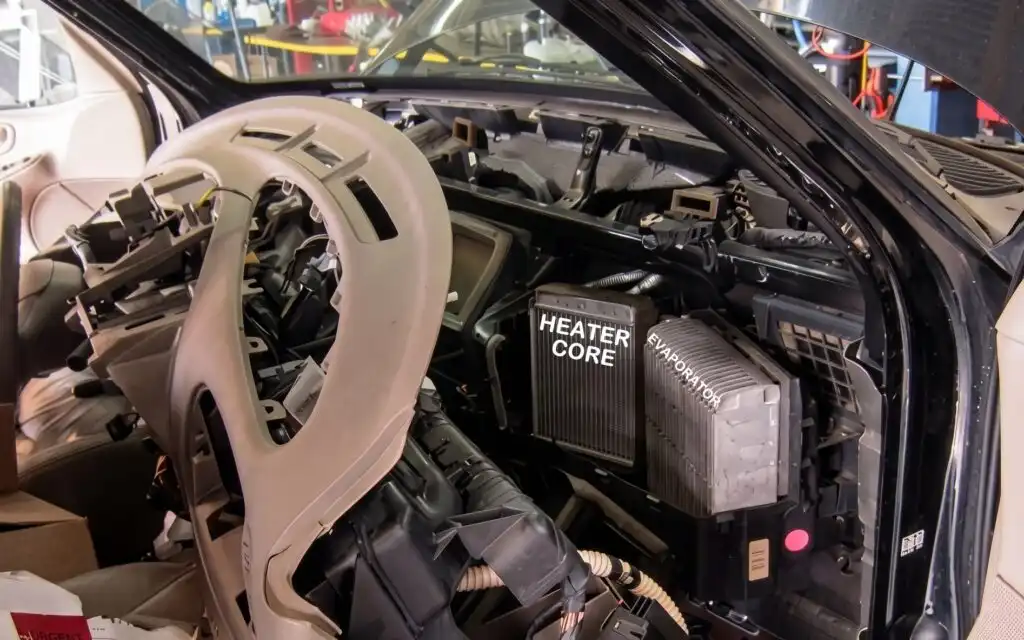
Quick Answer: How Do You Choose the Right Heater Core?
Confirm your year, make, model, engine size, and trim level before you browse. Then check whether the listing covers a bare core, a front or rear position, or a kit that includes a blower motor. Compare the inlet and outlet tube diameters and positions against your original part or vehicle service data. Verify what’s in the box before ordering, then use the brand as a secondary check after fitment and version are settled.
Start With the Vehicle, Not the Product Image
Start with the vehicle, not the thumbnail. A heater core that looks right in the photo can still be wrong if the tube positions, port sizes, or core dimensions don’t match your application.
Fitment depends on more than year, make, and model. Engine size matters on vehicles where multiple powerplants were offered. Trim level can affect HVAC configuration, especially on trucks and SUVs with optional rear climate control. Check out these heating system parts to understand how the heater core connects to the broader HVAC system on your vehicle.
Production date is worth checking on mid-cycle models where the HVAC system changed partway through a model year.

Before browsing listings, have these details ready:
- Year, make, model
- Engine size (e.g., 2.5L, 3.5L, 5.7L)
- Trim level or submodel
- Front or rear HVAC, if the vehicle has dual-zone or rear climate control
- Production date, if the vehicle falls in a transitional model year
Use the vehicle selector or filter tools to narrow results by application before comparing listing details. That one step cuts out most wrong-part risk before it starts.
Identify the Version Your Repair Actually Needs
Two heater cores can share the same name and still solve different ordering problems. The listing title alone won’t always tell you which version fits your situation. Here’s what to look for:
- Bare core vs. kit: Some listings include only the core. Others are 2-piece kits that bundle a blower motor with the heater core. If your blower motor is fine, a kit adds cost you don’t need. If both parts are failing, a kit can simplify the order.
- Front vs. rear position: Vehicles with rear climate control need a separate core for the rear HVAC unit. These don’t swap with the front core, and the listings won’t fit the same application.
- With or without auto temp control: Some listings specify manual vs. automatic climate controls. The core itself may be the same, but the listing filters to a specific HVAC system type.
- With factory air vs. without: Older vehicles sometimes used heater-only HVAC without A/C. Core size and tube positioning can differ between those variants, so that designation matters on certain applications.
Picking the wrong version is one of the most common heater core ordering mistakes. Read the full listing title and product notes before you decide.
Compare the Details That Make the Part Fit
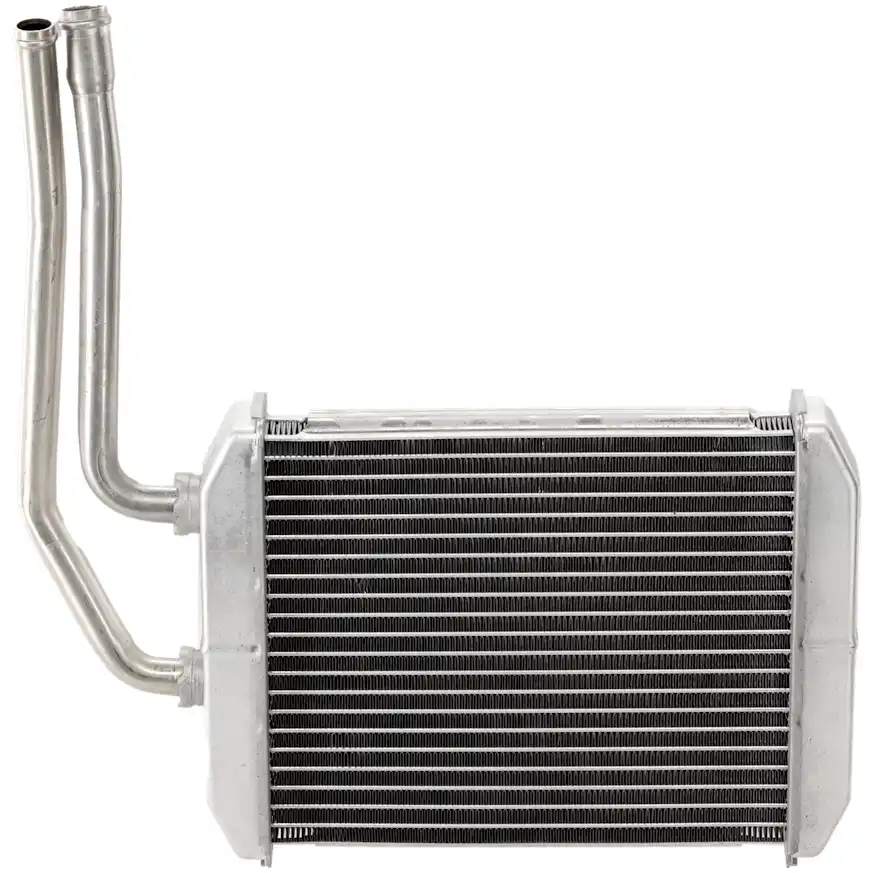
Use the product image as a starting point, not as the whole match. Heater cores can look nearly identical in photos but differ on the specs that decide whether the part seals correctly and installs without modifications. Knowing where the heater core is located in your vehicle can also help you assess whether the replacement matches the access and hose routing constraints in your specific application.
If you have the original part, compare these against the listing:
- Inlet and outlet tube diameter: Heater hoses connect to these ports, so a diameter mismatch means the hoses won’t seal properly and coolant can leak.
- Tube position and orientation: Some cores have both ports on the same end; others have them offset. The orientation has to match the hose routing in the vehicle.
- Core dimensions (height x width): Small size differences can cause fitment issues in tight heater box assemblies.
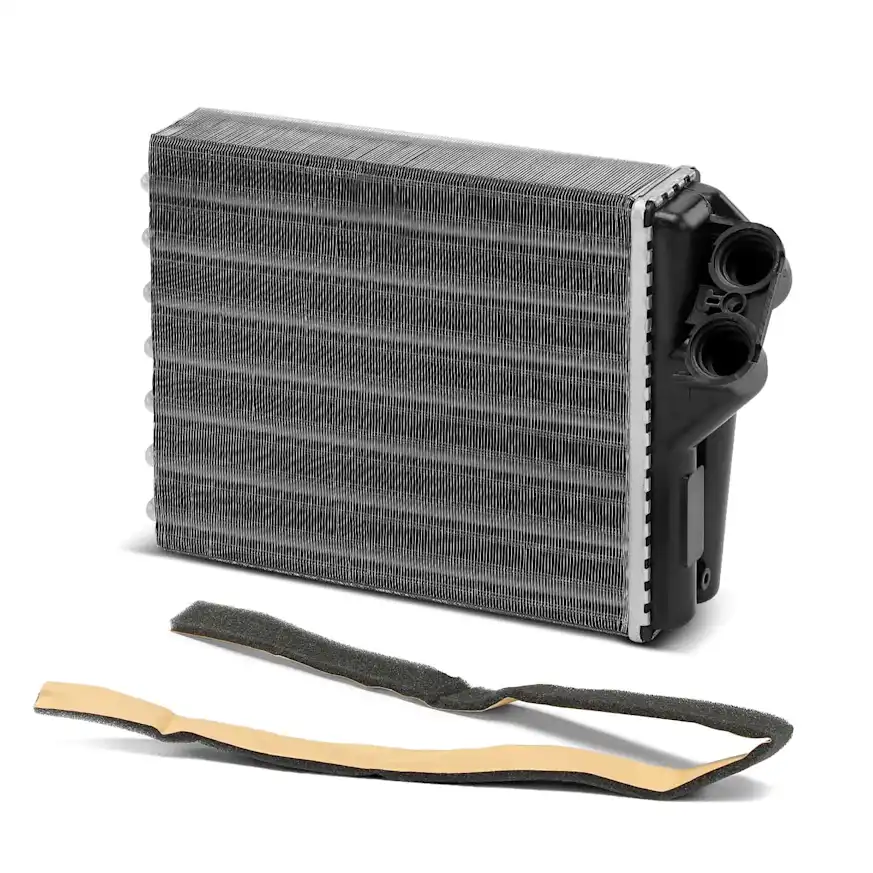
- With tubes vs. without: Some listings include connection tubes or couplers; others ship a bare core. If the listing says “with tube,” that component is in the box. If it doesn’t, check whether you can reuse the originals or need to source them separately.
Product specs and notes on the listing page usually cover these details. If a listing doesn’t show dimensions or port specs, cross-reference the part number against your vehicle’s service data before ordering.
Check What Comes in the Box
A listing can be correct for your vehicle and still be incomplete for your repair. If you’re unsure what a failed heater core typically involves, it helps to review bad heater core symptoms first so you can assess whether companion parts need attention too.
What’s sometimes included, depending on the listing:
- Inlet/outlet tubes or couplers
- O-rings or seals
- Blower motor (on kit listings)
What’s typically not included:
- Heater hoses or clamps (shop heater hose fittings separately if needed)
- Coolant (pick up coolant/antifreeze if you need to refill after the job)
- Mounting hardware for the heater box
- Cabin air filter or housing components
Read the product description carefully. If a required component isn’t listed as included, plan to source it separately or confirm you can reuse the original.
Compare Brands After You Confirm Fitment
Brand matters, but it shouldn’t be your first filter. A 4-Seasons, A-Premium, GPD, or Motorcraft heater core still has to match your vehicle, position, version, and included components before it belongs in the cart.
Once fitment is confirmed, the brand is a useful confidence check. Different brands may offer different configurations, bare cores vs. kits, different tube inclusion approaches, and different material specs. OE-brand options like Motorcraft or AC Delco closely follow factory specifications and fit certain applications well. Aftermarket brands like 4-Seasons, A-Premium, and GPD cover a wide range of domestic and import applications at competitive price points.
The better question isn’t which brand is best. It’s the one that offers the right configuration for your specific vehicle and repair. Settle on fitment and version first, then use brand to finish the decision.
Choose the Right Ownership Lane
The right heater core isn’t always the most expensive one. It’s the one that matches how long you need the repair to hold and what the vehicle is worth to you.
- Lowest-cost functional replacement: A bare core at the lower end of the price range makes sense for a high-mileage vehicle you plan to keep another season or two. Confirm fitment carefully; a cheap part that fits beats a premium part on the wrong application every time.
- Daily-driver OE-style replacement: For a vehicle you depend on, a direct-fit replacement from a reputable aftermarket brand is usually the right call. These meet factory specs and hold up well under normal use.
- Complete kit for a multi-part failure: If the blower motor is also failing or suspect, a 2-piece kit that bundles both components can simplify the job. Just confirm that both parts in the kit fit your application before ordering.
Make the Final Add-to-Cart Check
Before you add the heater core to cart, run through these quickly:
- Year, make, model, and engine confirmed
- Trim or submodel confirmed, especially on vehicles with rear climate control
- Front or rear position confirmed
- Bare core or kit version confirmed
- Inlet/outlet tube diameter and position checked against the original or service specs
- Included components reviewed (tubes, O-rings, blower motor if applicable)
- Any missing required items identified and sourced
- Brand chosen after confirming fitment, version, and inclusions
- Product notes and fitment notes read
Heater Core Hose Routing and Flow Restrictors
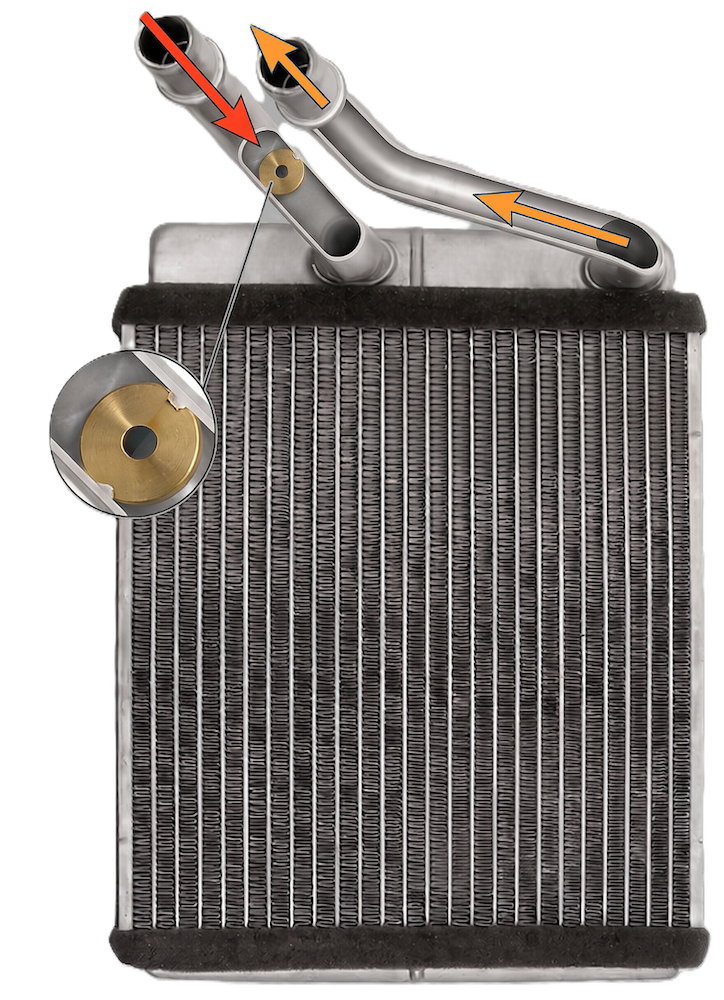
Another important point is that if you connect the heater hoses backward on a system that relies on an inlet restrictor, you may expose the new heater core to excessive pressure. The inlet pipe may be smaller, or it may contain a restrictor you might not notice down inside the inlet tube (see illustration). Depending on the application, a restrictor may instead be located in a hose or fitting.
Connecting the hoses backward is easy to do when both pipes are the same size and you don’t know about this orifice. Incorrect routing that places an intended inlet restriction on the outlet side can increase pressure inside the core and contribute to failure, even if it’s new. Verify the inlet, outlet, and any required restrictor locations against the vehicle’s service information.
Your Best Starting Point
Use the vehicle selector to filter results to your exact application first. That turns a large catalog into a short list of confirmed-compatible listings, which makes every other decision easier. Start browsing heater core replacements and enter your year, make, and model to see fitment-confirmed options right away.
From there, identify the version you need, bare core or kit, front or rear, then compare the tube configuration against the original. Verify what’s included in the listing, then use brand as the final confidence check.
The best heater core order isn’t the one that looks close enough in the thumbnail or carries a familiar name. It’s the one that matches the vehicle, the version, the included components, and the details you can verify before the part ships.
Keep Reading: Related Posts





Any information provided on this Website is for informational purposes only and is not intended to replace consultation with a professional mechanic. The accuracy and timeliness of the information may change from the time of publication.