You might already know you need a steering knuckle. The harder part is choosing the version that actually matches your vehicle, your repair, and what you expect to receive in the box.
Steering knuckle listings are easy to mix up. Two results can carry the same part name, look nearly identical in a thumbnail, and still differ on side, position, included hub and bearing, and material. One listing might be a bare knuckle. The next might be a fully loaded knuckle with the wheel hub and bearing already pressed in. A third might be a matched pair sold together for both front corners. Every vehicle has a steering knuckle, and designs vary tremendously.
This is a pre-order confidence check, not a repair walkthrough. The goal is simple: make sure the listing you click is the one that belongs on your vehicle before you commit to it.
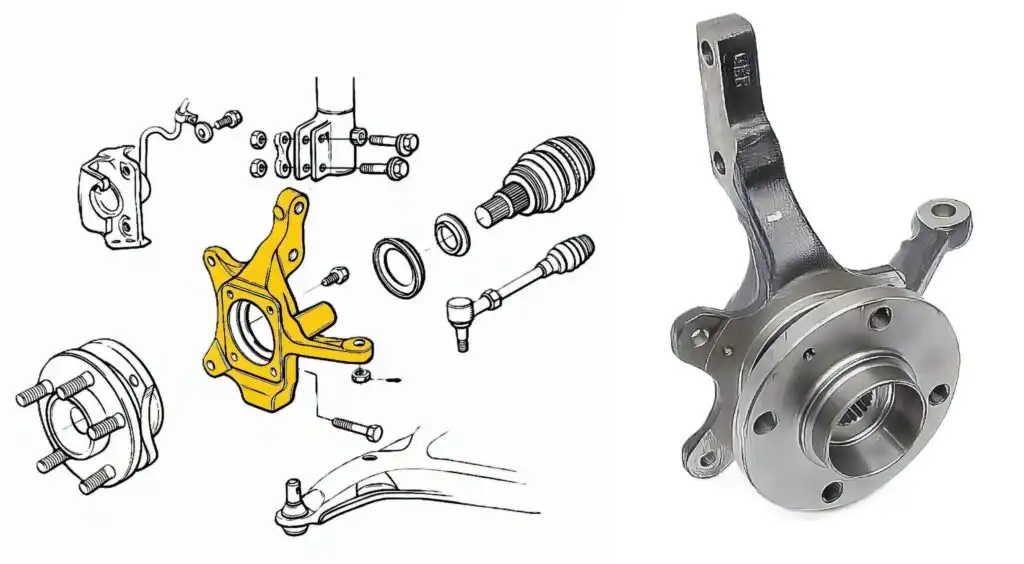
How Do You Choose the Right Steering Knuckle?
Start by confirming your vehicle’s year, make, model, engine, trim, and drivetrain, then nail down the corner you’re replacing: front or rear, driver or passenger side. Next, decide whether you need a bare steering knuckle or a loaded assembly that already includes the wheel hub and bearing. Check the listing notes for what’s actually packaged, since some knuckles ship with the hub, bearing, flange, dust shield, and wheel studs, and others ship as the casting alone. Compare the listing against your old part where possible, especially mounting points and the bearing bore. Once fitment, position, and version are settled, use brand as your final confidence filter before adding to cart.
Start With the Vehicle, Not the Product Image
Start with your vehicle, not the thumbnail. A steering knuckle photo tells you very little about whether the part clears your ride’s specific suspension layout, so image-matching alone is how wrong-corner and wrong-side orders happen.

Pro Tips are nuggets of information direct from ASE-certified automobile technicians working with CarParts.com, which may include unique, personal insights based on their years of experience working in the automotive industry. These can help you make more informed decisions about your car.
Pro Tip: In some cases, the image won't match the actual part and you may be looking at the right part without knowing it, so make sure you're careful. Drivetrain can matter too, including whether the vehicle is two-wheel drive, four-wheel drive, or all-wheel drive. Also factor in GVW, trim, and any other fitment details the parts catalog asks for.
Confirm these details before you trust any listing:
- Year, make, and model
- Engine and trim, since drivetrain and brake packages can change the knuckle
- Drivetrain (front-wheel drive, rear-wheel drive, or all-wheel drive)
- Position: front or rear
- Side: driver or passenger
- Whether your vehicle uses an integrated hub-and-knuckle design or a separate hub
Steering knuckles are both position-sensitive and side-specific. A front passenger knuckle isn’t interchangeable with the driver side, and a listing labeled for one corner won’t serve the other. Using a vehicle selector or fitment filter removes most of this guesswork up front.
Identify the Version Your Repair Actually Needs
Two steering knuckles can share the same name and still solve different ordering problems. The biggest split in this category is how much hardware comes attached.
- Bare steering knuckle: just the casting. You’ll reuse or separately source the hub,wheel bearing, and related parts. Lower cost, but more labor on your end.
- Loaded knuckle with wheel hub bearing assembly: ships with the hub, bearing, flange, dust shield, and wheel studs already installed. Fewer parts to chase, less press work.
- Single corner vs. matched pair: some listings cover one side, while others are sold as a two-piece set for both front knuckles at once.
- Material: you’ll see steel and cast iron versions depending on application.
- Specialty variants: items like drop lowering spindles exist in this category for vehicles that have been lowered, and aren’t a stock replacement.
Decide which of these you’re buying before anything else. A bare knuckle at a lower price isn’t a bargain if your repair actually called for a complete loaded assembly. The reason you’re replacing the knuckle matters too. If you just replaced the bearing and then discover the knuckle is bent, a bare knuckle, if available, might be a good choice.
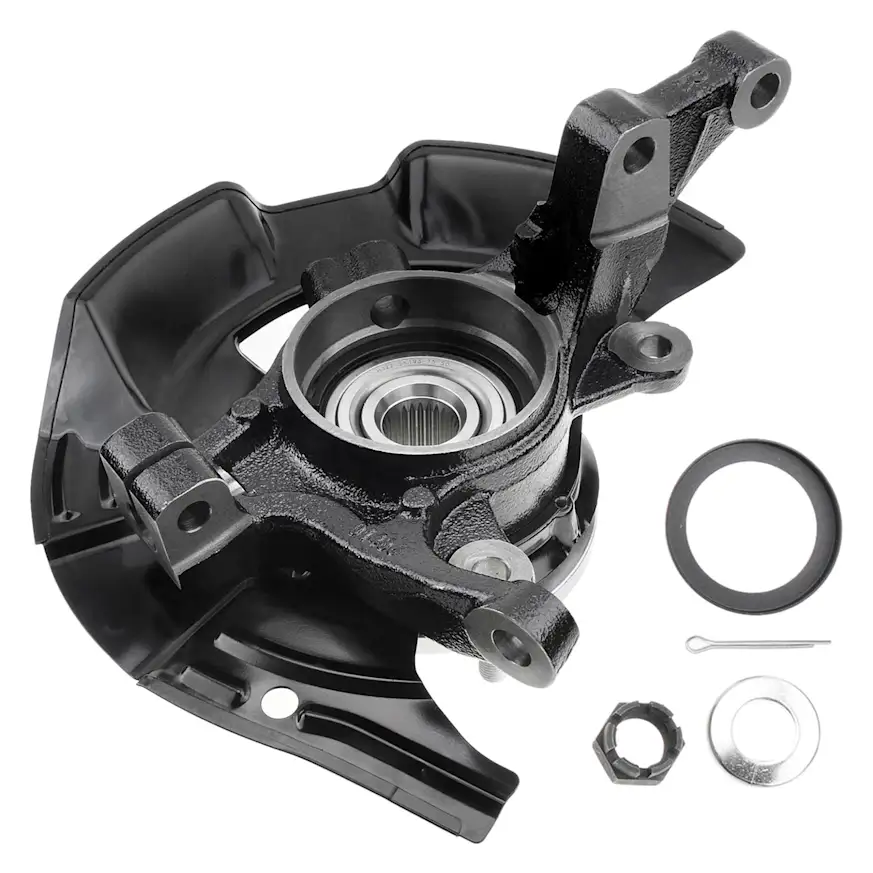
Compare the Details That Make the Part Fit
Use the product image as a starting point, not as the whole match. The casting shape is a clue, but the details that decide fitment are easier to verify against your original part.
Where you can, compare the following:
- Overall knuckle shape and arm orientation against the old part
- Steering arm and tie rod mounting points
- Upper and lower mounting points (strut, ball joint, or control arm interface)
- Brake caliper bracket mounting holes and spacing
- ABS or wheel-speed sensor opening, if your vehicle has one
- Bearing bore size and hub mounting pattern
- Wheel stud count and pattern, on loaded assemblies
If a listing is a loaded assembly, confirm the dust shield and stud pattern match what’s on the car. These are exactly the points where similar-looking knuckles diverge by submodel. Be careful not to bend the dust shield, or it may contact the rotor.
Check What Comes in the Box
A listing can be correct for your vehicle and still be incomplete for your repair. Fitment and completeness are two separate questions.
In this category, watch for the following:
- Hub included or not included
- Wheel bearing pressed in vs. sold separately
- Flange, dust shield, and wheel studs
- Whether it’s a single knuckle or a two-piece set
- Any mounting hardware, snap rings, or seals
Some loaded listings spell out their contents directly, noting that they include the hub, bearing, flange, loaded knuckle, dust shield, and wheel studs. Others are the bare casting only. If the version you choose doesn’t include a bearing or hub you need, plan to add this companion part so that your order is complete the first time. A separatewheel hub assembly is the most common add-on here.
Compare Brands After You Confirm Fitment
Brand matters, but it shouldn’t be the first filter. A familiar brand name doesn’t make the wrong side, position, or version correct. For loaded assemblies that include additional components such as ball joints or a hub with bearing, choose a reputable manufacturer with clear fitment information and warranty coverage.
On CarParts.com, this category is largely served by A-Premium across both bare knuckles and loaded knuckle-and-hub assemblies. Because the brand spread here is narrow, your real decisions are version, side, and what’s included, not a brand shootout.
The better question isn’t “Which steering knuckle brand is best?” It’s “Which listing offers the correct configuration, side, and included components for my vehicle?” Settle fitment first, then let brand be the last box you check.
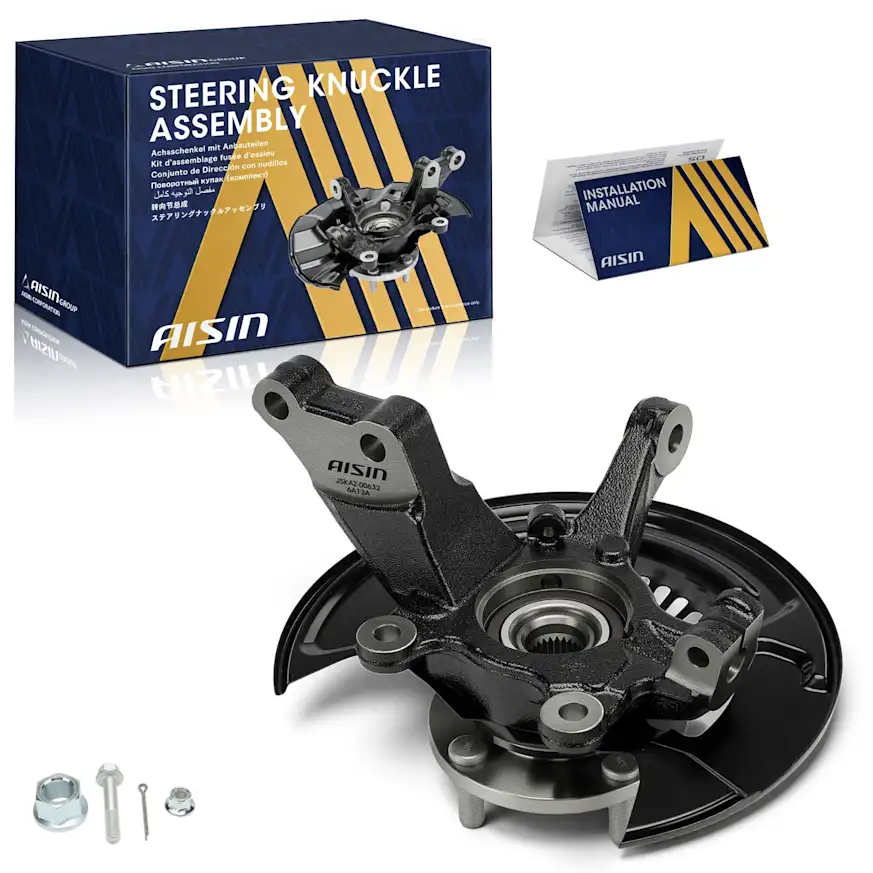
Choose the Right Ownership Lane
The right steering knuckle isn’t always the most complete one. It’s the one that matches your repair and how the rest of the corner is wearing.
- Replace only the failed casting: a bare knuckle fits when your hub and bearing are healthy and you only damaged the knuckle itself, often after impact. Lowest cost, but you take on the press work. Don’t underbuy here if your vehicle’s bearing is already noisy—catching a bad wheel bearing early saves you a second teardown.
- Standard loaded replacement: a steering knuckle with the hub and bearing already installed suits most daily drivers replacing a worn or damaged corner. You pay more up front but avoid sourcing and pressing a separate bearing. The sensible middle for most shoppers.
- Matched-pair refresh: a two-piece set makes sense when both front corners have similar mileage or you’re already in there on both sides. Don’t overpay for a pair if only one side is bad.
Make the Final Add-to-Cart Check
Before you add the steering knuckle to cart, make sure the listing matches the vehicle, the corner, and what you can verify from the original part.
- Vehicle year, make, model, engine, and drivetrain confirmed
- Front or rear position confirmed
- Driver or passenger side confirmed
- Bare vs. loaded version confirmed
- Hub, bearing, and studs checked against what you need
- Single vs. pair quantity confirmed
- Old part mounting points and bearing bore compared
- Any required companion parts added
- Product notes and fitment details read

Your Best Starting Point
Work in order and the right listing tends to surface on its own.
- Start with fitment using the vehicle selector or filters.
- Narrow by position and side.
- Decide between bare knuckle or loaded assembly.
- Confirm what’s in the box.
- Compare the listing against your old part.
- Let brand be the final confidence check.
The best steering knuckle order isn’t the one that looks close enough in a thumbnail. It’s the one that matches the vehicle, corner, version, and the components your repair actually needs. When you’re ready to match a part to your exact application, CarParts.com makes fitment the first step, not an afterthought.
Keep Reading: Related Posts




Any information provided on this Website is for informational purposes only and is not intended to replace consultation with a professional mechanic. The accuracy and timeliness of the information may change from the time of publication.