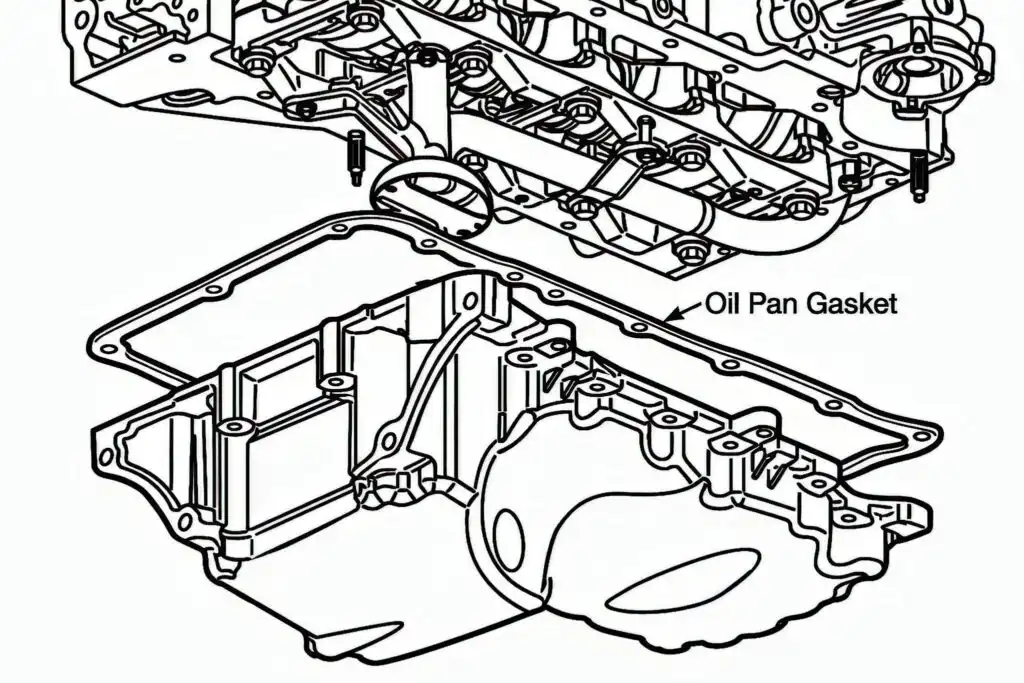
You might already know that you need an oil pan gasket unless you have an oil leak coming from somewhere else that has fooled you into thinking the oil pan gasket is leaking. Make sure you know the source of the leak before you make the pan gasket your target.
The harder part is choosing the listing that actually matches your vehicle’s engine, its pan, and your repair. Search the category and you’ll see one-piece molded gaskets, multi-piece sets, rubber gaskets with steel cores, all-steel designs, and listings that look nearly identical until you read the fitment notes.
That’s where wrong orders happen. An oil pan gasket isn’t a one-size part. It’s cut for a specific engine family, with a specific bolt-hole count, sealing surface shape, and material design. A gasket that’s even slightly off won’t seal, and you usually don’t find out until the pan is already off the vehicle. That’s a big problem if removing the pan was a tough job and the replacement gasket is wrong.
This article is a pre-order confidence check. It walks through the details that separate the correct oil pan gasket listing from the one that merely looks right, so you can add it to cart knowing it belongs on your engine.
How Do You Choose the Right Oil Pan Gasket?
To choose the right oil pan gasket, start by confirming your vehicle’s year, make, model, and exact engine, since the gasket is matched to the engine and pan, not just the model. Then check whether the listing is a one-piece molded gasket or a multipiece gasket set, and note the material, whether it’s rubber, rubber with a steel core, cork-composite, or steel, depending on the application. Compare listing details like bolt-hole count and gasket shape against your vehicle’s engine or the old gasket where possible, and confirm whether the listing is sold individually or includes extras such as a drain plug gasket. Once fitment, version, and contents are clear, use brand as your final confidence filter before adding it to cart.
Start With the Vehicle, Not the Product Image
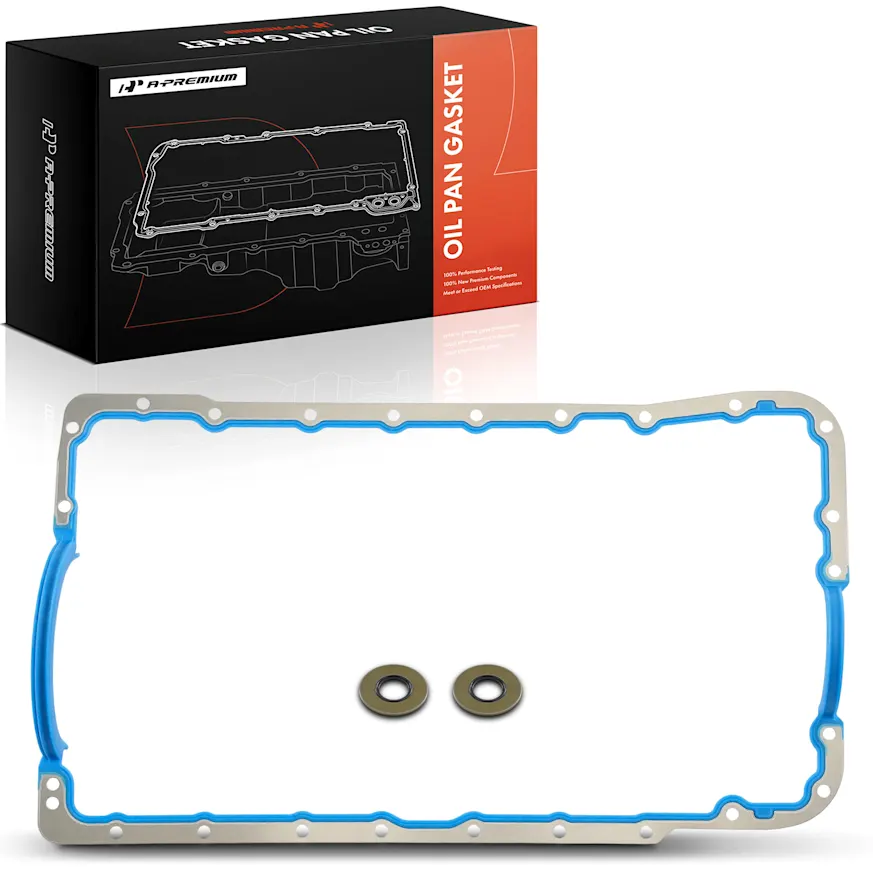
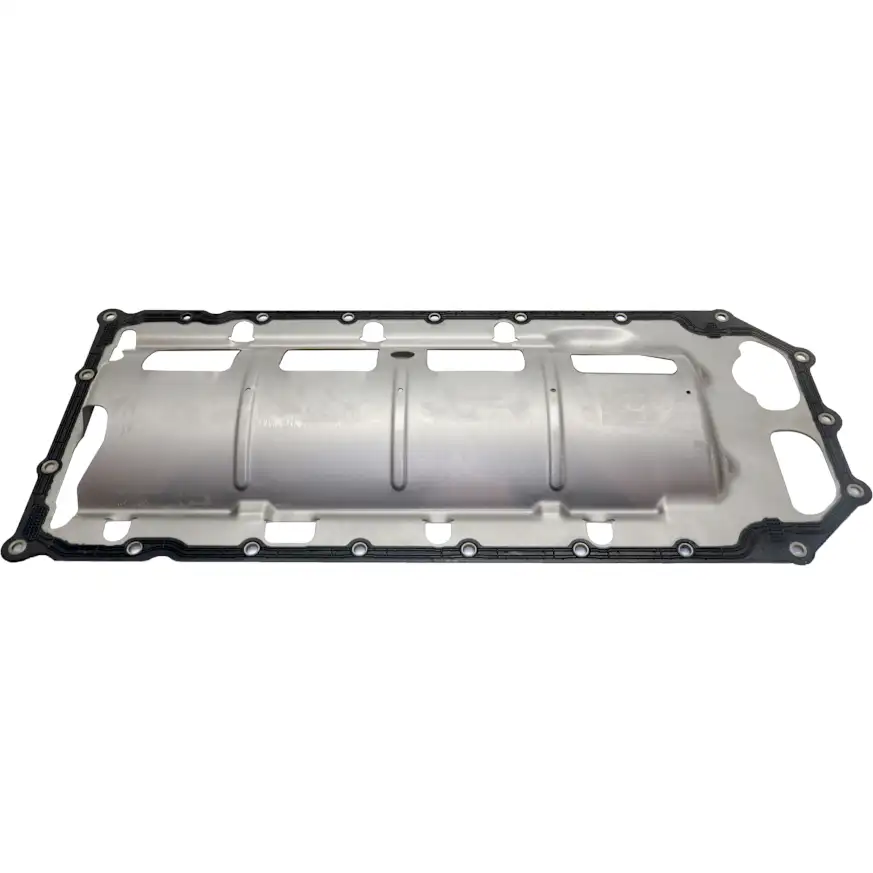
Start with the vehicle, not the thumbnail. Most oil pan gaskets are dark, flat, roughly rectangular loops of material, and dozens of them photograph almost identically. The image can’t tell you whether the bolt holes line up with your vehicle’s pan rails.
Engine is what decides fitment, so confirm these details before you compare listings:
- Year, make, and model: The baseline filter, but not enough on its own.
- Engine size and engine code: The single most important detail. The same model year can run two or three different engines, each with its own pan and gasket.
- Submodel or trim: Useful when an engine option is tied to a specific trim.
- Production date: Some engines changed pan or gasket design midyear, so a build-date split can apply depending on application.
- Transmission or drivetrain: Occasionally relevant when pan shape differs between configurations.
If the listing’s fitment notes call out a specific engine, bolt-hole count, or design detail, treat this as a requirement, not a suggestion. Entering your vehicle in the site’s selector and letting it filter the category is faster and safer than eyeballing product photos.
Identify the Version Your Repair Actually Needs
Two oil pan gaskets can share the same name and still solve different ordering problems. Before you compare prices, determine which version your repair calls for.
- One-piece molded gasket vs multipiece set: Many modern engines use a single molded gasket that follows the full pan flange. Older or specific engine designs may use a multipiece set with separate side rails and end seals. The listing should make clear which design you’re getting, and it has to match how your vehicle’s engine seals.
- Material and core design: You’ll see rubber gaskets, rubber gaskets with a steel core or steel carrier, cork-composite designs, and steel gaskets, depending on the engine. Material here isn’t a preference upgrade the way it can be with some parts. It generally follows the engine’s original sealing design, so match the construction the listing specifies to your application rather than assuming one material is universally better.
- Gasket only vs. gasket with extras: Some listings are the pan gasket sold individually. Others include a drain plug gasket or related sealing pieces. Neither is wrong, but you need to know which one you’re ordering.
- OE-style replacement vs. reusable designs: Most listings in this category are direct replacements meant to restore the original seal. If a listing describes a different sealing approach than what your engine came with, slow down and verify before adding it.
If you’re resealing the pan as part of a bigger job, the same logic applies: the gasket version still has to match the engine first, regardless of why the pan is coming off.
Compare the Details That Make the Gasket Fit
Use the product image as a starting point, not as the whole match. A gasket photo confirms general shape, but the differences that cause returns are the ones you can only catch in the specs and fitment notes.
If you still have the old gasket, or the pan is accessible enough to inspect, compare these details against the listing:
- Bolt-hole count and spacing: Some listings call out the exact number of bolt holes. If your pan flange doesn’t match, the gasket doesn’t fit, full stop.
- Overall shape and perimeter: Rear main arch, timing cover end profile, and any notches or cutouts should match your vehicle’s pan flange.
- One-piece vs sectioned design: A molded one-piece gasket won’t substitute for a multipiece rail-and-seal setup, and vice versa.
- Material and thickness: Match what the listing states to the original design. A steel-core rubber gasket and a plain rubber gasket can look similar in photos but seal differently.
- Sensor or baffle clearance: In some engines, the gasket shape accounts for an oil level sensor or pan baffle, so an off-application gasket can interfere even if it bolts up.
None of this requires removing the pan ahead of time. It requires reading the listing closely and checking it against what you know about your engine. When a spec on the listing conflicts with what’s on your vehicle, believe the vehicle.
Check What Comes in the Box
A listing can be correct for your vehicle and still be incomplete for your repair. Fitment and completeness are separate questions, and the second one is easy to skip when the first one checks out.
For oil pan gaskets, the common splits look like this:
- Sold individually: Many listings are the pan gasket alone. That’s often exactly what you need, but don’t assume anything else is in the box.
- Drain plug gasket included or not: Some listings include a fresh drain plug gasket but many don’t. Since the drain plug comes out during this job anyway, it’s worth knowing which situation you’re in.
- Hardware not included: Pan bolts are typically reused, and gasket listings generally don’t include them. If your vehicle’s engine uses any one-time-use fasteners, that’s a separate line item.
- Sealant: Some pan designs call for a small amount of sealant at specific junction points depending on application, and it’s rarely included with the gasket itself.
If the listing doesn’t include something your reseal needs, that’s not a reason to skip it. It’s a reason to add the missing piece before checkout instead of discovering the gap with the pan in your hand.

Compare Brands After You Confirm Fitment
Brand matters, but it shouldn’t be the first filter. A Fel-Pro, Mahle, or Replacement oil pan gasket still has to match the engine, gasket design, bolt-hole count, and material spec before it belongs in the cart. A trusted name on the wrong configuration is still the wrong part.
Once the fitment details are settled, brand becomes a useful confidence filter. Depending on the application, different brands can offer different materials, core designs, or set contents for the same engine, and one brand’s listing might include a drain plug gasket while another’s is sold individually. These are real differences worth comparing, and they’re visible right in the listings.
The better question isn’t “Which oil pan gasket brand is best?” It’s “Which brand offers the correct gasket design and contents for this engine?” Answer that, and the brand decision usually narrows itself to one or two listings you can choose between on price, warranty terms, and your own ownership plans.
Choose the Right Ownership Lane
The right oil pan gasket isn’t always the most expensive one. It’s the one that matches how long you need the repair to hold. Three practical lanes cover most situations:
- Basic replacement: You’re fixing a leak on a vehicle you don’t plan to keep long, or you’re working on a tight budget. A correctly fitting gasket that matches the engine’s specified design and material from any available brand can do the job. Don’t underbuy by guessing at fitment to save a few dollars, though. A cheap gasket that doesn’t seal costs you the whole job twice.
- Daily-driver OE-style replacement: This is the default lane for most shoppers. Choose a gasket that matches the original design and material, and lean toward listings with clear fitment notes and a stated warranty. If your engine originally used a steel-core or molded design, stay with this construction rather than dropping to a simpler material.
- Long-term keeper or high-mileage refresh: You plan to keep your vehicle well past this repair. It can make sense to choose the most robust construction offered for your application and to add the small extras, like a fresh drain plug gasket, in the same order. There’s no need to overpay for exotic options that don’t exist in this category. The premium move here is completeness and correct design, not a higher price tag for its own sake.
Make the Final Add-to-Cart Check
Before you add the oil pan gasket to cart, make sure the listing matches the vehicle, the engine, the gasket design, and the details you can verify from the original part.
- Vehicle year, make, and model confirmed in the fitment notes
- Exact engine size or engine code confirmed
- One-piece vs multipiece design matches your engine
- Material and core construction match the listing description you intended to buy
- Bolt-hole count checked where the listing specifies it
- Sold-individually vs. set contents confirmed
- Drain plug gasket accounted for, included, or added separately
- Old gasket or pan flange details compared where possible
- Quantity confirmed at one, since this isn’t a paired part
- Product notes and any application warnings read in full
If every line checks out, you aren’t guessing anymore. You’re ordering.
Your Best Starting Point
Start with fitment. Enter your vehicle’s year, make, model, and engine in the vehicle selector so the category only shows gaskets built for your engine. This one step eliminates most wrong-part risk before you read a single listing.
Then narrow by version: confirm the gasket design and material match your vehicle’s engine, check whether the listing is sold individually or includes a drain plug gasket, and compare any stated specs like bolt-hole count against what you know about your pan. Use brand as the final filter once two or three listings have survived the fitment and contents checks.
The best oil pan gasket order isn’t the one that looks close enough or carries a familiar name. It’s the one that matches the engine, sealing design, included pieces, and the details you verified before checkout, so the only surprise during the repair is how smoothly the order part went.
Keep Reading: Related Posts




Any information provided on this Website is for informational purposes only and is not intended to replace consultation with a professional mechanic. The accuracy and timeliness of the information may change from the time of publication.