Picture a freezing morning: you turn the key, and the dash flashes an exhaust fluid warning. The good news is that you can learn how to replace a diesel emissions fluid heater and fix it in an afternoon. That small part keeps your exhaust fluid, or DEF, from freezing, and your truck needs it to run clean. Plan on two to five hours, mostly for lowering the tank and refilling with fresh DEF.
How Do You Replace a Diesel Emissions Fluid Heater: A Step-by-Step Guide
These steps follow the Ford 6.7L Super Duty pickup, the most documented version of this job. Check tank access for your VIN before you start.
Prepare the Truck and Reach the Tank
Clean access helps prevent repeat faults, so confirm the diagnosis and wash the work area first.
- Confirm the heater is the problem. Scan and record every stored code, then test the heater circuit against your service specification.
- Prep the truck. Park on level ground, chock the wheels, and let the exhaust cool. Wash the tank area first, so dirt stays out of the open tank.
- Remove the shield and filler neck. Pull the 13mm shield bolts, then remove the three 5.5mm screws that hold the filler neck. Note: Photograph the fill hose routing so it doesn’t kink later.
- Disconnect the main connector. Unplug the harness above the tank and free its retainers. Tip: Don’t let the tank hang from the DEF line.
Drop the Tank and Swap the Heater
A partly full DEF tank is heavy, so support it with a transmission jack before you remove the last bolt.
- Support and lower the tank. Set a transmission jack under the tank, remove the 13mm mounting bolts, and lower it six to eight inches. Release the thin DEF pressure line by pushing it toward the pump nipple and squeezing the tabs. Warning: That nipple cracks easily, especially in the cold.
- Clean the top of the tank. Brush off dirt and crystallized DEF around the pump and heater opening. Wear clean nitrile gloves so grime stays out.
- Remove the pump and the old heater. Unplug the pump connectors, remove its three 4mm hex bolts, and lift it out. Turn the lock ring with a proper wrench, then release the heater’s lower tabs counterclockwise. Warning: Don’t pry the ring, because prying damages the sealing surface.
- Install the new heater. Match the original orientation, engage the lower tabs by turning clockwise, and fit a new seal. Route the harness the same way as before.
- Reinstall the pump with new seals. Tighten the bolts evenly to your truck’s spec. Ford’s 2011 workshop figure is 44 inch-pounds. If you replaced the pump too, prefill it with the syringe from the kit.
Reassemble and Verify
Careful reassembly and fresh fluid give the new heater its best chance.
- Raise the tank, reconnect everything, and refill with fresh DEF. Guide the fill hose over the frame and seat every connector until it locks. Don’t reuse the drained fluid.
- Clear codes and update software. Clear faults with a scan tool and confirm the PCM has the latest calibration. Ford calls for an update on many 2013 to 2016 trucks. Rescan after a test drive, and recheck wiring if the same code returns.
What Does a DEF Heater Do?
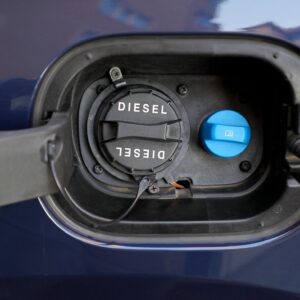
The SCR system, short for selective catalytic reduction, injects DEF into the exhaust to cut NOx emissions. DEF is a mix of 32.5% urea and 67.5% purified water, and it freezes near 12°F. The tank heater, also called a reductant heater, thaws frozen DEF so the SCR system can keep dosing. When the heater fails, the PCM stores a fault and may reduce engine power.
What Symptoms Point to a Failed DEF Heater?
Cold starts put the most load on the heater, so faults often show up after a freezing night. Symptoms of a failing DEF heater include a check engine light, a fault message, and odd level readings. Some trucks also warn that speed will drop, and a few settle at a 50 mph limit.
Ford 6.7L trucks commonly store P20B9 or P20BA for heater faults. Level codes P203A through P203E and temperature codes P2043, P205C, and P205D can point to the same assembly. P20E8 signals low reductant pressure, which points toward the pump.
Codes alone don’t prove a bad heater, because wiring and connectors can cause the same faults. Test heater resistance before you pull the tank. On some 2020 to 2021 GM Duramax trucks, a shorted heater means replacing the whole DEF tank. Don’t use emissions delete modules to clear the fault, because the Clean Air Act prohibits defeat devices, and they never repair a failed heater.

What Tools Does the Job Need?
Most pickups need basic hand tools plus a few specialty items. Gather everything before you open the tank.
- 13mm and 5.5mm sockets, a 4mm hex bit, and a ratchet with an 8-inch extension
- Transmission jack to support the tank
- Lock ring wrench, such as Ford service tool 310-069 or an equivalent
- Trim tool and a hooked pick for connector locks
- Drain pan or DEF extractor
- Torque wrench with an inch-pound range
- Nitrile gloves, safety glasses, and fresh DEF that meets ISO 22241
- Scan tool that clears SCR codes
How Does the Job Change by Truck Brand?
Tank access and retaining hardware change by brand, so confirm the layout in your service manual. Some heaters sit under a plastic lock ring, while others bolt down. Tighten plastic rings snugly, because overtightening cracks them. Heavy trucks with dual DEF tanks usually need a shop with manufacturer diagnostic software.
What Should You Verify Before Installing the New Heater?
A quick comparison before you open the tank saves a second teardown. Check the connector shape, height, lower retaining tabs, and included seal against the old heater. Quality aftermarket heaters match original fit and function, so the swap follows the same steps.
Part numbers matter on some trucks. On Super Duty models, BC3Z-5J225-L covers pickups, and BC3Z-5J225-M covers chassis cabs. Some trucks use the heater and sender as one assembly, so confirm which design yours has.
How Do You Prevent Another Heater Failure?
Most repeat failures trace back to contamination, damaged seals, or poor fluid care. A few habits cut that risk.
Keep the Fluid Clean
Off-spec DEF can crystallize faster around the heater element. Use fresh DEF that meets ISO 22241, and keep dirt, fuel, coolant, and tap water out of the tank.
Protect the Seals and Fill Level
Replace every seal you remove, and clean the sealing surfaces before reassembly. Fluid reaching the heater’s electrical area is a known failure point on some designs. Keep the tank at least half full, but don’t overfill it, because expanding ice can damage the tank.
Need Parts for the Job?
CarParts.com carries diesel emissions fluid heaters for trucks, SUVs, and diesel cars. Add your vehicle to confirm fitment, and your truck can get back to work.
Keep Reading: Related Posts


Any information provided on this Website is for informational purposes only and is not intended to replace consultation with a professional mechanic. The accuracy and timeliness of the information may change from the time of publication.