
Ask ten riders how often a jet ski needs service, and you’ll get ten different answers. One means the quick check before launch. Another means the yearly oil change. A third means the winter shutdown that keeps the engine from freezing.
They’re all right, which is exactly why the advice feels confusing. A real PWC maintenance schedule isn’t one task but a rhythm of habits and bigger jobs. Each one ties to a ride, an hour count, or a season. This guide covers them all in that order.
Start With the Owner’s Manual
Every schedule you read online, including this one, is a starting point. Your owner’s manual is the final word. A Sea-Doo GTI, a Yamaha VX, and a Kawasaki STX each call for different specs. Guessing wrong on oil type or spark plug gap can cost you an engine.
The manual spells out the exact break-in steps, fluids, and winterization for your model. All three brands offer free downloads online. This matters most with your cooling system, since designs vary widely. Sea-Doo watercraft, for example, use a closed-loop system that isn’t flushed like an open-loop one.
Before Every Ride: The Pre-Ride Inspection
The cheapest maintenance happens before the hull touches the water. A quick jet ski pre-ride checklist catches most problems that ruin a day. Walk the machine and look for hull cracks, loose trim, or anything hanging underneath. Then open the seat and check the engine bay for water, fuel smell, or oil residue.
Next, confirm the drain plugs are installed and tight, since forgetting them can sink a ski. Check the intake grate for weeds, rope, or rocks, because a blockage kills acceleration. Turn the bars lock to lock and squeeze the throttle to confirm smooth movement. Finally, glance at fluid levels, watch for warning messages, and confirm your safety gear is aboard.
After Every Ride: Rinse, Flush, and Dry
Post-ride care is where owners protect their investment. Salt is the obvious enemy, but freshwater riders aren’t off the hook. Lakes and rivers leave minerals, sand, and algae that also corrode. Rinse the exterior after each outing and hit the footwells, pump area, and seat seams.
Flushing the cooling passages matters most, and it’s the step people rush. Follow your manual’s exact sequence, since the order isn’t universal. On many watercraft, you start the engine before the water and stop the water first. Never assume that applies to your model, because flushing it wrong can cause damage.
Finish by opening the seat and compartments to let moisture escape. Trapped dampness breeds mildew, corrosion, and electrical trouble. A last walkaround catches anything that changed during the ride. Small issues are far easier to fix while they’re fresh.
Every 50 Hours or Once a Year: The Core Service
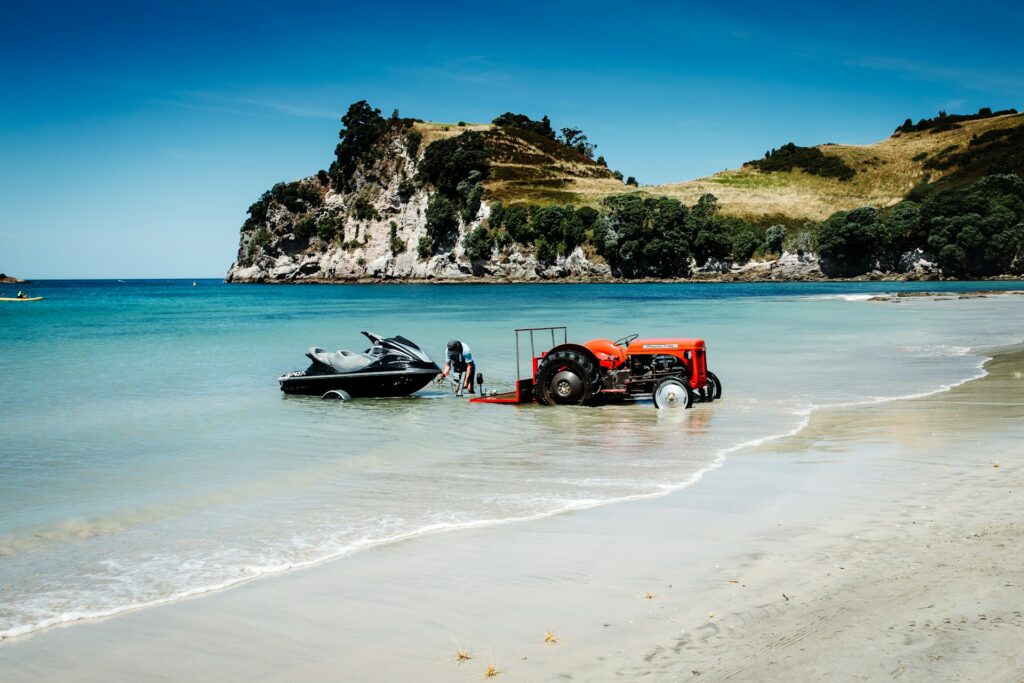
This interval sits at the heart of your maintenance schedule. The standard rhythm is service every 50 hours or once a year, whichever comes first. That last part matters, since the average PWC sees only about 30 hours a season. Oil ages regardless, so annual service still pays off on a low-hour ski.
Here’s what a proper annual or 50-hour service usually covers.
- Engine oil and filter change. Yamaha lists this every 50 hours or once a year for WaveRunners. Most four-stroke PWCs use a fluid extractor pump to pull oil through the dipstick tube. A quality aftermarket oil change kit bundles the pump, filter, and oil to simplify the job.
- Spark plug service. Worn spark plugs cause hard starts and weak throttle response. Use the exact plug type and gap your manufacturer specifies.
- Jet pump and impeller inspection. Check the impeller, wear ring, and intake for damage. Cavitation, where the engine revs but the ski won’t accelerate, often points here.
- Battery check. Marine batteries typically last three to five years. Clean the terminals and replace an aging battery before it strands you.
- Lubrication. Grease the steering and shift linkage with marine grease, then inspect hoses and clamps.
If your machine is supercharged, add one more calendar note. Many supercharged models call for a supercharger rebuild every couple of years. Check your specific requirement rather than assuming it matches basic service.

The First Service Is the Most Important
New owners often overlook the most critical service in the machine’s life. Most models require a first service around the 10-hour mark, tied to engine break-in. Those opening hours are when internal parts bed together. The manufacturer will limit you to around three-quarters throttle for the first 10 hours.
During break-in, the oil collects fine metal as parts wear in. That’s why the first oil change matters even on a new engine. Put this service on your calendar the day you take delivery.
Before Storage: Jet Ski Winterization
When the season ends, the ski needs a proper shutdown. Plan for it any time the machine will sit idle for two months or more. Jet ski winterization protects the engine, fuel system, and cooling parts from that idle damage. In freezing climates, it’s the difference between a smooth startup and a cracked block.
The Core Winterizing Steps
Run the engine to operating temperature first, since warm oil drains completely. Change the oil and filter while it’s still warm. Stabilize a full tank of fresh fuel, then run the ski briefly to move it through. Remove the hull drain plugs so no water is left to freeze.
Next, protect the exhaust and cooling system per your manual. On some models, you purge exhaust water with compressed air. Sea-Doo specifies staying under 55 PSI here, since higher pressure can damage parts. Many owners also fog the cylinders with storage oil to coat internal surfaces.
Finish by protecting the pump and electrical parts. Inspect the sacrificial anodes that guard against corrosion, and replace them if more than half worn. Pull the battery and keep it on a battery maintainer in a cool, dry place. Cover the machine, and it will wait safely until spring.
A Quick Reference PWC Maintenance Schedule
Use this as your at-a-glance rhythm, then match every item to your owner’s manual.
- Before every ride: Check drain plugs, hull, intake grate, controls, fluids, and safety gear.
- After every ride: Rinse the exterior, flush the engine if required, and dry the compartments.
- Monthly in season: Inspect battery terminals, trailer tires and lights, tie-downs, and corrosion points.
- Every 50 hours or yearly: Change oil and filter, service spark plugs, and inspect the pump.
- At 10 hours: Complete the break-in service and first oil change on new machines.
- Before storage: Stabilize fuel, change oil, service anodes, and charge the battery.
Keep the Whole Rig Ready
Here’s the part most guides skip. Your watercraft is only half the equation, since a perfect PWC on a neglected trailer still leaves you stuck. Check the trailer tires, wheel bearings, lights, and straps on the same schedule, and rinse it after saltwater launches.
That’s the philosophy behind a good maintenance schedule, where the truck, trailer, and ski work as one system. Need an oil change, a new impeller, or a fuel stabilizer? The JC Whitney Performance Hub at CarParts.com stocks quality aftermarket parts for the whole garage. Its vehicle selector confirms fitment up front, so you order right the first time.
Keep Reading: Related Posts







Any information provided on this Website is for informational purposes only and is not intended to replace consultation with a professional mechanic. The accuracy and timeliness of the information may change from the time of publication.