Here’s how to tow an ATV with a trailer: hitch a properly rated trailer to your truck or SUV, drive the quad up a solid ramp, set about 60 percent of its weight toward the front, and lock it down at all four corners with ratchet straps before you pull out. Get these four things right and your ATV rides flat, steady, and secure from the driveway to the trailhead.
Key Takeaways
- Use a trailer rated well above your ATV’s weight, and never load past about 80 percent of its capacity.
- Drive the ATV up the ramp slowly in a low gear. Muscling it on by hand is where injuries happen.
- Put roughly 60 percent of the weight toward the front for stable tongue weight.
- Strap all four corners to solid frame points, never to axles, suspension, or plastic.
- Recheck your straps after the first few miles, since they loosen as the load settles.
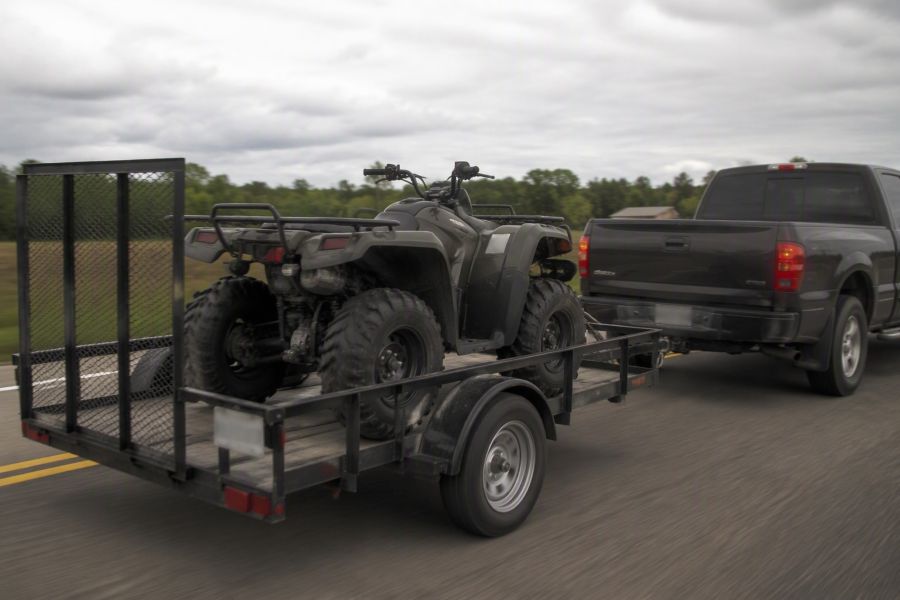
Match the Trailer to Your ATV
Your trailer is the foundation of a safe haul. Pick one rated comfortably above your ATV’s weight to provide margin for gear, mud, and a full tank.
Trailer Types
Open utility trailers are the most common choice. They’re affordable, easy to load, and simple to clean, though your ATV will be exposed to weather and road grime. Enclosed trailers cost more but protect your machine from rain, debris, and theft, which makes them popular for long hauls and higher-value builds. Deck-over trailers ride above the wheel wells, giving you a wide, flat surface and room for more than one quad.
Capacity and Ramps
Check the trailer’s weight rating and stay under about 80 percent of it. Overloading strains the axle, tires, and hitch, and it makes the whole rig harder to control. For loading, use a ramp that’s solid, wide, and rated for your ATV’s weight, with a nonslip surface. Many trailers include fold-down or slide-out ramps. If yours doesn’t, a quality portable ramp is worth the money. Lifting an ATV by hand is dangerous, especially when you’re alone.
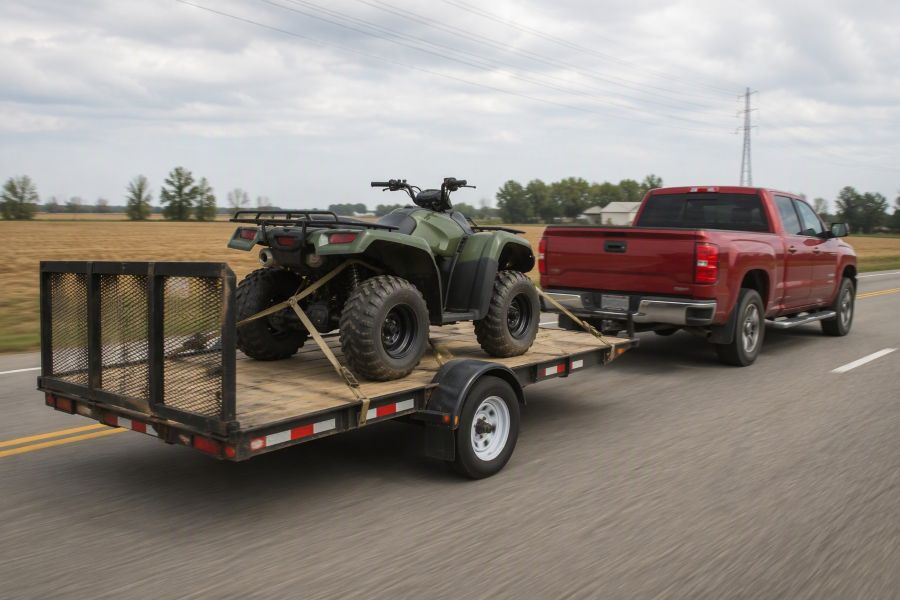
Load the ATV Safely
Loading is the moment most things go wrong, so slow it down.
Start by prepping your machine. Check tire pressure and confirm the brakes work, since you’ll rely on them on the ramp. Line the trailer up straight so the ramp sits square, and set the parking brake on your tow vehicle.
Drive the ATV up the ramp slowly in a low gear, keeping steady throttle without gunning it. Spinning tires on a metal or wet ramp can slip out fast. If you’d rather not ride it up a narrow ramp, put the machine in neutral and push it, or use a winch. Either way, keep your body clear of the machine’s path and wear a helmet while you load.
Secure It for the Road
Once your ATV is in position, tie it down before you do anything else.
The 60-40 Rule
Position your ATV so about 60 percent of its weight sits toward the front of the trailer, closest to the tow vehicle. That balance gives you proper tongue weight and keeps the trailer from swaying at highway speed. Too much weight at the back makes the trailer fishtail. Set your ATV’s parking brake once it’s in the right spot.
Tie-Down Points
Use ratchet straps at all four corners, with the front and rear secured separately. Anchor them to solid frame points or the built-in hooks many ATVs have. Never strap to the axles, suspension, or any nonstructural part, since these can bend or crack under strap tension and let the machine shift. Compress the suspension slightly as you tighten so the straps stay snug when the trailer bounces. A loose ATV is the fastest way to lose a load or damage your machine, so double-check every strap before you roll.

Drive Smart While Hauling
A loaded trailer changes how your vehicle handles. Give yourself more room to stop, since braking distance grows with the extra weight. Signal early, take corners wider, and avoid sudden braking that can jackknife the trailer. After the first few miles, pull over and recheck your straps. They almost always need a second tightening as the load settles. Glance at your mirrors now and then to confirm your ATV hasn’t moved.
If you notice sway, a pulling sensation, or anything loose while driving, ease off and pull over to inspect the hitch, safety chains, and straps before you continue. This quick stop beats a roadside scramble.
Using Your ATV as the Tow Vehicle
The reverse job matters too. Towing with an ATV, such as pulling a cargo trailer or wagon around your property, has its own rules. Check your owner’s manual to confirm the ATV is rated for the combined weight of the load and trailer, and use a rigid hitch with a tow bar so the trailer can’t ram the machine. Load cargo low and spread it across the bed to keep the center of gravity down, and secure it so it won’t shift when you turn. When you slow down, downshift and let the engine help rather than stabbing the brakes, and always drop to a lower gear before you descend a hill.
Off-Season Care and Storage
Smart ATV transport & storage keeps your machine trail-ready between rides. Since ATV season runs hardest from spring through fall, use the off-months to clean, inspect, and properly stow your quad. Keep your ramps and tie-down straps away from road grit, and give your trailer’s tires, bearings, brakes, and lights a look before the first ride of the season. A little pre-season prep means less time in the garage and more time on the trail.
FAQ
Use at least four, one at each corner, with the front and rear secured independently. Extra straps add security on long or rough hauls.
Anchor to solid frame points or factory tie-down hooks. Keep straps off the axles, suspension, and plastic body panels, which aren’t built to hold that load.
Working lights are required for legal towing, and trailer brakes help you stop a heavy load safely. Check both before every trip and confirm they meet your local rules.
Yes, if you drive it up a solid, properly rated ramp slowly and keep clear of its path. Avoid lifting or pushing it up by hand alone, which is how drops and injuries happen.
Aim for about 60 percent toward the front. This keeps tongue weight in a safe range and helps prevent sway.
Getting your quad to the trail safely starts with the right gear for both your tow rig and your machine. The JC Whitney Performance Hub brings trailer hardware, tie-downs, and trail-ready ATV parts together in one place. Gear up here and roll from the driveway to the trailhead with confidence.
Keep Reading: Related Posts




Any information provided on this Website is for informational purposes only and is not intended to replace consultation with a professional mechanic. The accuracy and timeliness of the information may change from the time of publication.