
Sport ATV vs. Utility ATV: Which One Should You Buy?
Pick a sport ATV if you want speed, agility, and aggressive trail or dune riding. Pick a utility ATV if you need towing, hauling, all-day comfort, and the ability to handle work and rugged terrain. The sport ATV vs. utility ATV choice comes down to how you actually ride. If you’re chasing top speed and tight corners, sport wins. If you’re plowing snow, hauling firewood, or covering long miles on mixed terrain, utility wins.
Key Takeaways
- Sport ATVs are lightweight, two-wheel-drive machines built for speed, jumps, and aggressive trail riding.
- Utility ATVs are heavier, four-wheel-drive workhorses built for towing, hauling, and tough terrain.
- Sport quads typically run 250cc to 700cc with manual transmissions, while utility quads typically run 400cc to 1000cc+ with automatic continuously variable transmissions (CVTs).
- Utility ATVs cost more upfront but offer broader year-round usefulness for most riders.
- Match the machine to your terrain, budget, and primary use, not just brand loyalty or top-speed numbers.
Power and Performance
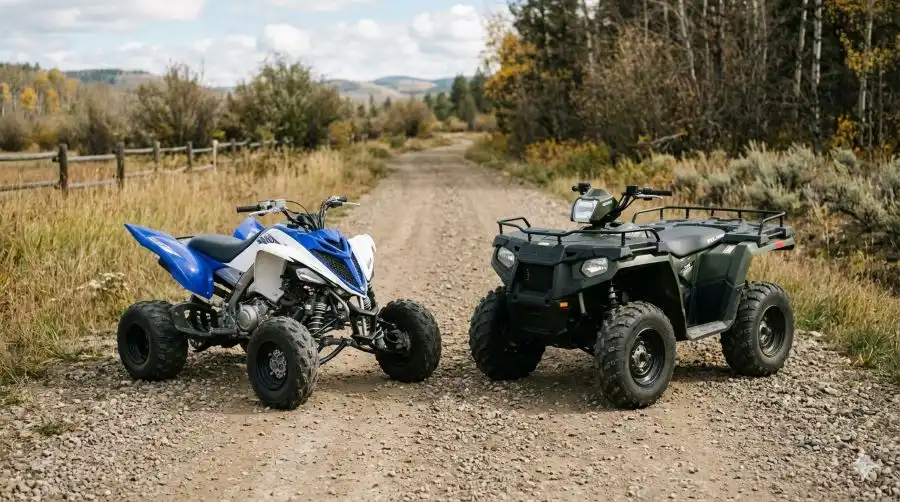
Sport ATVs and utility ATVs are tuned for completely different jobs, and the engineering shows the moment you twist the throttle.
Sport ATVs: Built for Speed
Sport quads use lightweight frames, high-performance engines, manual clutch transmissions, and air-cooled or liquid-cooled single-cylinder powerplants. Most ride on two-wheel drive to keep weight down and acceleration sharp. Engines typically range from 250cc to 700cc, and top speeds in bigger sport models often hit 75 mph or more on open ground. The trade-off is comfort and capacity. These machines aren’t designed to tow, haul, or cruise for hours, and they reward riders who enjoy shifting, leaning, and working the throttle.
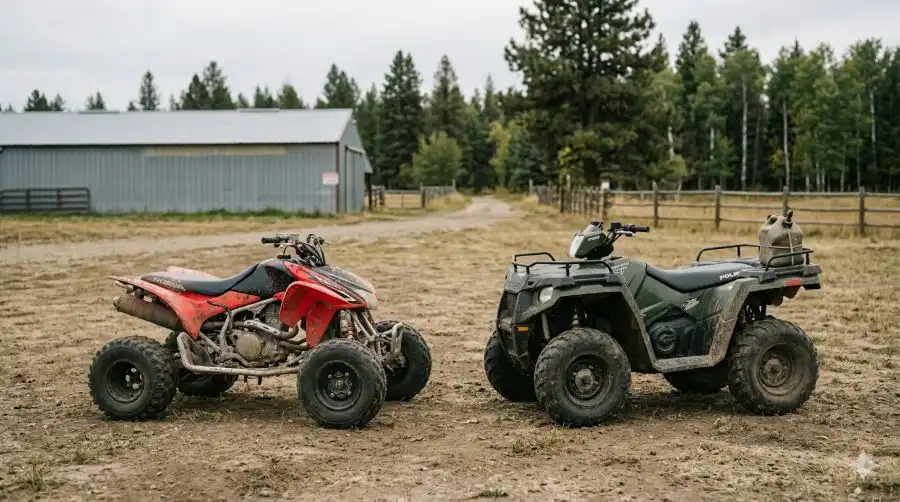
Utility ATVs: Built To Work
Utility ATVs run larger displacement engines, often 400cc to 1000cc and beyond, with liquid cooling and twin-cylinder options for premium models. Most come with automatic CVTs, selectable four-wheel drive, and locking differentials. Top speeds usually land in the 55 to 70 mph range, but raw speed isn’t the point. These machines deliver torque, low-end pulling power, and steady performance under load. They’ll tow, plow, and crawl through terrain that would stop a sport quad cold.

Capacity: Hauling and Towing
This is where the gap between the two really opens up.
Sport ATVs are single-rider machines with minimal storage. Most don’t have racks, and passenger seats are rare. Towing capacity is usually limited to small trailers, often around 800 to 1,200 pounds when towing is rated at all. Cargo space is essentially limited to what you can strap to the seat or wear on your back.Utility ATVs are built for work. Front and rear racks are standard, with combined cargo capacities often reaching 250 to 600 pounds. Towing ratings frequently exceed 1,500 pounds, with some larger machines pulling 2,000 pounds or more. Many utility models include passenger seats, hitch receivers, and mounting points for plows, winches, sprayers, and gun racks. If you need a machine that earns its keep around the property or hauls gear into camp, this quad comparison points clearly toward utility.
Ride Feel and Comfort
The riding experience between these two categories is dramatically different, and most buyers underestimate how much that matters over a full day in the saddle.
Sport ATVs: Aggressive and Engaging
Sport quads put the rider in an active, forward position. Long-travel suspension, narrow seats, and stiff chassis tuning reward standing on the pegs, leaning into corners, and attacking obstacles. On smooth trails or open dunes, this feels exhilarating. On long rides over rough mixed terrain, it gets tiring quickly. Sport ATVs are made for shorter, intense sessions rather than full-day cruising.
Utility ATVs: Stable and Comfortable
Utility quads sit higher, ride on wider stances, and use suspension tuned for load-carrying rather than aggressive handling. Wider seats, often with passenger room, make long rides far more manageable. The ride is less sharp through corners, but it’s also less punishing on your body. For trail riding, hunting, ranch work, or exploring with a passenger, utility ATVs simply make more sense.
Choosing the Right Quad for Your Use
When you compare ATVs across the two categories, the decision usually comes down to four practical questions.
What’s Your Primary Use?
If you’re racing, jumping, or chasing top speed on dunes and groomed tracks, sport is the answer. If you’re working land, hunting, plowing snow, or riding mixed terrain with friends and family, utility wins. Plenty of riders own both for exactly this reason.
What Terrain Are You Riding?
Open dunes, motocross tracks, and smooth trails play to sport ATV strengths. Wooded trails, mud, rocks, snow, and steep hills favor utility quads with four-wheel drive and torque.
What’s Your Experience Level?
Sport ATVs demand more skill. Manual transmissions, sharper power delivery, and twitchier handling can overwhelm beginners. Utility quads with automatic transmissions and four-wheel drive are more forgiving and easier to learn on, especially for newer riders or families.
What’s Your Budget?
Sport ATVs generally have lower entry prices, particularly on the used market. Utility ATVs cost more upfront, especially midsize and full-size models with four-wheel drive, but they hold value well and tend to deliver more year-round usefulness per dollar for most riders.
Safety Considerations
Both machine types demand respect. Wear a DOT-approved helmet, goggles, gloves, boots, and protective gear every ride. Sport ATVs reach higher speeds and are more prone to rollovers when ridden aggressively, so suspension, tires, brakes, and steering components need regular inspection. Utility ATVs carry heavy loads that stress brakes, steering, and suspension over time. If you notice soft brake feel, steering play, leaks, or overheating, stop riding and get the machine inspected before the next outing. Practice on familiar terrain before pushing into harder rides, and never carry passengers on a sport ATV that isn’t rated for two-up riding.
FAQ
Is a sport ATV or utility ATV better for beginners?
Utility ATVs are generally easier for beginners. Automatic transmissions, four-wheel drive, and more stable handling make them more forgiving while you build skills. Sport ATVs reward experienced riders comfortable with manual clutches and aggressive power delivery.
Can a sport ATV tow anything?
Some sport ATVs have light towing capacity, often around 800 to 1,200 pounds, but they aren’t designed for regular towing or hauling. Frames, hitches, and cooling systems are tuned for performance, not work. If towing matters to you, choose utility.
How fast does a utility ATV go?
Most utility ATVs top out between 55 and 70 mph, depending on engine size and model. Sport ATVs in the 450cc to 700cc range often exceed 75 mph. Real-world cruising speeds for both are usually well below those numbers, especially on technical terrain.
Are utility ATVs good for trail riding?
Yes. Modern utility ATVs handle trails well, especially in wooded, rocky, or muddy conditions where four-wheel drive and torque matter. They aren’t as quick as sport quads on smooth trails, but they cover more terrain with less fatigue.
Should I buy a used sport quad or a new utility ATV on a tight budget?
It depends on use. A clean used sport quad can be a great value if you mostly ride trails and dunes for fun. A new or lightly used utility ATV makes more sense if you need towing, hauling, or year-round work capability. Inspect any used machine carefully before buying.
What’s the difference in maintenance between the two?
Sport ATVs often need more frequent attention to clutches, chains, and suspension because of how hard they’re ridden. Utility ATVs have more components, including drivelines and CVTs, but typically run longer between major service intervals when ridden at moderate loads.
Find Your Next ATV at JC Whitney Performance Hub
Whether you’re prepping a sport quad for the next track day or upgrading a utility ATV for ranch work, the right parts make the ride. From tires and brakes to winches, racks, and performance upgrades, the JC Whitney Performance Hub on CarParts.com brings 100+ years of fitment expertise to your machine. Visit theJC Whitney Performance Hub and gear up for the season ahead.
Keep Reading: Related Posts






Any information provided on this Website is for informational purposes only and is not intended to replace consultation with a professional mechanic. The accuracy and timeliness of the information may change from the time of publication.