A car air pump, formally called a secondary air injection pump and often nicknamed a smog pump, is a component bolted to the engine that pushes pressurized ambient air into the exhaust stream. Its sole job is to supply extra oxygen so that unburned fuel left over from combustion can continue to oxidize inside the exhaust manifold or catalytic converter. The result is lower tailpipe output of hydrocarbons (HC) and carbon monoxide (CO), two pollutants regulated by federal and state emissions standards.
How a Car Air Pump Works Inside the Emissions System
The air pump is a rotary vane pump. Spinning internal vanes draw in outside air through a filtered intake, compress it lightly, and force it into the exhaust pathway. Depending on the vehicle, the pressurized air enters at one of two locations: the exhaust ports in the cylinder head or the exhaust manifold, and sometimes farther downstream at the catalytic converter.
During a cold start, the engine runs on a deliberately rich fuel mixture (more fuel, less air) to stabilize idle and warm up quickly. That rich mixture produces a spike in unburned hydrocarbons and CO. The air pump activates immediately, flooding the exhaust stream with oxygen so that residual fuel burns off before leaving the tailpipe. This secondary combustion also generates heat, bringing the catalytic converter up to operating temperature faster, typically within 90 to 120 seconds.
Once the catalytic converter reaches full efficiency and the oxygen sensors confirm a balanced air-fuel ratio, the engine control module (ECM) shuts the air pump off. On larger trucks and SUVs, the pump may remain active longer to process the higher volume of exhaust.
Several supporting components keep the system safe:
• A check valve (one-way valve) prevents hot exhaust gas from flowing backward into the pump housing, which would melt or corrode internal parts.
• A diverter valve redirects pressurized air to the atmosphere during sudden deceleration, preventing explosive backfires in the exhaust.
• A control or combination valve, operated by vacuum or an electronic solenoid, determines whether air flows to the exhaust manifold, the catalytic converter, or nowhere at all.
• A relay and fuse circuit supplies and protects the electrical power feeding an electric pump.
How Secondary Air Injection Systems Changed Over Time
Early systems were belt-driven units that pushed air through ports into the exhaust to reduce hydrocarbons on cold start. They would also deliver air to the exhaust system between the converter “bricks” to help the oxidation catalyst deal with HC and CO. These systems were typically plumbed with vacuum-operated valves that diverted air to the atmosphere during deceleration to prevent exhaust backfiring. Most late-model vehicles no longer use air pumps of any kind, although there are a few exceptions.
Some older systems had “flutter valves” that used natural exhaust pulses to draw fresh air into the exhaust stream.
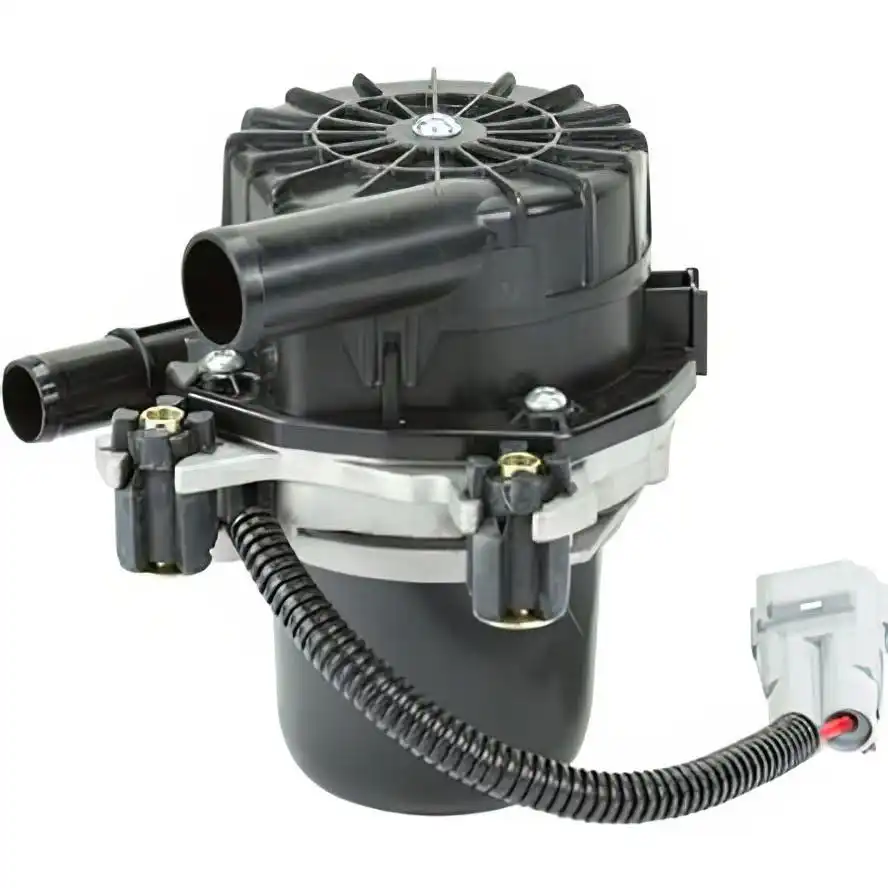
Electric secondary air pumps, used on many vehicles from 1996 to the mid-2010s, are not belt-driven. They deliver upstream air only, either into the exhaust manifold or just ahead of the catalytic converter, for a short duration of about 20 to 90 seconds after cold start. They are used only to help the catalytic converter light off faster. In other words, they inject fresh air into the exhaust very briefly during cold start to heat the catalyst faster.
By the 2015 to 2020 model years, most manufacturers had eliminated secondary air pumps entirely because close-coupled catalysts light off extremely fast, and wideband O2 sensors allow precise warm-up.
The belt-driven air pump first appeared on production vehicles in 1966 after researchers linked tailpipe emissions to urban smog. Since then, emissions regulations have grown stricter, and the air injection reactor system has evolved from a simple belt-driven setup to a computer-controlled electric unit found on many trucks, SUVs, and passenger cars. [RED]However, most air pump systems have been eliminated, with very few exceptions, since about 2020.
Belt-Driven vs. Electric Air Injection Pumps
Not every smog pump operates the same way. Vehicles use one of two designs, and knowing which type sits under the hood matters when shopping for a replacement.
Belt-driven pumps are the older design. A serpentine belt or V-belt spins the pump continuously while the engine runs, and vacuum-operated valves control where the air flows. These units are mechanically simple but create a small parasitic power drain on the engine. They are common on vehicles built before the mid-2000s.
Electric pumps use a DC motor powered by the battery and controlled by the ECM through a relay. They run only when the ECM commands them, usually for the first couple of minutes after a cold start. Because they consume no engine power, they impose zero parasitic loss. Electric pumps are standard on most newer vehicles, including GM LS-series engines, Toyota V8 platforms, and many European models from BMW, Mercedes-Benz, Audi, and Volkswagen.
Tip: Before ordering a replacement, confirm whether the vehicle uses a belt-driven or electric pump. Mixing up the type leads to parts that physically will not mount or connect.
Signs That a Secondary Air Injection Pump Is Failing
A failing air pump rarely strands a vehicle, but it triggers problems that worsen over time. Watch for these symptoms:
1. The check engine light illuminates. The ECM monitors air pump operation and flags trouble codes when it detects insufficient airflow or an electrical fault. Common DTCs include P0410 (secondary air injection system malfunction), P0411 (incorrect flow detected), P0412, P2440, and P2442.
2. The engine idles roughly during warm-up. Without supplemental oxygen in the exhaust, the O2 sensors read a rich condition and signal the ECM to lean out the fuel mixture, causing the RPM to dip, stutter, or stall.
3. Acceleration feels sluggish. A faulty pump disrupts the feedback loop between the O2 sensors and the ECM, leading to inconsistent fuel delivery and reduced power output.
4. A loud whirring or grinding noise comes from the engine bay. Corroded bearings or a seized impeller inside the pump housing produce sounds that are most noticeable during the first one to two minutes after a cold start.
5. The vehicle fails an emissions test. A non-functional air injection circuit causes the SAI system monitor to report a “Not Ready” or “Incomplete” status on an OBD-II scan, which is an automatic failure in states that require smog checks.
Warning: Do not ignore a P0410 or related code for an extended period. Prolonged operation without the air pump can overstress the catalytic converter and oxygen sensors, leading to far more expensive repairs.
Common Causes of Air Pump Failure
Understanding why an air pump breaks helps prevent a repeat failure after installing a new one.
• Moisture intrusion. A faulty check valve allows condensation from exhaust gas to seep into the pump housing. Water corrodes the impeller vanes and, in cold climates, can freeze and burn out the motor.
• Electrical problems. High resistance in the power or ground wiring forces the motor to draw excess current, generating heat that melts contacts and damages the relay.
• Blocked or cracked hoses. Collapsed or kinked hoses restrict airflow, causing the pump to overheat. Cracked hoses introduce unmetered air that confuses the O2 sensors.
• Failed combination valve. A stuck combination valve either floods the exhaust with constant airflow or blocks it entirely, triggering a fault code and potentially masking the real problem.
Tip: When replacing the air pump, always inspect the check valve, hoses, and combination valve at the same time. A new pump installed behind a corroded check valve will fail again within months. A bad air injection check valve can also damage other parts of the AIR system.
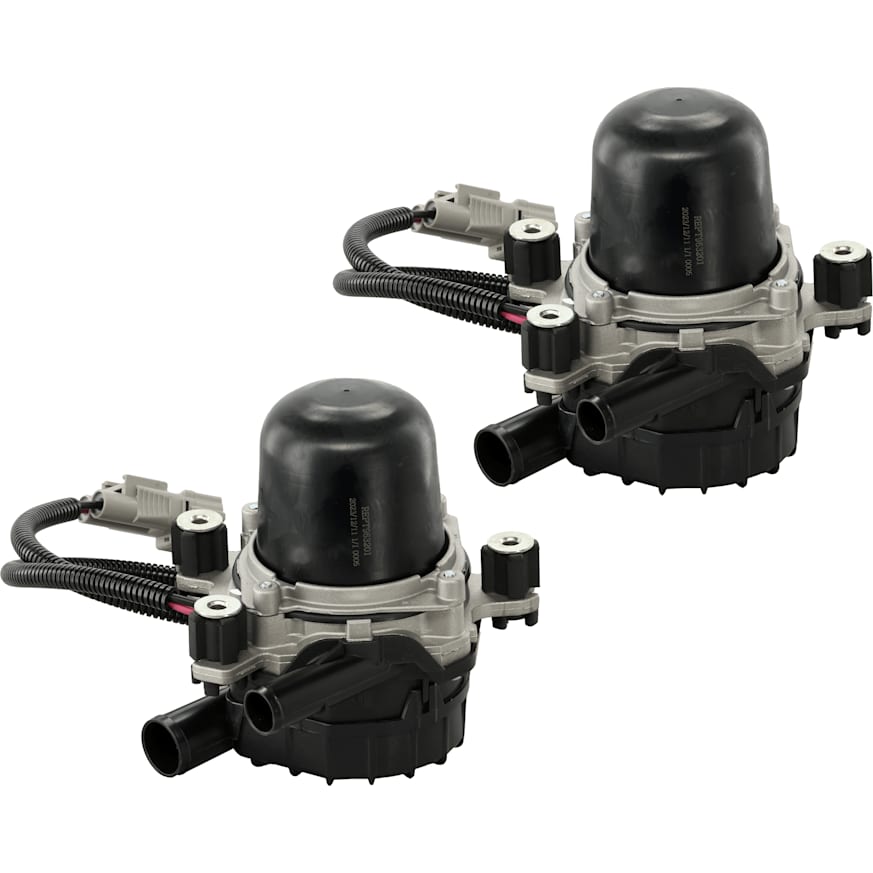
Fitment and Compatibility Checks Before Buying
A secondary air injection pump is not a universal part. Fitment varies by make, model, engine size, and production year. Skipping compatibility checks is one of the most common buyer mistakes.
Before placing an order, gather this information:
• The vehicle’s exact year, make, model, and engine displacement (for example, 2012 Audi Q7 3.0L V6 Supercharged).
• The original equipment manufacturer (OEM) part number, which is printed on the old pump housing or listed in the vehicle’s service manual.
• Whether the vehicle is a California-emissions or federal-emissions model. California-spec vehicles sometimes use a different pump or additional valving.
Cross-reference the replacement part number with the OEM number using the seller’s fitment tool or a catalog like the one on CarParts.com, which filters results by vehicle details and shows compatible brands side by side. Do not rely on a generic “fits most vehicles” claim.
Note: Some European vehicles, particularly Audi, BMW, and Volkswagen models, have revised pump designs released through technical service bulletins (TSBs). Always search for TSBs before ordering to ensure the replacement includes the updated design, bracket, and hoses.

Deciding Between OEM, Aftermarket, and Remanufactured Pumps
The replacement parts market for air injection pumps breaks into three categories, each with trade-offs in price, warranty, and risk.
• OEM (Original Equipment Manufacturer) parts come from the automaker or its contracted supplier. They guarantee exact fit and function but cost the most: OEM pumps for European luxury brands can run $500 to $900 for the part alone, plus $150 to $250 in dealership labor.
• Aftermarket parts are produced by independent manufacturers to match OEM specifications. Reputable aftermarket brands offer solid reliability at 40% to 60% less than OEM pricing, making them a smart choice for budget-conscious vehicle owners who still want dependable performance.
• Remanufactured (rebuilt) parts are used pumps disassembled, inspected, and rebuilt with new wear components. A quality rebuilt pump can cost roughly half the price of a new OEM unit. Buy only from sellers that offer a warranty of at least 12 months.
Warning: Extremely low-priced pumps from unverified marketplace sellers often use substandard materials. Check the return policy and warranty terms before committing.
Installation Notes to Prevent Common Mistakes
Many vehicle owners with moderate mechanical ability can replace an electric air pump at home with basic hand tools. Belt-driven pumps require additional steps for belt routing and tensioning.
1. Disconnect the negative battery terminal before starting work on an electric pump.
2. Photograph or label every hose connection and electrical plug before removal. Air injection hoses often route through tight spaces, and reconnecting them incorrectly creates vacuum leaks.
3. Inspect the electrical connector on the vehicle side for melted pins or heat damage. A failing pump frequently damages the connector through high current draw.
4. Check the inlet hose and air filter screen for debris.
5. Clear all stored DTCs with an OBD-II scanner after installation, then cold-start the engine and verify that the pump activates. Listen for the characteristic hum lasting about 90 seconds. If airflow or pressure sensor readings are out of range, the issue can also trigger a P2431 code.
6. Run a drive cycle to reset the SAI system monitor before taking the vehicle for an emissions test.
Tip: Search for a technical service bulletin specific to the vehicle before starting. Some manufacturers have released revised intake hoses, brackets, or baffles that must be installed with the new pump to prevent repeat failures.
Why Removing the Smog Pump Is a Bad Idea
A persistent myth in car modification forums suggests that deleting the air pump frees up engine power and simplifies the engine bay. In practice, removing the secondary air injection system creates more problems than it solves.
The power gained by eliminating a belt-driven pump amounts to a negligible fraction of a horsepower. Removing or bypassing the pump triggers a permanent check engine light and emissions DTCs that prevent the vehicle from passing a state smog inspection. In states with strict testing, this means the vehicle cannot be legally registered. An ECM tune to delete the air pump logic voids the powertrain warranty on newer vehicles and may violate federal Clean Air Act regulations.
A sloppy removal that leaves open ports or disconnected hoses can also introduce exhaust or air leaks. If the leaks affect oxygen sensor readings, the ECM may enrich the fuel mixture, which worsens fuel economy and can foul spark plugs. For more context on where the air injection system fits, see this guide to exhaust system parts.
How to Save on Car Parts by Shopping Online
Dealership parts counters and local auto parts stores mark up secondary air injection pumps significantly. Shopping online eliminates much of that markup and opens access to a wider selection of OEM, aftermarket, and remanufactured options.
CarParts.com is a reliable source for quality replacement and aftermarket air injection pumps at competitive prices. The site’s vehicle fitment filter narrows results to parts that match a specific year, make, model, and engine, reducing the risk of ordering the wrong pump. Multiple brand options appear side by side with pricing, warranty details, and customer ratings.
Online retailers also run promotions that brick-and-mortar stores rarely match. Free shipping thresholds, seasonal discounts, and loyalty programs add up, especially on higher-priced components for European vehicles.
Before completing any online purchase, double-check the return window and warranty terms. A return policy of 30 to 60 days provides a safety net if the part does not match, and a lifetime or multi-year replacement guarantee protects against defects long after installation.
Keep Reading: Related Posts




Any information provided on this Website is for informational purposes only and is not intended to replace consultation with a professional mechanic. The accuracy and timeliness of the information may change from the time of publication.