A bad compressor is a failing or failed pump that can no longer raise refrigerant pressure or push refrigerant through your car’s air conditioning (A/C) system. The clearest of the symptoms of a bad compressor is an A/C that blows nothing but warm air, and you’ll want to address it right away, especially if it’s hot outside.
Quick Answer: Bad Compressor at a Glance
- Meaning: With the engine running and the A/C on, this belt-driven pump raises refrigerant pressure and circulates it.
- What it affects: Cabin cooling first, then the drive belt, refrigerant level, and the rest of the A/C system.
- How serious it is: Address it right away in hot weather. If a seized compressor damages or throws the drive belt, stop driving, because this belt often also turns the alternator and water pump.
- Possible causes: Internal failure that locks it up, worn O-rings and seals, an internal falling apart, or a clutch that won’t engage.
- What to do first: Confirm the vent air is warm, then, engine off, try turning the compressor clutch by hand. If it’s hard to turn it means internal failure.
- How much does it cost to replace a compressor?: About $800 to $1,500 professionally, or an hour or two of labor if you do it yourself. Compressors alone run $100 to upwards of $2,000.

What Does a Car’s A/C Compressor Do?
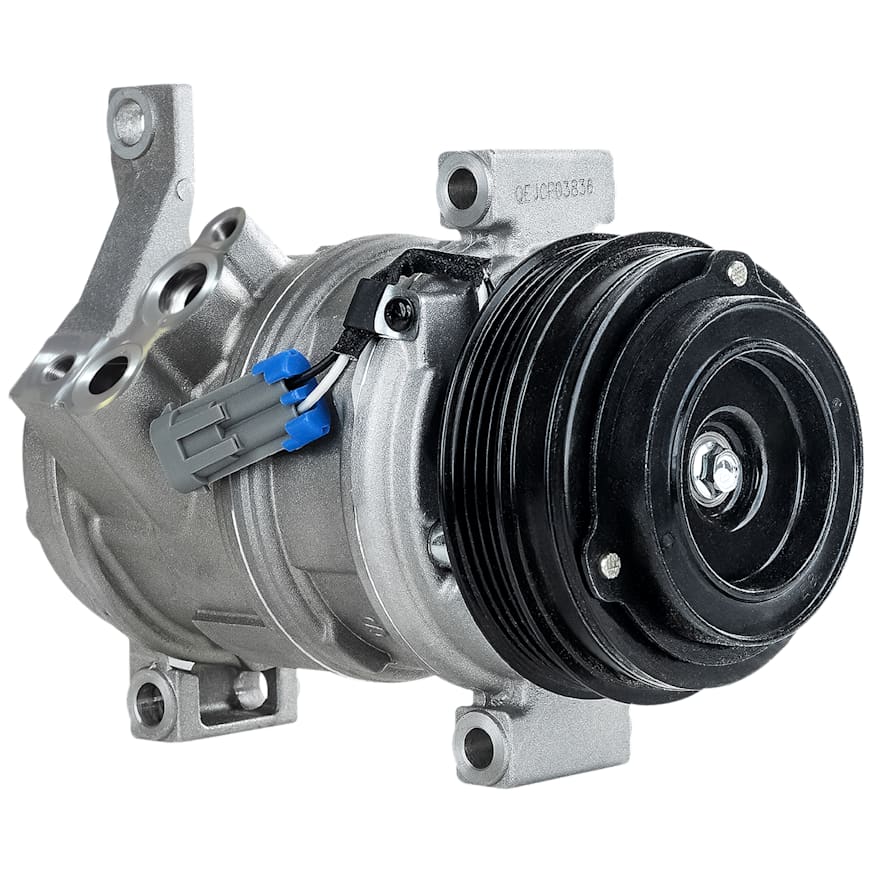
A pulley on the compressor’s shaft is driven by the engine’s drive belt. In a traditional positive-displacement compressor, switching the A/C on energizes a magnetic clutch that connects the two, and internal pistons move the same amount of refrigerant every revolution. Variable displacement compressors have no clutch, so a module governs them instead.
Symptoms of a Bad Compressor: 5 Signs To Watch For
Note: Other problems present the same symptoms, so diagnose thoroughly before condemning the compressor.

1. The Air Conditioning Doesn’t Work
One of the most common signs of a bad compressor is an inoperative A/C system. If nothing but warm air comes from the vents, the compressor might be to blame.
2. The Drive Belt Is Damaged or Screeching
A compressor that fails internally can lock up, so the pulley refuses to turn with the A/C on. The belt may then screech or get damaged trying to turn it.

3. You Hear Abnormal Noises With the A/C Engaged
A bad compressor typically rattles or knocks whenever the A/C is switched on, which often means it’s beginning to fail.
4. Refrigerant Is Leaking
The compressor’s O-rings and seals can develop refrigerant leaks over time. Refrigerant is colorless and odorless, so you might not notice a leak without dye in the system or visible oil build-up.
5. The A/C System Is Contaminated

A compressor that comes apart internally contaminates the system with metal debris, which isn’t visible unless you open the system up. This turns a simple swap into a bigger job.
How Serious Is a Bad Compressor?
It won’t strand you on its own, but ignoring it costs you twice: a locked-up compressor can damage the drive belt, and a come-apart spreads debris, raising the eventual bill.
One safety boundary matters here. In most vehicles a single serpentine belt also drives the alternator and water pump, so if a seized compressor throws this belt, the engine can lose charging and cooling. Have your vehicle towed rather than driving it.
How to Diagnose a Bad A/C Compressor in a Car (Positive Displacement Design)
Step 1: Confirm the symptom. Start the engine, turn the A/C on, and feel the vent air. Warm air means keep going. Normal cooling means the compressor probably isn’t the problem.
Step 2: Listen with the A/C engaged. A screeching belt points toward a locked-up compressor, while a rattle or knock points toward one that’s beginning to fail.
Step 3: Check whether the compressor is seized. Try to turn the compressor clutch, which is attached to the compressor shaft, by hand. You don’t need to remove the drive belt. Hard to turn, or no movement, means internal failure. Do this with the engine off and the engine bay cool.
Step 4: Chase a clutch that won’t engage. Use a test light to check for power at the clutch. Power but no engagement means you should suspect a faulty clutch. No power points to a low refrigerant level tripping the low-pressure cutout switch, or a faulty relay. An excessive clutch-to-pulley air gap also causes slipping. Check it with a feeler gauge and shim it.
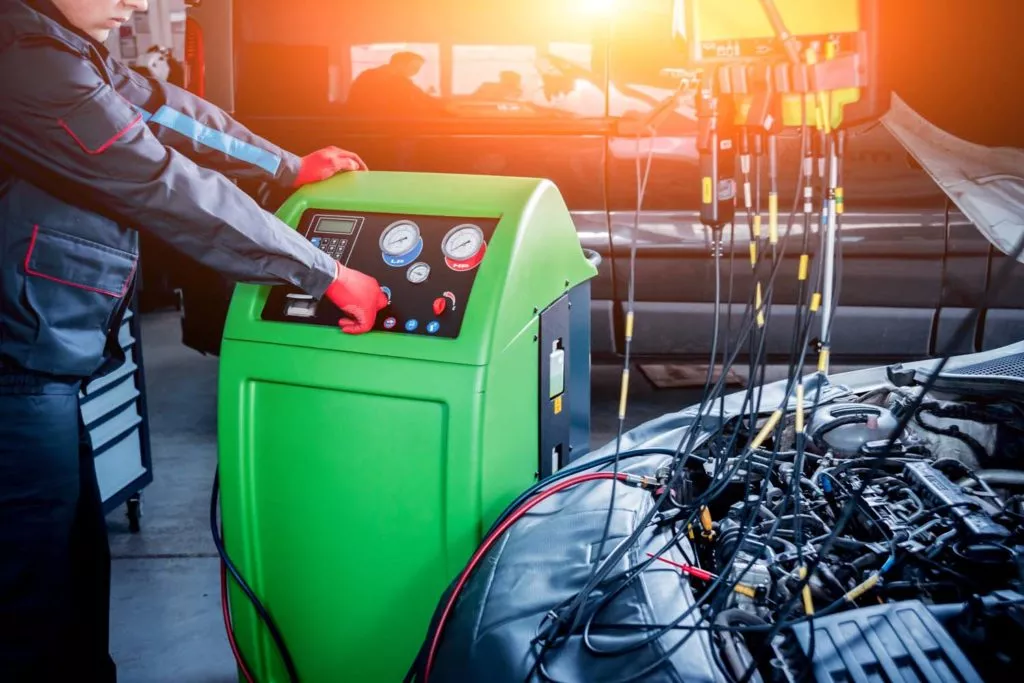
Step 5: Read system pressures. Professionals put manifold gauges on both service ports and compare readings to an A/C performance chart. Both sides high, or a high low side with a low high side, can point to the compressor. Pressures that never rise above static (engine off) readings mean a seized compressor or a clutch that isn’t engaging.
Step 6: Rule out a leak. Inspect the O-rings and seals with dye and a UV light, or look for refrigerant oil build-up. Variable displacement compressors need scan tool data instead, since there’s no clutch to test.
Refrigerant can cause frostbite and eye injury, so wear gloves and eye protection, and venting it is illegal in the US, so the system must be recovered with proper equipment.

How To Fix a Bad Compressor
- Seized or failed internally: Replace the compressor. Rebuilding is rarely an option.
- Clutch has power but won’t engage: The clutch is the suspect, not the pump. Ask a shop if it’s serviceable separately.
- Excessive clutch air gap: Adjust it with shims after checking with a feeler gauge, then retest.
- No power at the clutch: Trace the electrical cause, since a low charge or bad relay leaves the compressor itself fine.
- Leaking O-rings or seals: Pinpoint and repair the leak. Adding refrigerant alone leaves it in place.
- Internal falling apart: Expect the rest of the system to need attention, since debris travels through it.
Either way, the system must be evacuated before the compressor comes off and recharged afterward, which takes shop equipment.
How Much Does It Cost To Replace a Compressor?
Professionally, expect between $800 and $1,500, though the exact A/C compressor replacement cost depends on your vehicle’s year, make, and model. Some compressors cost around $100 while others run upwards of $2,000, so comparing A/C compressor brands shows where yours lands. Doing it yourself is cheaper, but budget $150 to $300 for a recharge.
How Much To Repair AC Compressor in Car?
Repair usually isn’t on the table, since very few shops rebuild compressors, so the realistic figure is the same $800 to $1,500 range. Fixing a related cause instead, such as a bad relay or a leaking O-ring, costs far less.
What Else Should You Replace With the Compressor?
Experts generally recommend replacing the receiver drier or accumulator, along with the expansion valve or orifice tube, whenever the compressor’s replaced. At around $20 each, they cost far less than opening the system twice.
How Long Does It Take To Replace an A/C Compressor?
It depends on your vehicle, but the swap usually takes an hour or two, plus time to evacuate and recharge the system.
Bad Compressor FAQs
Between $800 and $1,500 at a shop for most vehicles, driven mainly by the year, make, and model. The part alone runs about $100 to upwards of $2,000, and a recharge adds $150 to $300.
Usually yes, though it’s uncomfortable and noisy. Stop driving if the compressor has seized and damaged the drive belt, since this belt often turns the alternator and water pump too.
It typically rattles or knocks whenever the A/C is switched on. A screech usually comes from the belt slipping against a locked-up pulley, not the compressor itself.
Not if it’s failed internally. A recharge can restore operation if a low refrigerant level was tripping the low-pressure cutout switch and keeping the clutch from engaging. Even then, the leak still needs repairing.
Possible causes include internal mechanical failure, worn O-rings and seals, and an internal falling apart. Running the system with a low charge is also hard on a compressor, because the refrigerant carries its lubricating oil.
It’s mounted on the engine and driven by the drive belt, though the exact position varies by vehicle. A clutch face on the front tells you which design you have.
When To Get Professional Help
- The refrigerant needs recovering, or a leak needs pinpointing with dye and a UV light.
- Your vehicle has a variable displacement compressor, or debris is in the system.
- A seized compressor has damaged the drive belt, so the vehicle should be towed.
Where To Get a New A/C Compressor for Your Vehicle
You’re in for an uncomfortable ride when you leave a bad compressor unaddressed, so get one the easy way with CarParts.com. Use our vehicle selector to get the right part. We ship from warehouses across the US in as fast as two business days, and every replacement A/C compressor carries a low-price guarantee.
Keep Reading: Related Posts





Any information provided on this Website is for informational purposes only and is not intended to replace consultation with a professional mechanic. The accuracy and timeliness of the information may change from the time of publication.