The 3.0L V6 in the Ford Ranger is one of the most quietly dependable engines Ford ever built. It isn’t fast, it isn’t sophisticated, and it never won an award. What it did was run. Millions of these engines left the factory between 1991 and 2008, and a surprising number are still hauling tools, towing small trailers, and starting every morning with over 200,000 miles on the odometer.
If you own one, you’ve probably reached the point where something needs replacing. Here’s what you’re actually working with, what tends to fail, and where to source parts.
What Engine Is In A Ford Ranger 3.0?
The 3.0L V6 in your Ranger is the Ford Vulcan, a cast-iron, overhead-valve pushrod engine displacing 182 cubic inches. It uses a bore and stroke of roughly 3.50 x 3.14 inches, a two-valve-per-cylinder head design, and a firing order of 1-4-2-5-3-6.
This matters because Ford built three completely different 3.0L V6 engines, and confusing them will get you the wrong parts:
Vulcan 3.0 (OHV): The pushrod engine found in the Ranger, Taurus, Aerostar, and Mazda B3000. Simple, cheap to service, and built for durability over output.
Duratec 30 (DOHC): A dual-overhead-cam 3.0L used in the Taurus, Escape, and various Mazda models. It was never offered in the Ranger.
EcoBoost 3.0 (twin-turbo): A modern turbocharged V6 used in Lincoln and Explorer ST applications. Also never in a Ranger.
If your Ranger has a 3.0, it’s a Vulcan. To confirm it, check the eighth digit of your VIN, which encodes engine displacement. Ranger 3.0L applications typically use the code “U,” though flex-fuel variants carry their own designation in certain model years.
Ford Ranger 3.0 Engine Specs And Horsepower
Output shifted slightly across the production run, but the numbers stayed in a narrow band. Most Rangers with the 3.0 make somewhere between 140 and 154 horsepower, with torque in the 175 to 185 lb-ft range.
2000 Ford Ranger 3.0: Roughly 148 hp and 180 lb-ft of torque.
2002 Ford Ranger 3.0: Approximately 154 hp and 180 lb-ft, following the update to the intake and management system.
2007 Ford Ranger 3.0: Around 148 hp and 180 lb-ft, positioned between the 2.3L four-cylinder and the 4.0L SOHC V6.
Peak torque arrives low, which is exactly what you want in a compact pickup. It’s a modest engine on paper that feels adequate in practice.
Is The Ford Ranger 3.0 A Good Engine?
Yes, with an honest caveat. The Vulcan’s reputation for longevity is earned. There’s no timing belt to snap, since it runs a timing chain. It’s widely considered a non-interference design, meaning a chain failure typically doesn’t destroy your truck’s valves. The pushrod architecture means fewer moving parts than an overhead-cam engine, and there’s real room to work in the engine bay.
The trade-off is performance. The 3.0 is noticeably slower than the 4.0L SOHC V6, and its fuel economy advantage over the 4.0 is smaller than most buyers expect. If you tow regularly or need to merge onto highways with a load, the 4.0 is the better engine. If you want something that runs forever on affordable parts, the 3.0 wins.
Common Problems With The Ford Ranger 3.0 Engine
Age is the real enemy here. Nearly every issue for this engine traces back to a wear item that’s simply overdue.
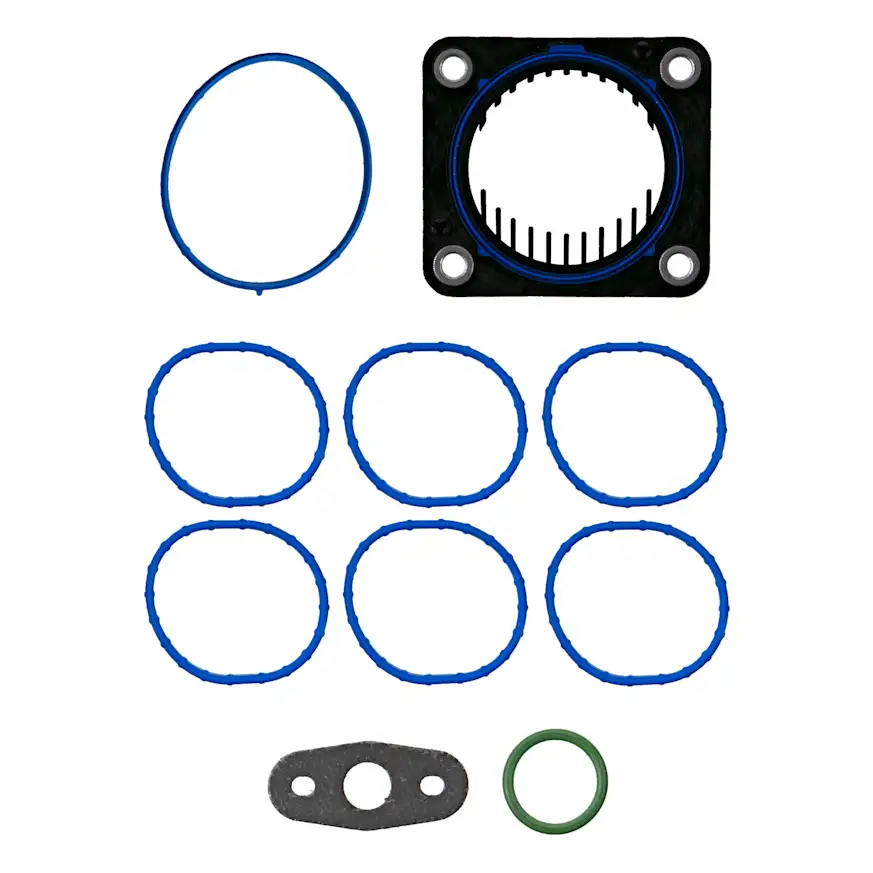
Lower intake manifold gasket leaks: The single most common failure. Coolant seeps internally or externally, and you may lose coolant with no visible puddle. Replacing the intake manifold gasket set is the standard fix.
Rough idle and misfires: Usually caused by worn spark plugs, degraded spark plug wires, a failing ignition coil pack, or a vacuum leak. Codes in the P0300 to P0306 range point directly at the offending cylinder.
Overheating: Water pumps, thermostats, and radiators in 20-year-old trucks are past their service life. Address these before a head gasket fails.

Oil consumption and leaks: Valve cover gasketsharden and weep. Higher-mileage examples may burn oil past worn valve seals.
Check engine light from emissions components: The Differential Pressure Feedback Electronic (DPFE) sensor and Exhaust Gas Recirculation (EGR) valve are frequent culprits, often triggering P0401.
Sensor failures: Crankshaft position, camshaft position, oxygen, and mass air flow sensors all degrade with heat cycling and mileage.
Ford Ranger 3.0 Maintenance Parts You’ll Actually Need
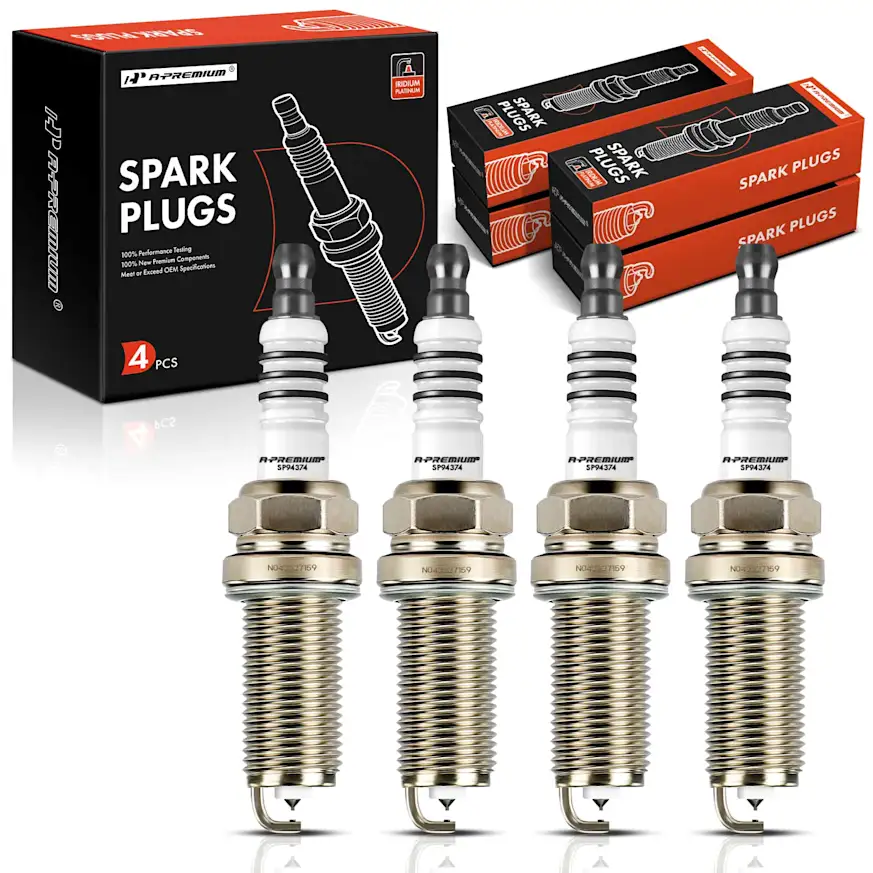
A complete tune-up for this engine is refreshingly straightforward. Plan for spark plugs, a spark plug wire set, an air filter, a fuel filter, a PCV valve, and fresh oil with a new filter. Many owners tackle the whole job in an afternoon.
Beyond the tune-up, the parts that move most often for the 3.0 Ranger are intake manifold gasket sets, valve cover gaskets, water pumps, thermostats, radiators, serpentine belts, engine mounts, alternators, starters, fuel pumps, fuel injectors, catalytic converters, and exhaust manifolds.
Most of these components interchange broadly across the 2000 to 2008 Ranger 3.0 range, though brackets, sensors, and emissions hardware can vary by model year and emissions package. Always verify fitment against your truck’s specific year before ordering.
Ford Ranger Engine For Sale: Rebuild, Replace, Or Repair?
When a 3.0 finally gives up, you have three paths:
Repair the existing engine: If compression is healthy and the problem is a gasket, sensor, or accessory, this is almost always the right call. You’re often looking at a few hundred dollars in parts versus thousands for a replacement.
Used engine: The cheapest full replacement, generally starting around $1,500, but you’re inheriting someone else’s unknown maintenance history.
Remanufactured long block or complete engine: Typically ranges from roughly $2,000 to $4,000 depending on configuration and whether you need a long block or a complete assembly. This is the most predictable option, and reputable rebuilds carry a warranty.
A useful rule: if your truck’s body and frame are solid and the transmission shifts cleanly, spending money on the engine usually makes sense. If rust has taken the frame, it doesn’t.
Where Can I Find Replacement Parts For A 2002 Ford Ranger 3.0 Engine?
This is where the Vulcan’s ubiquity works in your favor. Because Ford produced these engines in enormous volume across multiple vehicle lines, aftermarket support is deep and pricing is competitive. You aren’t hunting for rare components.
At CarParts.com, you can filter by year, make, model, and engine to narrow results to parts that actually fit your truck. Whether you’re chasing a coolant leak in a 2000 Ranger, replacing a coil pack in a 2002, or refreshing the cooling system in a 2007, the catalog covers the full 3.0L range with parts backed by clear warranty terms and straightforward returns.
Quality aftermarket components meet the specifications of the originals they replace, and for a truck of this age, they’re the sensible economic choice. There’s little reason to pay dealer pricing for a water pump in a 2003 pickup.
Your Ford Ranger 3.0 has already proven it can go the distance, and the right parts are what keep this streak alive. CarParts.com stocks the gaskets, sensors, cooling components, and tune-up kits your Vulcan V6 needs, with vehicle-specific fitment filtering that takes the guesswork out of ordering. Enter your truck’s year and model, find exactly what fits, and get your Ranger back on the road in no time.
Keep Reading: Related Posts




Any information provided on this Website is for informational purposes only and is not intended to replace consultation with a professional mechanic. The accuracy and timeliness of the information may change from the time of publication.