A PCV valve replacement usually costs between $124 and $173 at a repair shop, according to RepairPal‘s estimate updated September 3, 2026, while Kelley Blue Book puts the national average a little higher at $186 to $220. The valve itself is one of the less expensive parts under the hood, so most of what you pay goes to labor, and that labor depends on where the valve sits on your engine and whether it is a separate part or built into a larger assembly. Below, we break down what drives the price, how to confirm the PCV valve is really the problem before you pay for the repair, and when replacing it yourself makes sense.
How Much Does a PCV Valve Replacement Cost?
National averages vary by source, but they agree on one point: the part is cheap and the labor is not. The table below compares published estimates from three sources.
| Source | Parts | Labor | Total |
|---|---|---|---|
| RepairPal (national average) | $32 to $39 | $91 to $134 | $124 to $173 |
| Kelley Blue Book (national average) | Not listed | Not listed | $186 to $220 |
| YourMechanic (Chevrolet Malibu average) | $3 | $95 | $98 |
The YourMechanic Malibu example shows how lopsided the bill can be, with a $3 part and $95 of labor. Other estimates put the part higher. RepairSmith lists $20 to $50 for parts and $60 to $170 for labor, for a total of $80 to $220.
Why Do PCV Valve Quotes Vary So Much?
The biggest factor is access. RepairPal says the job can take seconds or an hour or two depending on the vehicle, and that luxury, performance and off-road vehicles can be much harder to service. Its model-specific estimates show how wide the range is.
| Vehicle | RepairPal estimate |
|---|---|
| Ford F-150 | $68 to $101 |
| Nissan Altima | $74 to $96 |
| Honda Accord | $91 to $115 |
| Honda CR-V | $101 to $125 |
| Toyota Corolla | $217 to $317 |
| Toyota Camry | $315 to $457 |
Where the Valve Sits
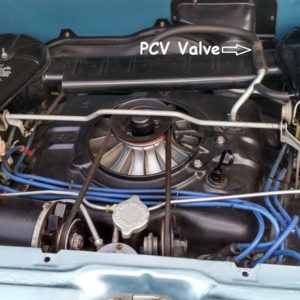
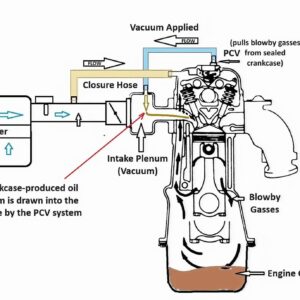
On many engines the valve sits in the valve cover with a hose running to the intake, where you can reach it by hand. On V-type engines it may sit in the lifter valley under the intake manifold, according to eBay Motors. Reaching it there means removing intake parts first, and that is where most of the extra labor comes from.
Whether the Valve Is a Separate Part
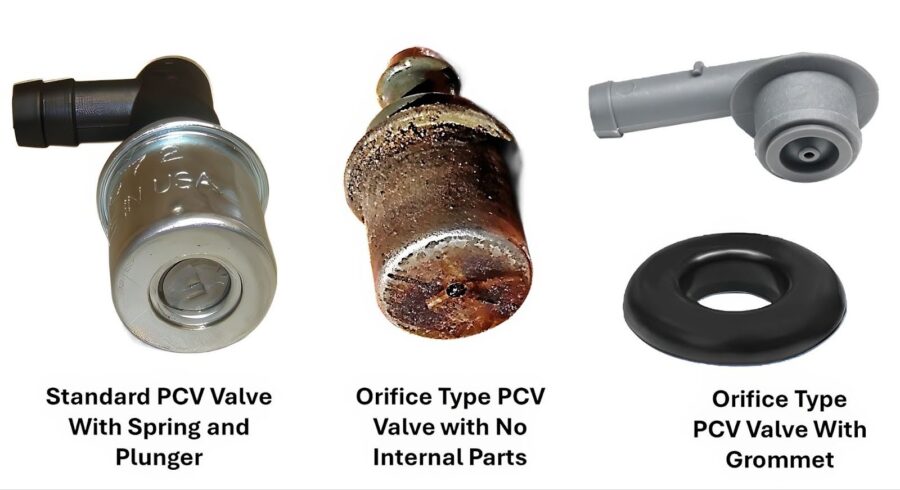
Some engines do not use a standalone valve. TorqueMech lists an integrated valve-cover design as one of the main cost factors, since the part you replace becomes the larger assembly instead of a small valve. If your quote includes a valve cover or an oil separator, ask the shop to confirm that your engine uses one of these designs.

Hoses and Grommets
Brittle PCV hoses and hardened valve grommets are often replaced at the same time. According to RepairSmith, replacing a PCV hose adds about $105 to $130.

Is the PCV Valve Really the Problem?
A failing PCV valve can cause oil consumption, a rough idle, oil leaks and a check engine light. The full list is in our guide to bad PCV valve symptoms. Several of those signs overlap with other faults. A punctured PCV hose, for example, is one of the vacuum leaks that can set a P0171 lean code, and a rough idle has many possible causes.
RepairPal describes the shop test: the technician removes the valve and applies vacuum, then forced air. A good valve lets air through in one direction only. If air passes both ways, neither way, or only the wrong way, the valve has failed. If the old valve was clogged, RepairPal advises finding out why and checking the engine for sludge before you install a new one.
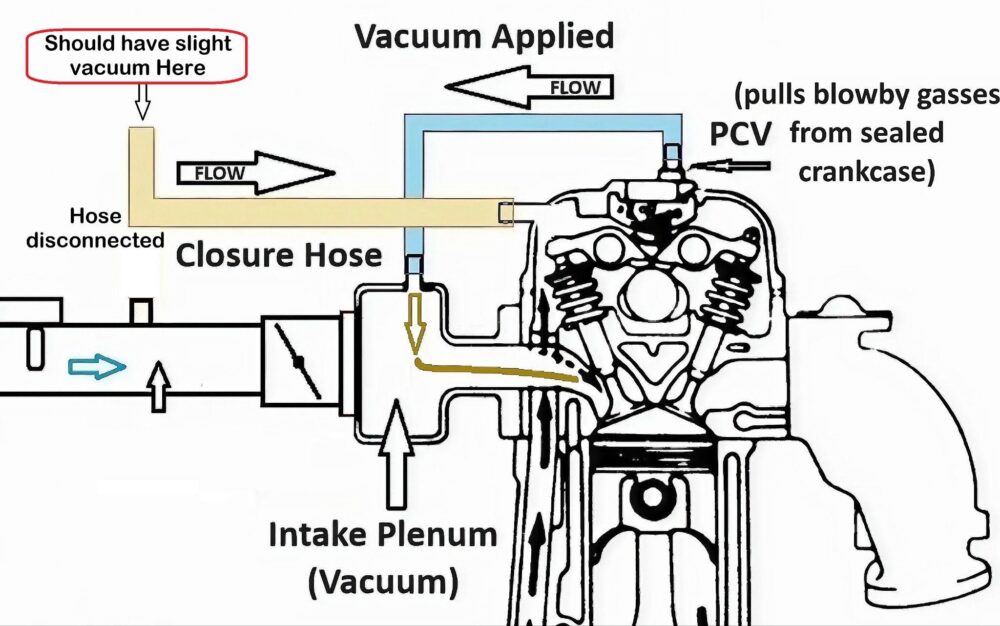
Warning: Do not remove, plug or bypass the PCV system. Federal emissions certification rules say vehicles may not discharge crankcase emissions into the air (40 CFR 86.1810-17), and the EPA notes that tampering with emission controls is illegal under the Clean Air Act and can void your vehicle warranty.

Can You Replace a PCV Valve Yourself?
On many engines you can. RepairPal notes that when the valve can be reached without removing other parts, the job comes down to pulling the old valve out and installing the new one. The basic steps are in our guide on how to replace a PCV valve, and the short version is below.
- Find the valve. Check your owner’s manual or a service manual for its location on your engine.
- Remove it. Disconnect the hose, then pull the valve from its grommet or unscrew it, depending on the design.
- Inspect the hose and grommet. Replace either one if it is cracked, soft or hard.
- Install the new valve. Use the valve specified for your engine, reconnect the hose and check that every connection is tight.
RepairPal recommends OEM parts when possible. If the valve sits under the intake manifold or is built into the valve cover, the job takes more tools and time, and a shop may be the better choice.
How Can You Lower the Cost?
- Confirm the fault first. A vacuum and airflow test can keep you from paying for parts you do not need.
- Ask what the quote covers. Find out whether it includes only the valve or a valve cover or separator assembly, and whether your engine needs that.
- Replace worn hoses and grommets together. Doing them in the same visit avoids paying for access twice.
- Combine jobs. If the valve cover is coming off for a valve cover gasket, have the PCV valve checked at the same time.
- Do it yourself when access is easy. On engines where the valve is in plain view, the part cost is most of what you pay.
FAQs
Yes, if testing shows it has failed. The part is inexpensive on most engines, and a failed valve can cause oil consumption, a rough idle and oil leaks. RepairPal puts the average repair at $124 to $173.
It depends on access. RepairPal says the job can take seconds or an hour or two, depending on the vehicle.
There is no fixed interval for most vehicles. J.D. Power says that as long as the valve works properly, it does not need to be replaced. Check your owner’s manual in case your vehicle’s maintenance schedule lists an inspection.
High quotes usually mean the valve is hard to reach, such as under the intake manifold, or the quote covers a larger assembly like a valve cover. Ask the shop which part it plans to replace and how many labor hours it is charging.
Keep Reading: Related Posts




Any information provided on this Website is for informational purposes only and is not intended to replace consultation with a professional mechanic. The accuracy and timeliness of the information may change from the time of publication.