Several MINI Cooper owners have reported that their brakes would squeal loudly when braking. While this issue can appear in all vehicles, complaints show that brake squealing seems to be particularly common with the MINI Cooper.
Possible Reasons Why Your MINI Cooper’s Brakes Squeal
What could be causing this noise? Is this normal? Does brake temperature play a role? Here are some of the possible reasons why your brakes could squeal:
Normal Brake Noises
Squealing is normal when it comes to some brake pad materials.
For example, high-performance brake pads are known to squeal when they’re cold, becoming quiet once they get hot after repeated use. Meanwhile, semi-metallic brake pads are generally known to squeal because of their metal content. Ceramic brake pads also tend to squeal when they’re not bedded properly or if they’re still cold.
Changing to quieter brake pads on your MINI Cooper might fix this issue.
That being said, quieter brake pads have pros and cons.
Non-asbestos organic (NAO) brake pads are very quiet due to their soft composition. They’re made from organic fibers like glass, rubber, and resins. But the lifespan of these pads is shorter than ceramic or semi-metallic pads. That’s one of the cons. Another con is that they’re less effective in high heat and humidity conditions. Pros would be low noise and dust, less wear on the rotors.
Brake Pads Aren’t Bedded Properly
Brake bedding involves going at a moderate speed and then firmly pressing on the brakes.
Aside from slowing you down, this practice applies a protective layer on the brake rotor that helps the pad last longer and reduce squealing. Brake bedding is typically only done when you’ve recently replaced your rotors or pads and the rotors are either new or freshly machined.
But be very careful to do it in a place where there is no traffic. Other drivers will not expect you to do this, so don’t do it where other vehicles are being driven.

Pro Tips are nuggets of information direct from ASE-certified automobile technicians working with CarParts.com, which may include unique, personal insights based on their years of experience working in the automotive industry. These can help you make more informed decisions about your car.
Pro Tip: Bendix recommends that freshly turned rotors should always be washed with soap and water (not brake parts cleaner) to remove microscopic metal particles. When fresh brake pads are installed, Bendix® also recommends a 30/30/30 break in. That’s 30 normal stops at 30 miles per hour with a 30 second cooldown before the next stop (you can be driving during the 30 second cooldown). This takes about 15 minutes.
Rust on the Rotors
If you’ve left your MINI unused for some time in a moist or humid environment, rust can form on the MINI Cooper’s brake rotors. When you use your vehicle and the pad comes into contact with the rusty rotor, the friction between them can cause a loud squealing sound.
Luckily, rust on brake rotors is normal, and you just need to use the brakes normally for the rust layer to flake off.
Note that excessive rust accumulation will initially cause a groaning sound. As rust particles embed themselves into the pad lining, you may get a squeal you didn’t have before.
Worn Brake Pads
When a brake pad wears out, a metal tab called a wear indicator may come into contact with the rotor on some types of pads. But most pads don’t have this tab, so yours might not. When the lining on the pad is gone, you get some scrubbing noises where the metal backing pad is directly contacting the rotor. This may, in the early stages, cause a squealing noise that indicates that your MINI Cooper requires a brake pad change if your pads have this metal tab. This issue also makes your brakes squeak at low speeds.
Overheated and Glazed Brakes
When brakes overheat, a glaze forms on the surface of the brake pad. This smooth surface results in less friction when the brake pad comes in contact with the rotor, which reduces braking power and creates squealing noises.
Repetitive use of glazed pads will also cause the brake rotors to glaze. Removing the glaze from the pads is possible, but owners typically need to replace the components to restore braking performance.
Brakes can overheat if you’re constantly using the brakes on a mountain descent or if you’re driving around the track. If you find yourself in these scenarios, you should also consider engine braking to keep your brakes’ temperatures in check.
Worn Rotor
When a rotor wears out, the surface typically develops deep grooves, score marks, or rough spots on the surface. This worn surface can interact with the pad, creating vibration or pulsation in the brake pedal. The uneven interaction between the rotor and pad can also cause squealing, though squealing doesn’t usually happen due to work rotors alone.
If your brakes are squealing and you don’t know the exact cause, then it’s probably a good idea to have your vehicle’s brakes inspected by a trusted mechanic. Not all of the previously mentioned problems are a safety concern, but some of them can lead to serious safety concerns if ignored.
Consider the Originator, Conductor, and Reactor for the Squealing Noise
Every abnormal noise on a vehicle has an originator, a conductor and a reactor.
- With brake squeal, the originator is the brake pad/rotor contact.
- The conductor is the caliper and its bracket and the steering knuckle.
- The reactor is usually the dust shield, which is bolted to the knuckle and amplifies the squeal when the resonant frequency of the brake pad and rotor matches the resonant frequency of the rotor’s dust shield.
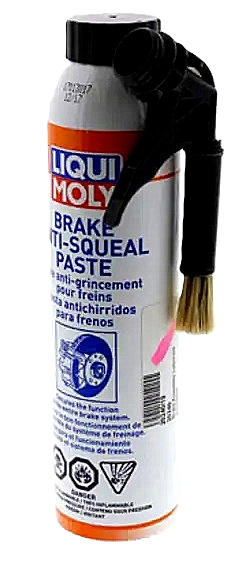
Finding the Right Parts for Your MINI
If your MINI’s brakes keep squealing, you’ll need to replace them. Worn pads, glazed rotors, or dry caliper pins don’t just make noise. They can also affect how your car feels on the road. Swapping in quality components is the easiest way to get rid of the squeal and bring back smooth, confident braking.
That’s where CarParts Euro comes in. We’re your go-to spot for quality euro parts all in one place. Whether you’re driving a MINI, Mercedes, or another European classic, you’ll find parts from trusted names like Bosch, MEYLE, and Continental. These brands are engineered to match the pedigree of your car, giving you exact fit and the performance you expect from European engineering.
Backed by CarParts.com, CarParts Euro combines the trust of an established brand with a catalog focused specifically on Euro car parts in the US. If your MINI or any other European vehicle in your garage needs new brakes or other replacement parts, head to CarParts Euro and shop with confidence.
Keep Reading: Related Posts




Any information provided on this Website is for informational purposes only and is not intended to replace consultation with a professional mechanic. The accuracy and timeliness of the information may change from the time of publication.